
Opinion
21:52, 05-Apr-2019
Without utmost attention to safety, aircraft manufacturer will take its toll
 ["china"]
Share







Copied
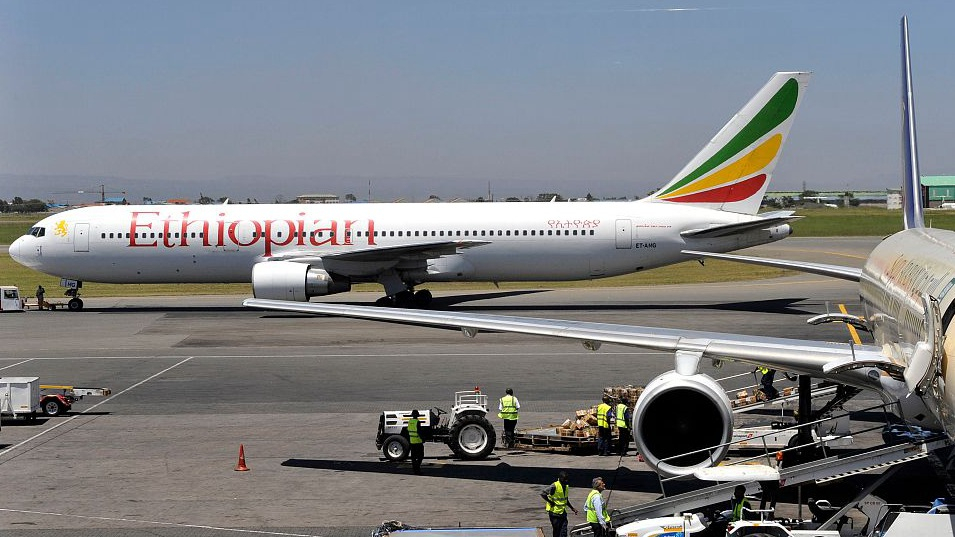
On Thursday, Ethiopia investigators released a preliminary report on the Ethiopian Airlines Flight 302 crash that killed 157 people on board last month.
The report suggests that Boeing 737 Max 8's Maneuvering Characteristics Augmentation System (MCAS) had a role to play in the incident.
Based on results retrieved from the jet's flight data recorder and cockpit voice recorder, it was revealed that right before the clash, a faulty sensor on the Max 8 wrongly detected that the plane was close to a stall, thus triggering the MCAS, a system put in place to prevent the plane from stalling, which immediately caused the nose of the plane to be pushed down.
Even though the captain subsequently cut off the electric switches, and used the manual trim wheel to pull the nose up, the system later came back on again, overriding the captain's several attempts, pitching the plane even further down, and eventually leading to its fatal nose dive.
All of this happened within six minutes after the plane took off. One could easily imagine the unbearable anxiety and sense of doom permeating the plane throughout the pilots' fierce battle against the faulty system. Nevertheless, all the attempts in these six minutes failed to prevent the Max 8's ill fate.
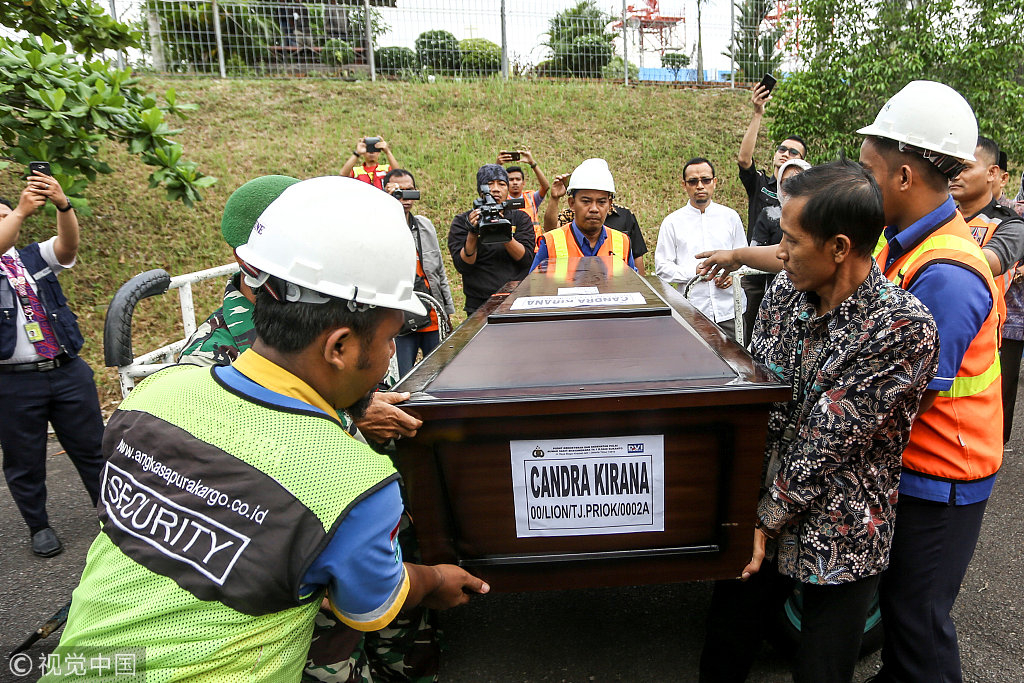
Officials carry coffin of Candra Kirana, a passenger of Lion Air flight JT610 that crashed on October 29, 2018, for a funeral in Palembang, Indonesia, November 3, 2018. /VCG Photo
Officials carry coffin of Candra Kirana, a passenger of Lion Air flight JT610 that crashed on October 29, 2018, for a funeral in Palembang, Indonesia, November 3, 2018. /VCG Photo
Even though experts would caution against attributing all the blame to the MCAS system at this stage as only the preliminary investigation has been concluded, what was revealed so far nevertheless sheds light on the contributing factors of the crash. In hindsight, provided that the preliminary findings were true, the incident was indeed a devastating calamity for many, especially as some would argue it was a tragedy that could have been averted.
It was not the first time that the problem with Boeing 737 Max's control system, MCAS, was brought to light. In last year's Lion Air Flight 610 crash of the same model, the system also took part of the blame for causing the incident.
In the immediate aftermath of the Lion Air crash, Boeing released an Airworthiness Directive, giving instructions to pilots as to how to react if a similar situation happened again where the anti-stall system malfunctions. The company said that the emergency procedures would rectify the problem that may have contributed to the incident.
However, as the fatal incident showed this time, simply relying on the instruction given by the company is far from enough -- the fact is that even though the captain on ET302 followed all the emergency procedures, as suggested in the report, he was still unable to gain control over the system.
A deeper problem thus lies in the system itself which urgently needs a fix. Originally the anti-stall system was put in place as a "correcting measure" to the new Max model which, compared to Boeing 737, is equipped with larger and more fuel-efficient engines. In order to fit the bigger engine in the plane it is moved "slightly upward and higher up," which consequently makes the jet more likely to stall under certain conditions. MCAS was thus designed to compensate for such a change and make the plane more stable.
However, right after the JT610 crash, doubts were raised over the safety of the system as it was seen as partly responsible for the plane's plunge. Back then the company failed to take quick action, however.
Now as the investigation continues, the public has increased their scrutiny over the system. Boeing has thus finally stepped up its efforts to update the software associated with the MCAS. But it could have been a move that was implemented much earlier. The fact that the recent incident displayed "significant similarities" with the Lion Air crash where the same problem is seen likely to cause both accidents means that Boeing has unshakable responsibilities in not taking action to correct MCAS faster.
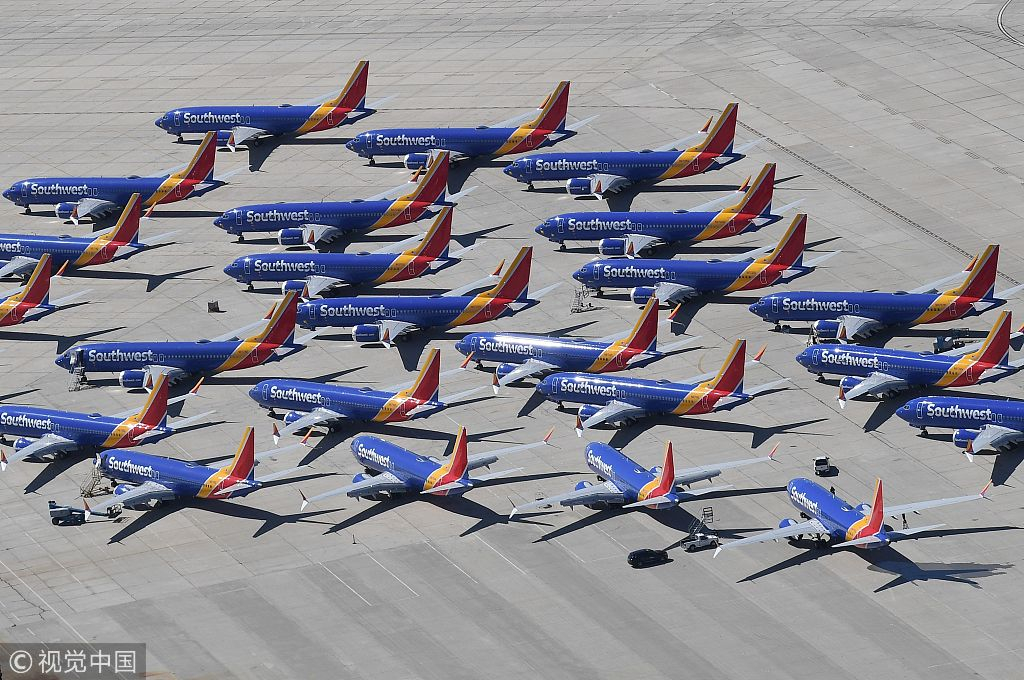
Southwest Airlines Boeing 737 MAX aircraft parked on the tarmac after being grounded, at the Southern California Logistics Airport in Victorville, California, on March 28, 2019. /VCG Photo
Southwest Airlines Boeing 737 MAX aircraft parked on the tarmac after being grounded, at the Southern California Logistics Airport in Victorville, California, on March 28, 2019. /VCG Photo
Moreover, another sore point for Boeing is that pilots who have flown the Max may not have received enough training that would involve Max's new features, including its MCAS program. News reports suggest that many of the pilots are not aware of the new system at all. A Chinese pilot who has over 8,000 flight hours and has piloted Boeing 737 Max echoed this, who, during an interview with Chinese magazine Vistastory, said that he was never introduced to this system during his training course of the Max.
These are no coincidence. Boeing once said that experienced 737 pilots needed little training for the new Boeing 737 Max model. But now such negligence has finally taken its toll.
On Thursday Boeing chief executive Dennis Muilenburg apologized over the two incidents and promised to take measures to regain public confidence in the company. But this journey may prove to be tough. Following the ET302 crash, countries around the world have all grounded the plane, fearing the risk of another dreadful event. When it comes to matters of life and death, no company can be too careful.
Stable and safe planes have been the name card of Boeing, which earned their reputation through decades of efforts. The reputation did not come easy. However, the hard-earned reputation can be scuppered in a much quicker and decisive manner and now it is high time for Boeing to fix the problem.
(If you want to contribute and have specific expertise, please contact us at opinions@cgtn.com.)