Not long after crowds of dazzling stars graced the staircases of the Met Gala, the Metropolitan Museum of Art's Costume Institute of New York's annual fundraiser, its institute peers are ready to celebrate another memorable day of their own, the International Museum Day, on Friday.
The International Museum Day (IMD), a day designated by the International Council of Museums (ICOM) on May 18 every year to bring the public closer to the museums, has embraced a new theme this year – “Hyperconnected museums: New approaches, new publics”.
Days ahead of the event, a number of Chinese museums have announced their ticket-free favorable policies for the public around the IMD. In the country’s capital Beijing, 99 museums opened to the public for free, while in Shanghai, the number has exceeded 100.
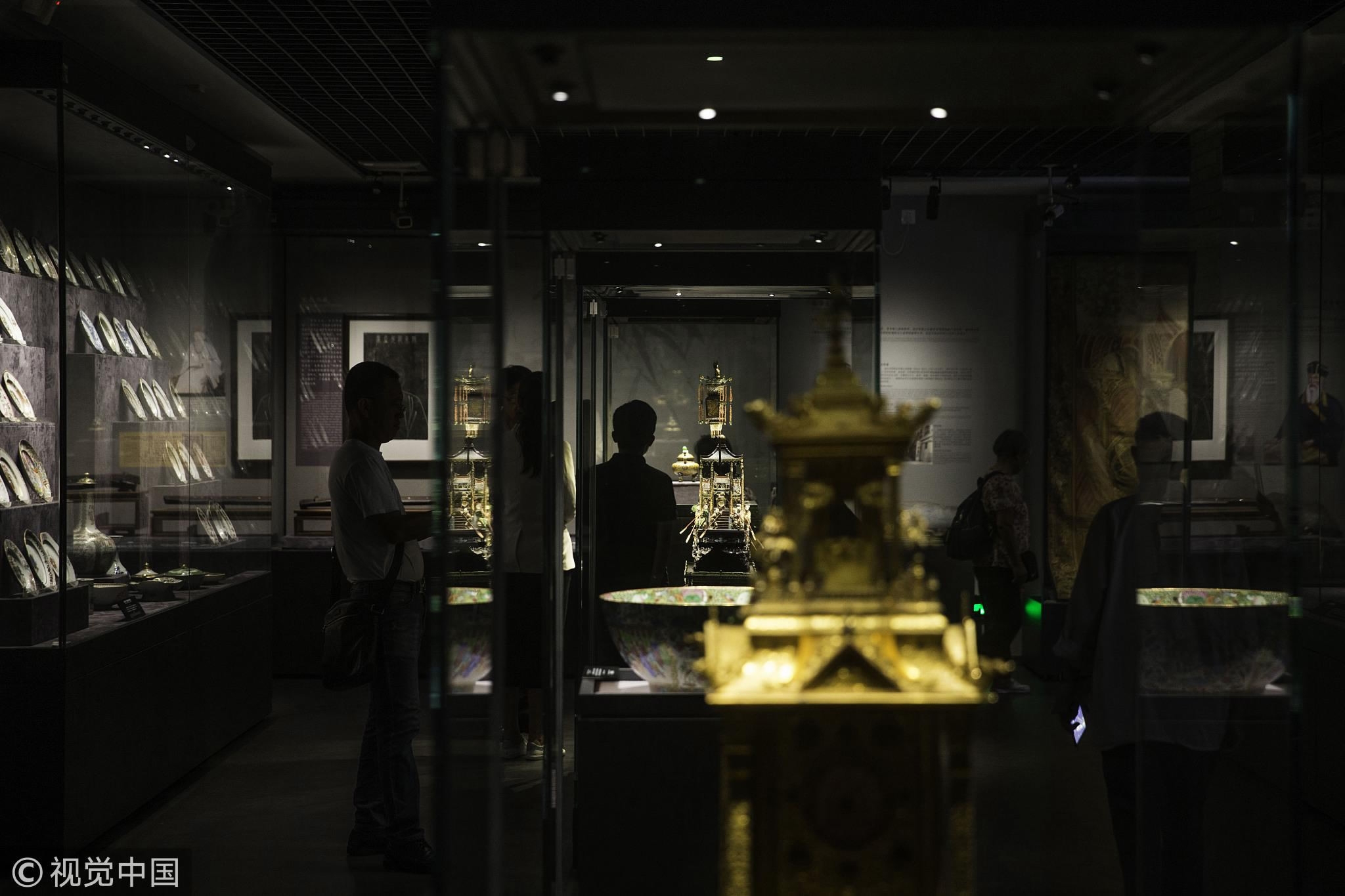
Visitors watch relics on display in the Guangzhou Museum, which is open to the public for free on Friday. /VCG Photo
Visitors watch relics on display in the Guangzhou Museum, which is open to the public for free on Friday. /VCG Photo
All for one purpose – to encourage more visitors to walk into the museums, to be closer to the exhibits, and hopefully, to resume their popularity in a world filled with numerous ways to access information and entertainment.
Many museums in the world have been trying different methods to earn back the hearts of their visitors.
Embracing fashion
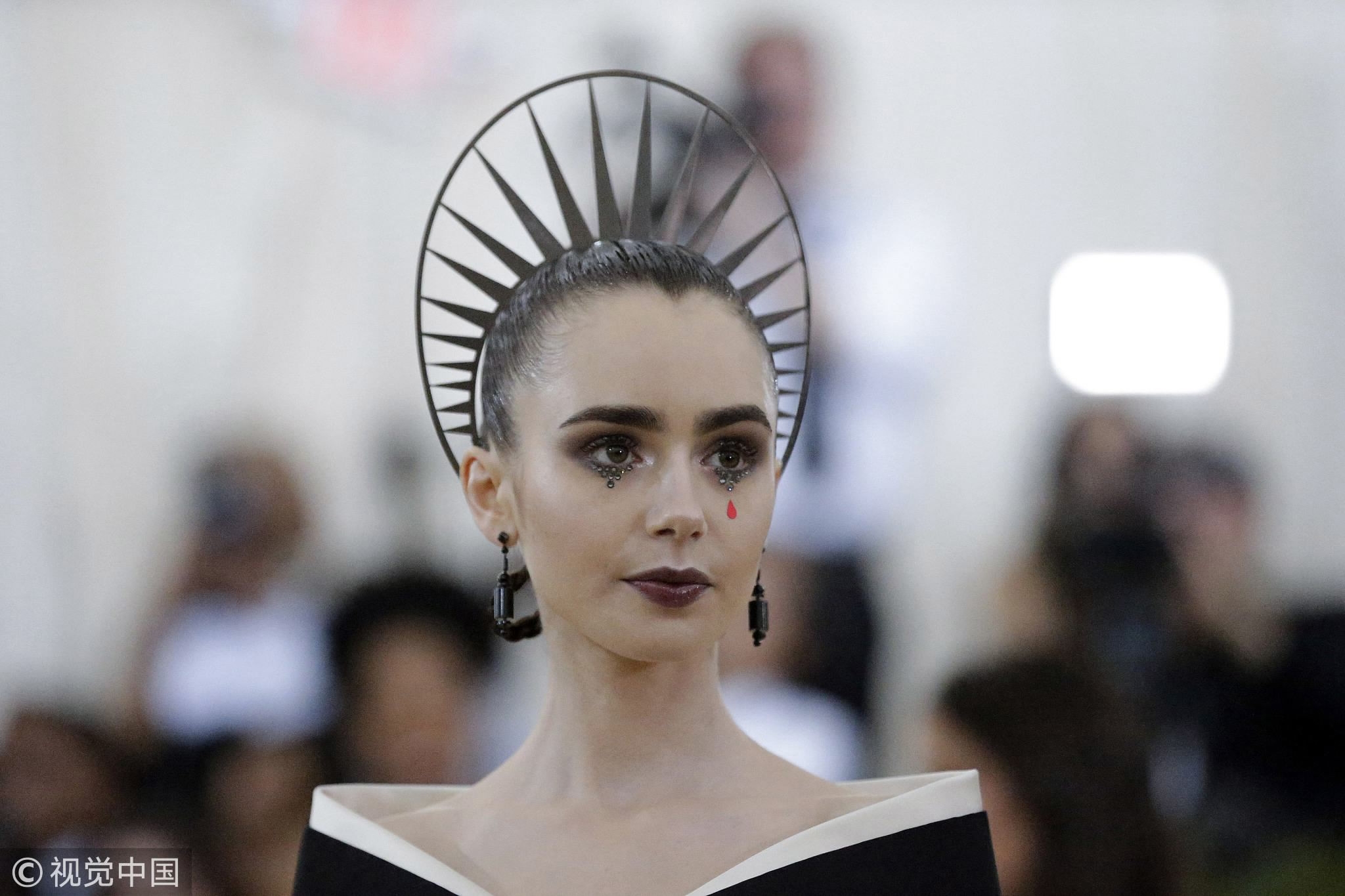
Lily Collins arrives on the red carpet at The Metropolitan Museum of Art's Costume Institute Benefit "Heavenly Bodies: Fashion and the Catholic Imagination" at Metropolitan Museum of Art in New York City on May 7. /VCG Photo
Lily Collins arrives on the red carpet at The Metropolitan Museum of Art's Costume Institute Benefit "Heavenly Bodies: Fashion and the Catholic Imagination" at Metropolitan Museum of Art in New York City on May 7. /VCG Photo
The Metropolitan Museum of Art in New York City is probably one of the most successful museums in attracting attention.
Despite the fact that the Met Ball, also known as the Costume Institute Gala, was launched back in the 1970s, it remains to be the most renowned event around the world. Every year, celebrities in fashion, entertainment and art realms gather in formal dresses according to the exhibition’s settled theme, opening the Met’s fashion exhibit.
This year, the theme was “Heavenly Bodies: Fashion and the Catholic Imagination”, the event saw celebrities walking on the red carpet in outfits sprinkled in divine elements, and aimed to showcase how religion has inspired the fashion industry.
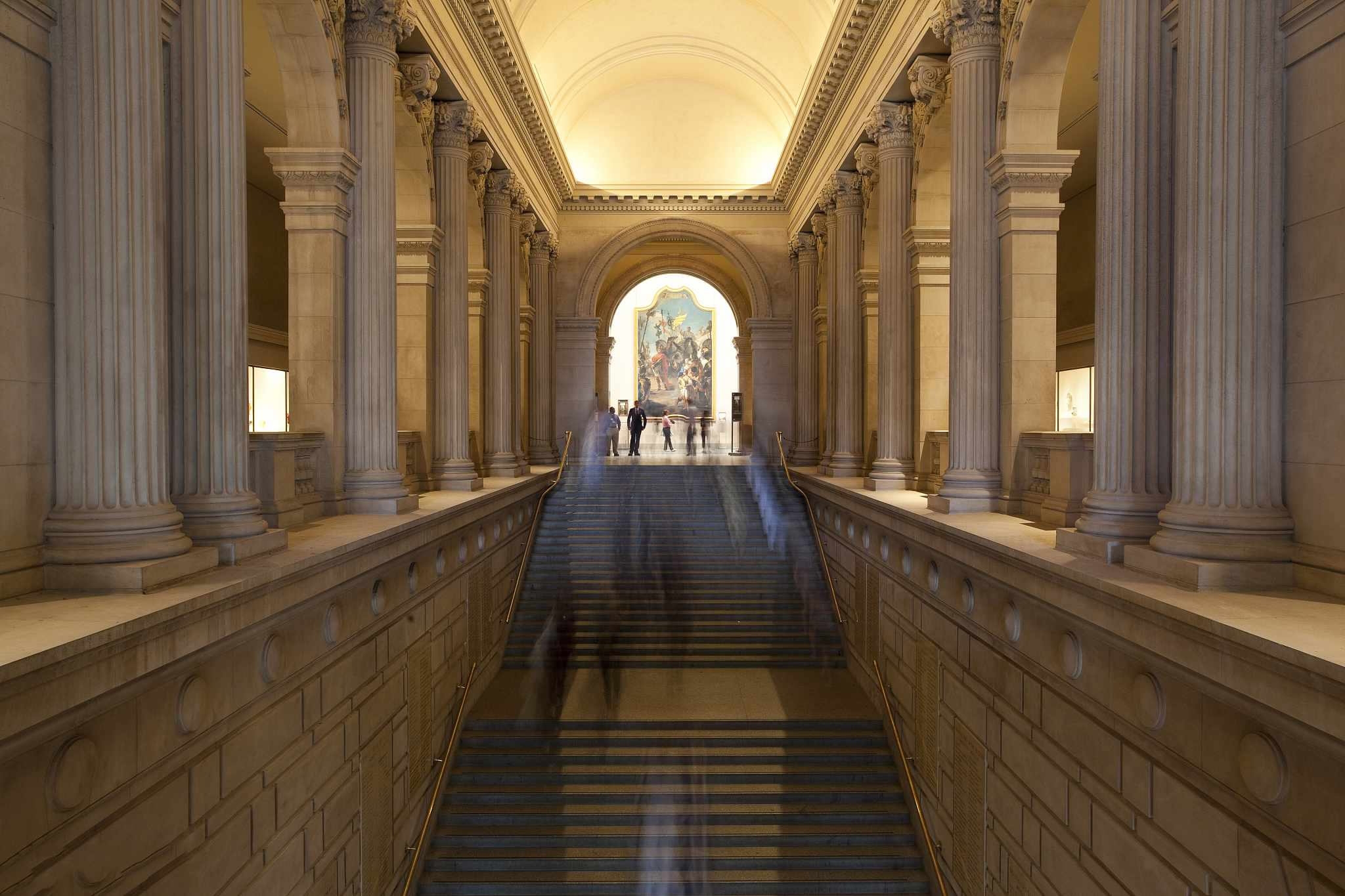
The Metropolitan Museum of Art in New York City, the US. /VCG Photo
The Metropolitan Museum of Art in New York City, the US. /VCG Photo
Back in 2015, Chinese elements were also explored in their theme “China: Through the Looking Glass”, while a number of Chinese celebrities, such as supermodel Liu Wen, actor Zhang Ziyi, Zhou Xun and singer Li Yuchun, Kris Wu attended the opening night.
After the event, there is a fashion exhibition at the Met that runs for several months. The Met Ball not only attracts the world’s cameras and visitors, but also does a good job in fundraising. According to the US media, in 2017, the Gala raised over 12 million US dollars for the Institute.
Embracing the young
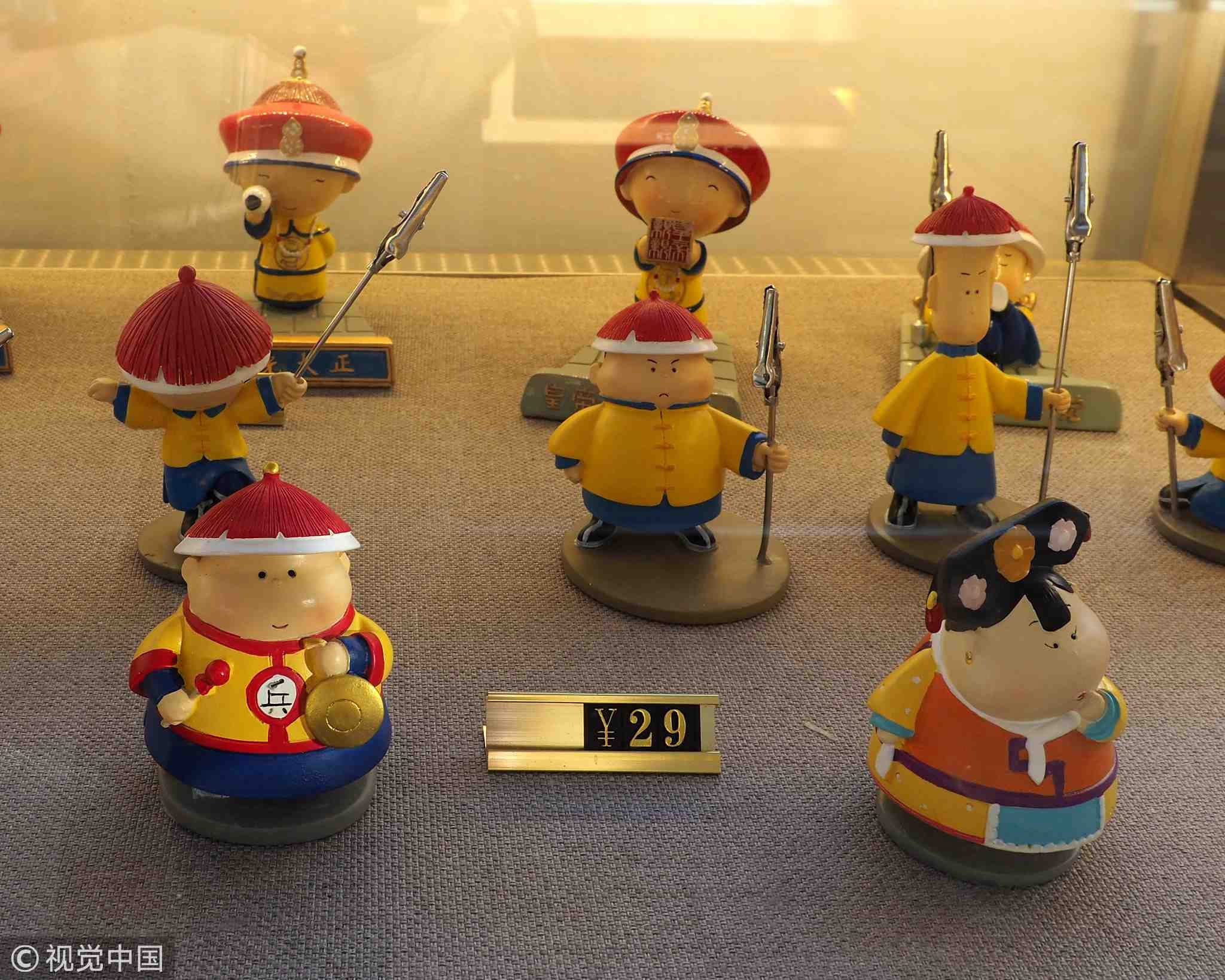
Cultural products from the Palace Museum. /VCG Photo
Cultural products from the Palace Museum. /VCG Photo
Back in China, the Palace Museum is taking the lead in embracing today's social media and pop culture.
In 2016, the museum became a blockbuster after a documentary series “Masters in Forbidden City” wowed the millennials on Bilibili, a Chinese video sharing website for ACG (animation, comic and game) culture.
In the past year there has been a boom of cultural variety shows in China and Chinese museums have played an impressive role in that. A number of programs were dominated by museums, such as the “The Nation’s Greatest Treasures”, which is jointly presented by the China Media Group and nine of China’s museums to introduce more ancient cultural relics.
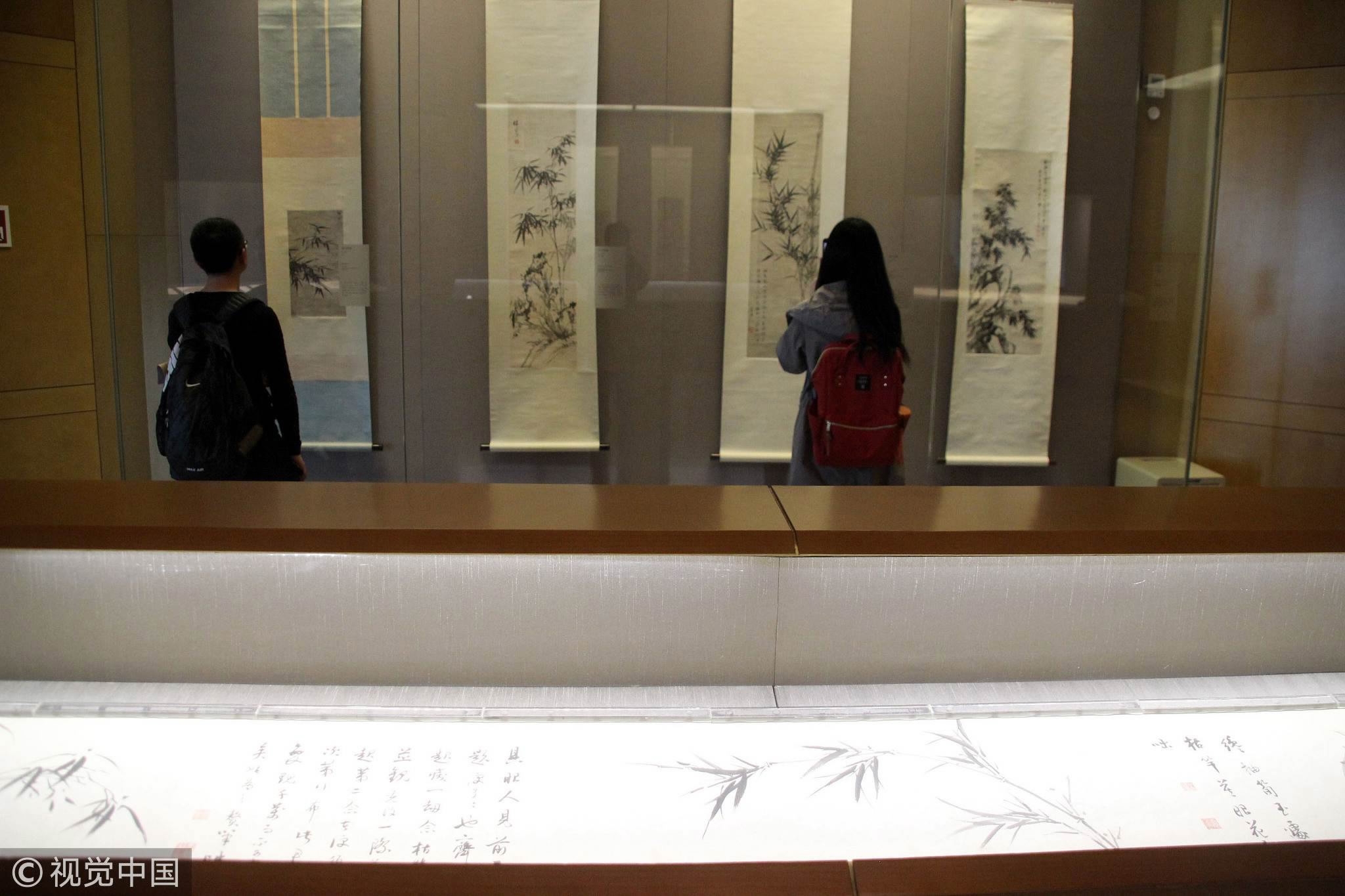
A visitor views Chinese paintings on display at Suzhou Museum. /VCG Photo
A visitor views Chinese paintings on display at Suzhou Museum. /VCG Photo
After the show was aired, museums have become a new hot spot for Chinese tourists. The search for museums on tourism websites has increased by 50 percent, and most of them were made by school students.
The micro documentary series “If Treasures Could Talk” has seen another museum fever take off in Chinese society. Adopting many of the online buzzwords, the documentary captured many younger viewers immediately after it was launched.
Embracing technology
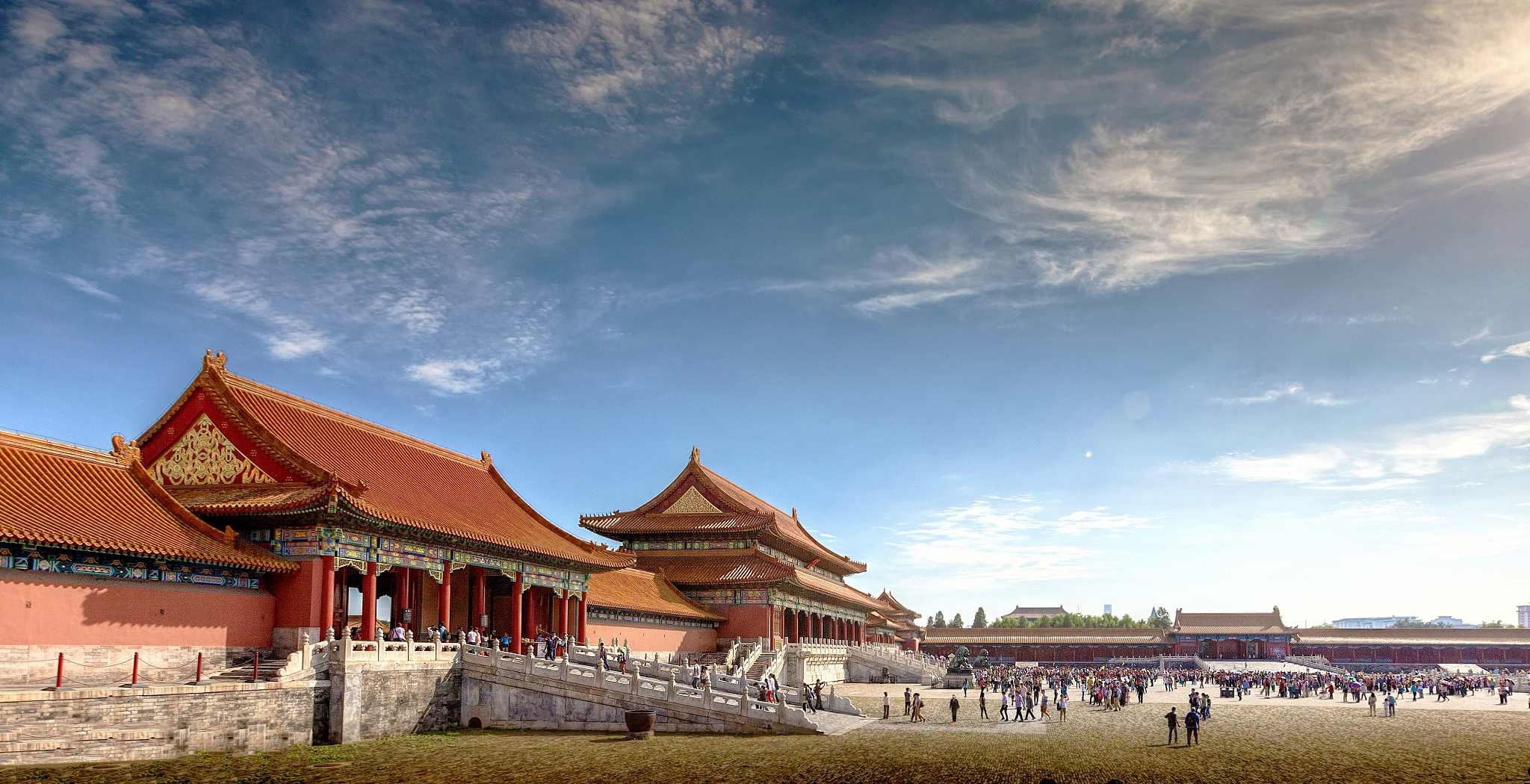
The Palace Museum in Beijing, China. /VCG Photo
The Palace Museum in Beijing, China. /VCG Photo
Besides the trending culture, many museums have also been shifting toward cutting-edge technologies in recent years. The Palace Museum is one of those museums that has recently piloted the technology.
In 2017, the 600-year-old palace compound launched a digital gallery, which allowed visitors to submerge themselves into the exhibitions though virtual reality (VR), artificial intelligence (AI) and interactive games. Visitors could experience how the emperors’ day would have looked like in the past.
The Palace Museum also joined hands with China’s tech giant Tencent to establish a creative lab, aiming at exploring the preservation of relics, high-tech products and applications in the digital era.
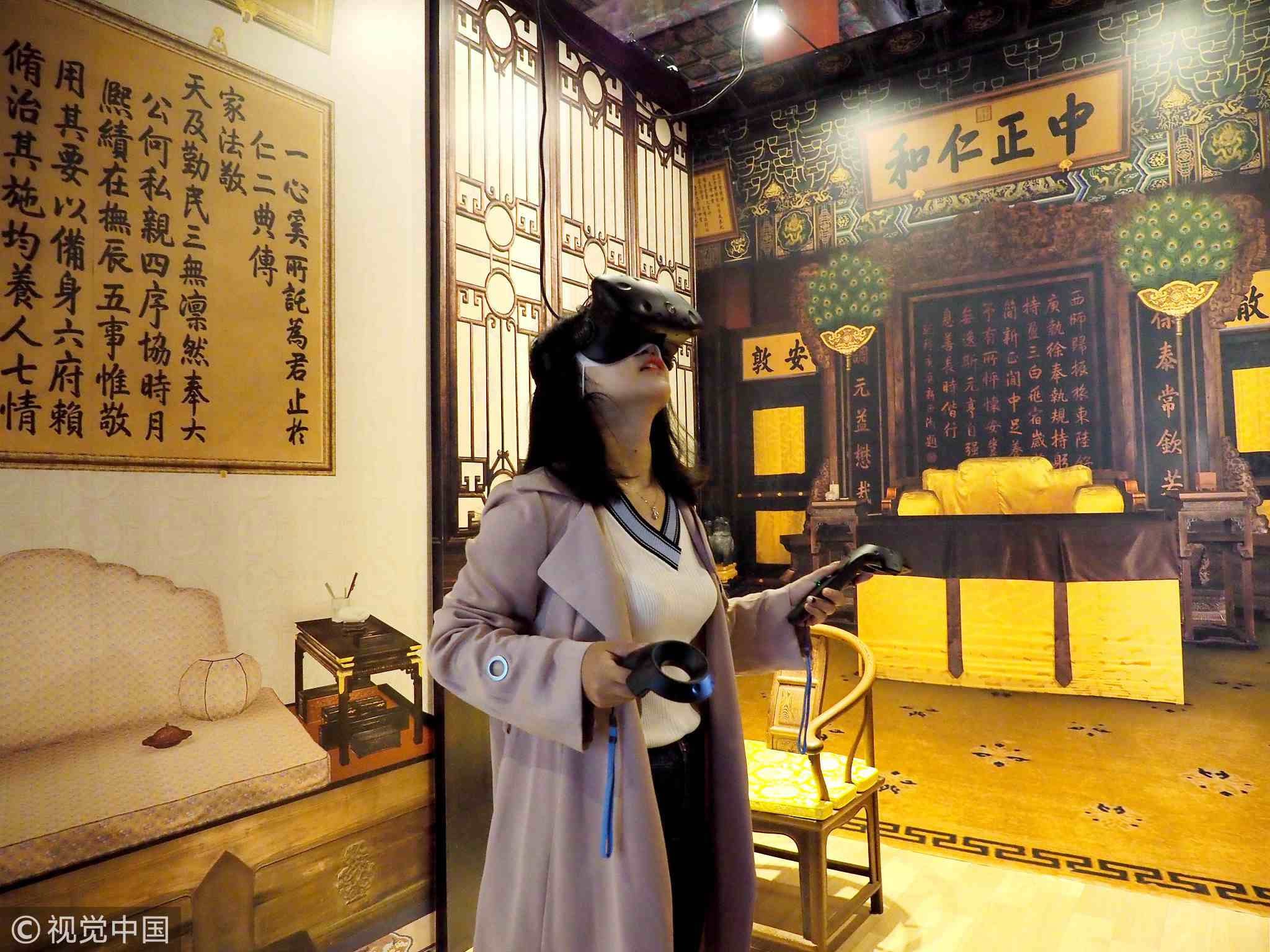
A visitor wearing VR headset while watching an exhibition at the Palace Museum. /VCG Photo
A visitor wearing VR headset while watching an exhibition at the Palace Museum. /VCG Photo
Chinese Museums are not alone in embracing technology, however, as their peers across the world have all embarked on the new journey. In the US, for instance, many art museums have started to use virtual reality technology to allow the public to watch their collections at home.
In the UK, the country’s Department for Digital, Media, Culture and Sports has also issued guidelines to teach museums how to “harness the potential of digital technology”, since visitors are no longer simply “passive receivers” of art and culture.
As part of the events to mark International Museum Day, the State Administration of Cultural Heritage jointly launched an “AI Museums Project” with tech giant Baidu, aiming to bring museum collections to the public through the internet.
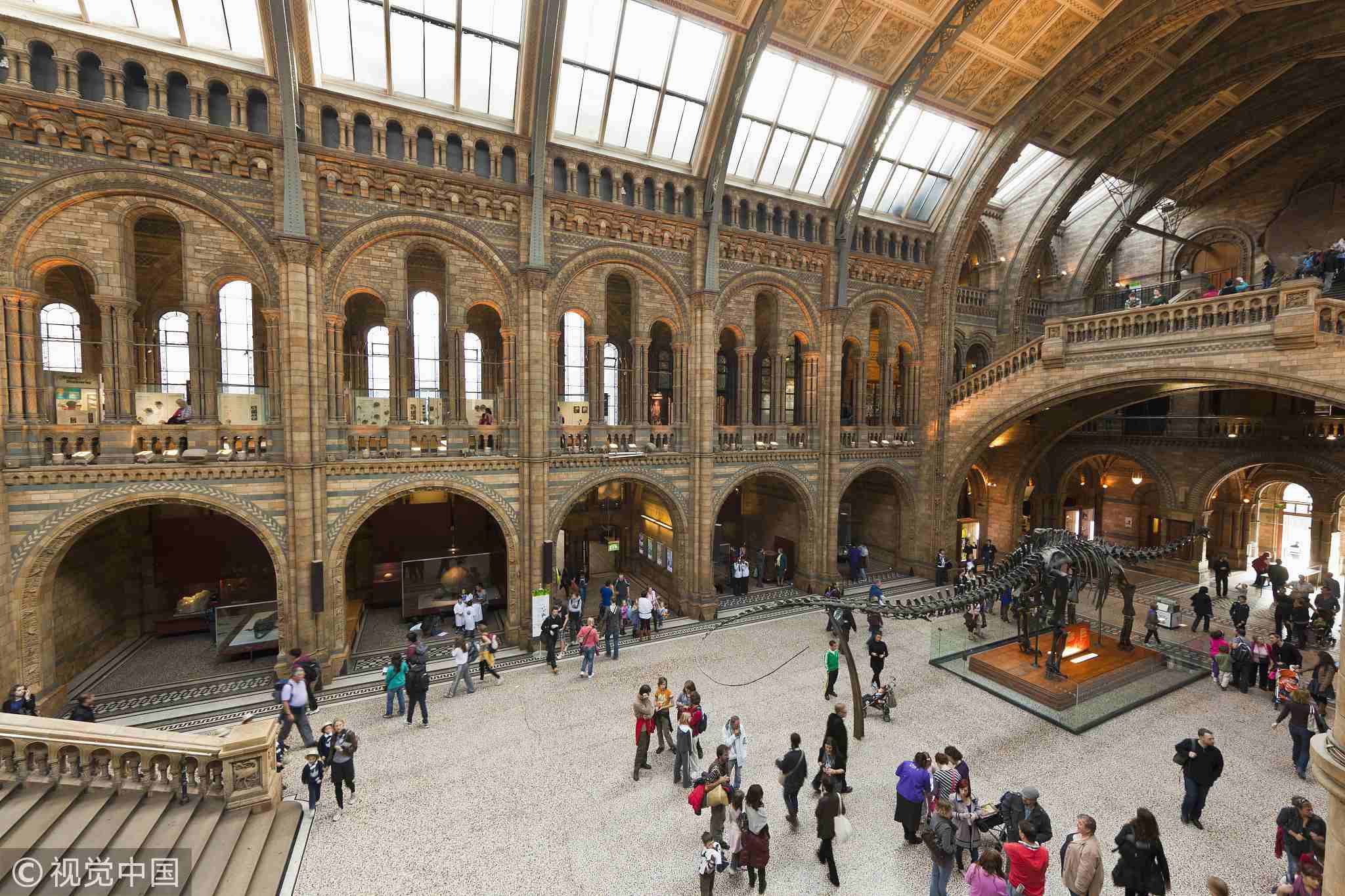
Visitors at the Main Staircase of the British Museum. /VCG Photo
Visitors at the Main Staircase of the British Museum. /VCG Photo
However, the concerns still exist despite the fact that technology is making art and culture more accessible in people’s daily life. Jane Alexander, Chief Information Officer of the United States’ Cleveland Museum of Art, one of the pioneers in exploring the high-tech’s application at museums, once expressed her concerns during an interview,
“We work with stunning technology and like to see high engagement,” she said, “but we want to make sure that the visit to museum is about art and not just technology.”
(Head image by Gao Hongmei)

 ["china"]