Editor's note: Kazuto Suzuki is vice dean and professor of international politics at the Public Policy School of Hokkaido University in Japan. The article reflects the author's opinion, and not necessarily the views of CGTN.
The presidential election for the Liberal Democratic Party (LDP) will take place on September 20.
The two candidates, Shinzo Abe, incumbent president, and Shigeru Ishiba, former party secretary-general, will be on the contest of 810 votes – 405 members of Diet (MD) will cast individual votes and an equal number of votes are allocated for general party members.
Although Abe expects to earn around 350 MD votes and a considerable portion of general votes, Ishiba may upset him by attracting votes from general members of the party. Even if Ishiba loses, the amount of general votes cast for him may reflect the level of discontent within the party regarding Abe's policies and ideas.
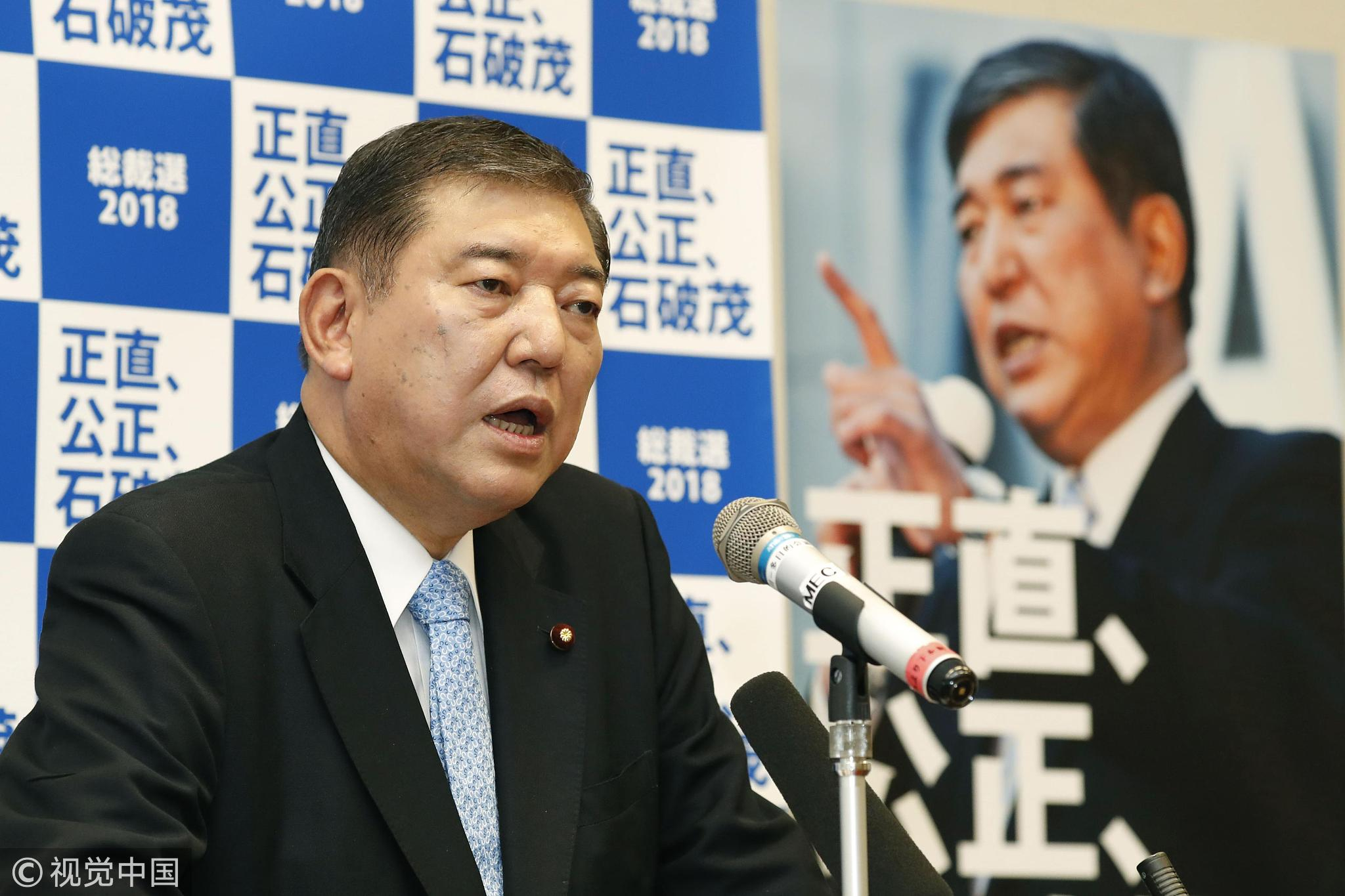
Former Japanese Defense Minister Shigeru Ishiba declares his candidacy for the forthcoming ruling Liberal Democratic Party presidential election during a press conference in Tokyo on August 10, 2018. /VCG Photo.
Former Japanese Defense Minister Shigeru Ishiba declares his candidacy for the forthcoming ruling Liberal Democratic Party presidential election during a press conference in Tokyo on August 10, 2018. /VCG Photo.
Ishiba's strategy for gaining general votes focuses on Abe's policy on distribution. He claims that during Abe's administration, the wealth is concentrated in major cosmopolitan cities due to deregulation and quantitative easing of monetary policies.
Since Ishiba's prospect of winning MD votes is very weak, he aims to gain general votes from rural regions that are left out of economic growth. In other words, if the number of general votes from rural areas cast for Ishiba are substantially large, Abe needs to shift his economic policy to focus on improving the well-being of these regions.
However, Abenomics has provided certain economic opportunities for rural areas, and his management of consecutive natural disasters has been efficient. Ishiba's support in these areas is not so strong.
Furthermore, LDP members want to have strong leaders in order to meet challenges from opposition parties and in times of Trump turbulence. So, it seems that Abe's victory in this race is certain.
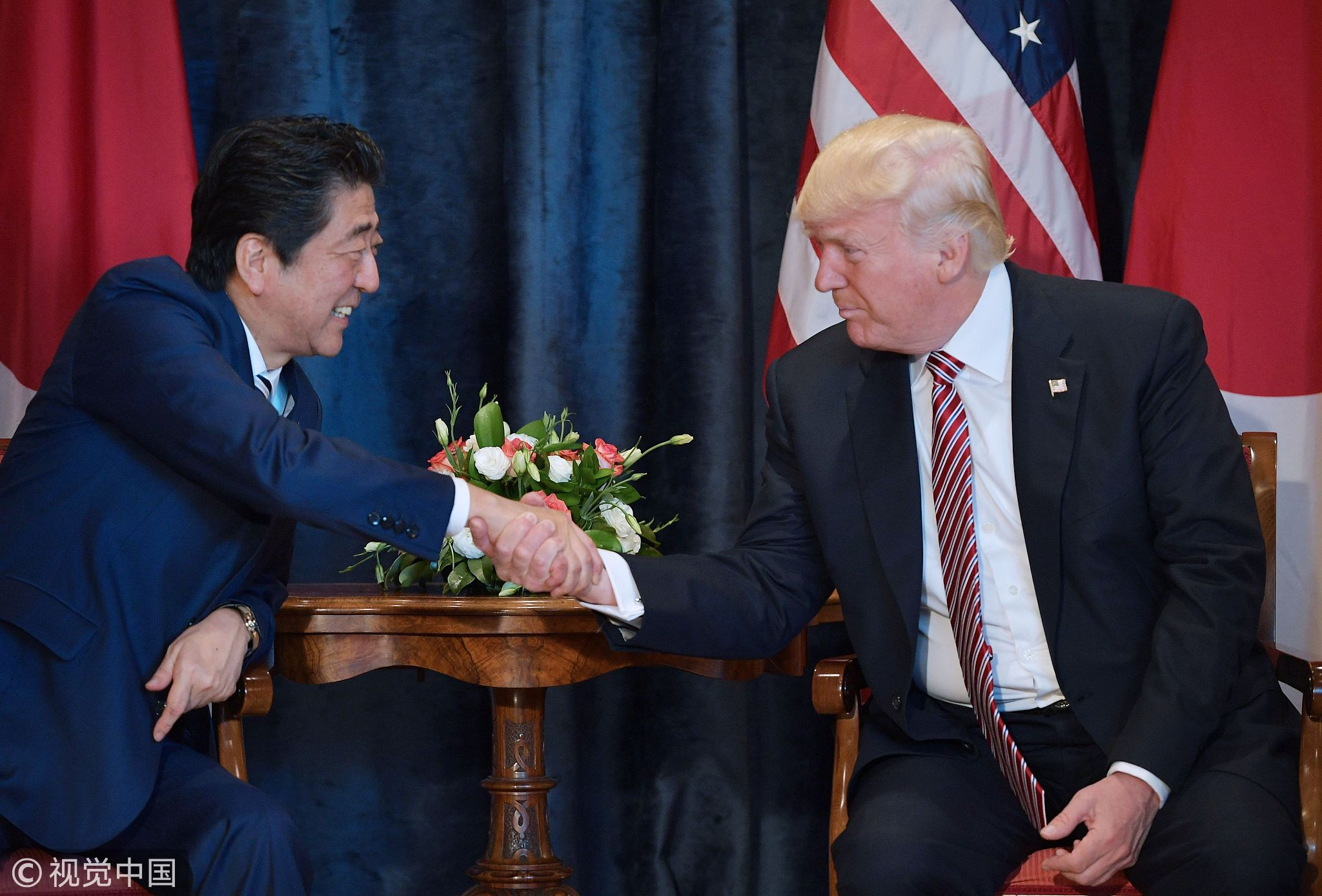
Japan's Prime Minister Shinzo Abe and US President Donald Trump shake hands before a meeting in the Oval Office of the White House in Washington, DC, on February 10, 2017. /VCG Photo.
Japan's Prime Minister Shinzo Abe and US President Donald Trump shake hands before a meeting in the Oval Office of the White House in Washington, DC, on February 10, 2017. /VCG Photo.
An Abe victory would be a continuation of current policies, including his rapprochement with China. Abe considers himself the leader of major industrial countries, as he holds the second longest tenure after Germany's Chancellor Angela Merkel.
With the Trump administration's retreat from multilateral frameworks such as the G7 and UN, Abe finds himself as a leader who maintains a good relationship with President Trump and the rest of the world.
Nevertheless, he is also aware of the possible confrontation with the Trump administration on the trade issue. Abe also tries to promote the CPTPP (Comprehensive and Progressive Agreement for Trans-Pacific Partnership) and RCEP (Regional Comprehensive Economic Partnership) to make sure that multilateral free trade frameworks will continue even in the wake of protectionism.
In this context, Abe is very keen on improving the relationship with China. However, Abe's number one agenda – constitutional reform – in this election may cause some controversy.
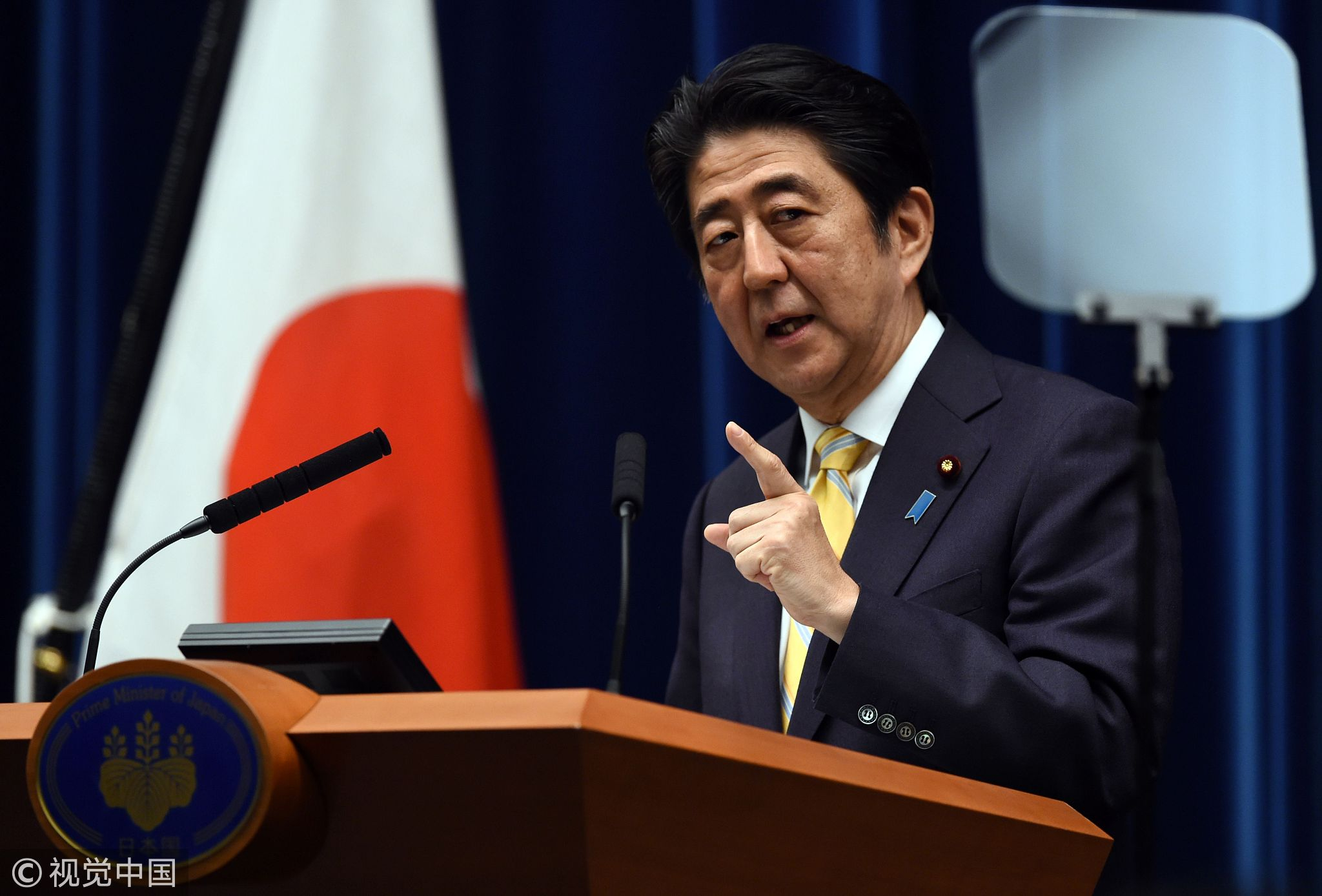
Japan's Prime Minister Shinzo Abe delivers a speech during a press conference following a cabinet meeting which approved a set of bills bolstering the role and scope of the military, in Tokyo on May 14, 2015. /VCG Photo.
Japan's Prime Minister Shinzo Abe delivers a speech during a press conference following a cabinet meeting which approved a set of bills bolstering the role and scope of the military, in Tokyo on May 14, 2015. /VCG Photo.
His intention to add a third clause to Article 9 of Japan's Constitution is to provide a constitutional foundation for the existence of the Self-Defense Forces (SDF).
For many years, there was a legal debate over whether the SDF was constitutional or not since Article 9 renounces Japan's engagement in war, and therefore the SDF should not exist as a regular standing force.
However, Japan's Supreme Court ruled that the country possess the right of self-defense, meaning that the SDF cannot possess aggressive capabilities but only respond to aggression by foreign forces.
This interpretation of Article 9 heavily restricted the actions of the SDF, which Abe regarded as unfair for its servicemen and women. It is also his aim to attack center-left parties that question the constitutionality of the SDF's actions every time it is deployed on missions.
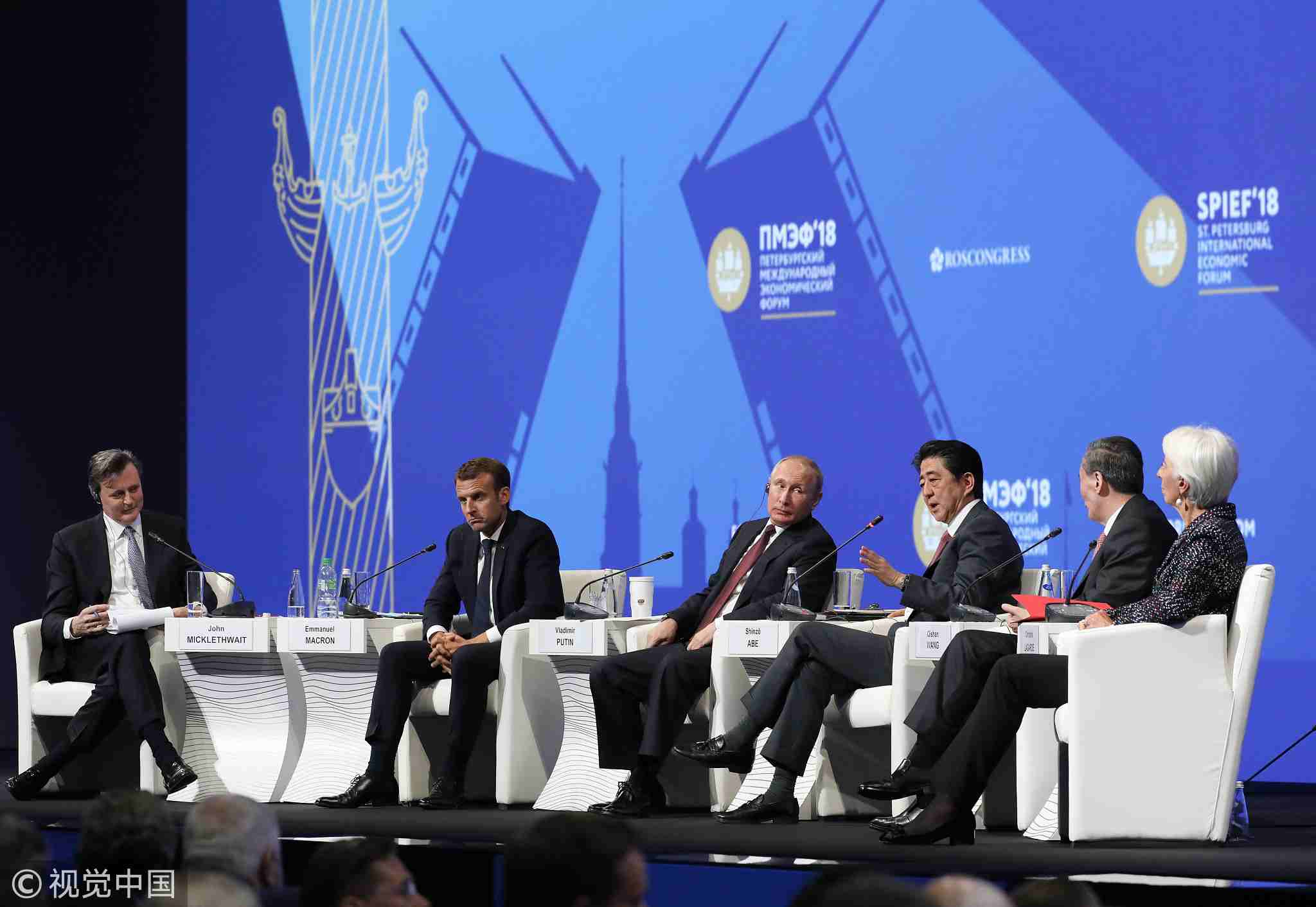
Abe attends the plenary session of the 2018 Saint Petersburg International Economic Forum in Saint Petersburg, Russia, on May 25, 2018. /VCG Photo.
Abe attends the plenary session of the 2018 Saint Petersburg International Economic Forum in Saint Petersburg, Russia, on May 25, 2018. /VCG Photo.
It is not clear whether his challenge for constitutional reform will be successful even if he wins a large majority of votes in the LDP leadership election, but if he succeeds, it may result in more freedom for the SDF, which might raise China's concern.
Abe's victory will be good news for the Japan-China relationship in the short run, particularly in economics and trade.
However, regarding security, it may not be positive in the medium to long-term. To maintain good Japan-China relations, it is imperative to ease tension and establish confidence-building measure to avoid confrontation.
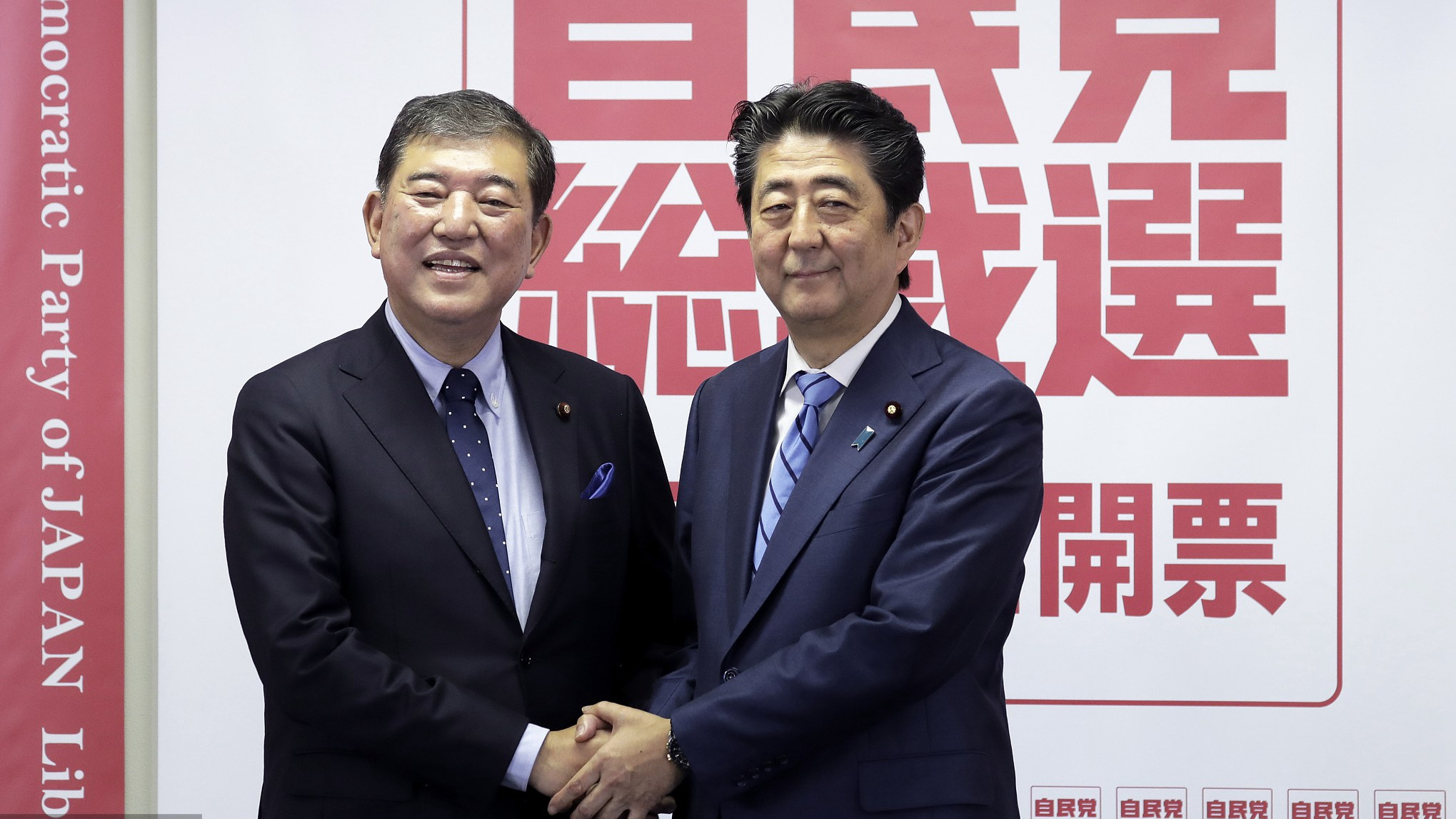
(Cover: Japanese Prime Minister and ruling Liberal Democratic Party President Shinzo Abe shakes hands with former Defense Minister Shigeru Ishiba as they hold a press conference for the party leadership election at the LDP headquarters in Tokyo, September 10, 2018. /VCG Photo.)
(If you want to contribute and have specific expertise, please contact us at opinions@cgtn.com.)

 ["china"]