00:48
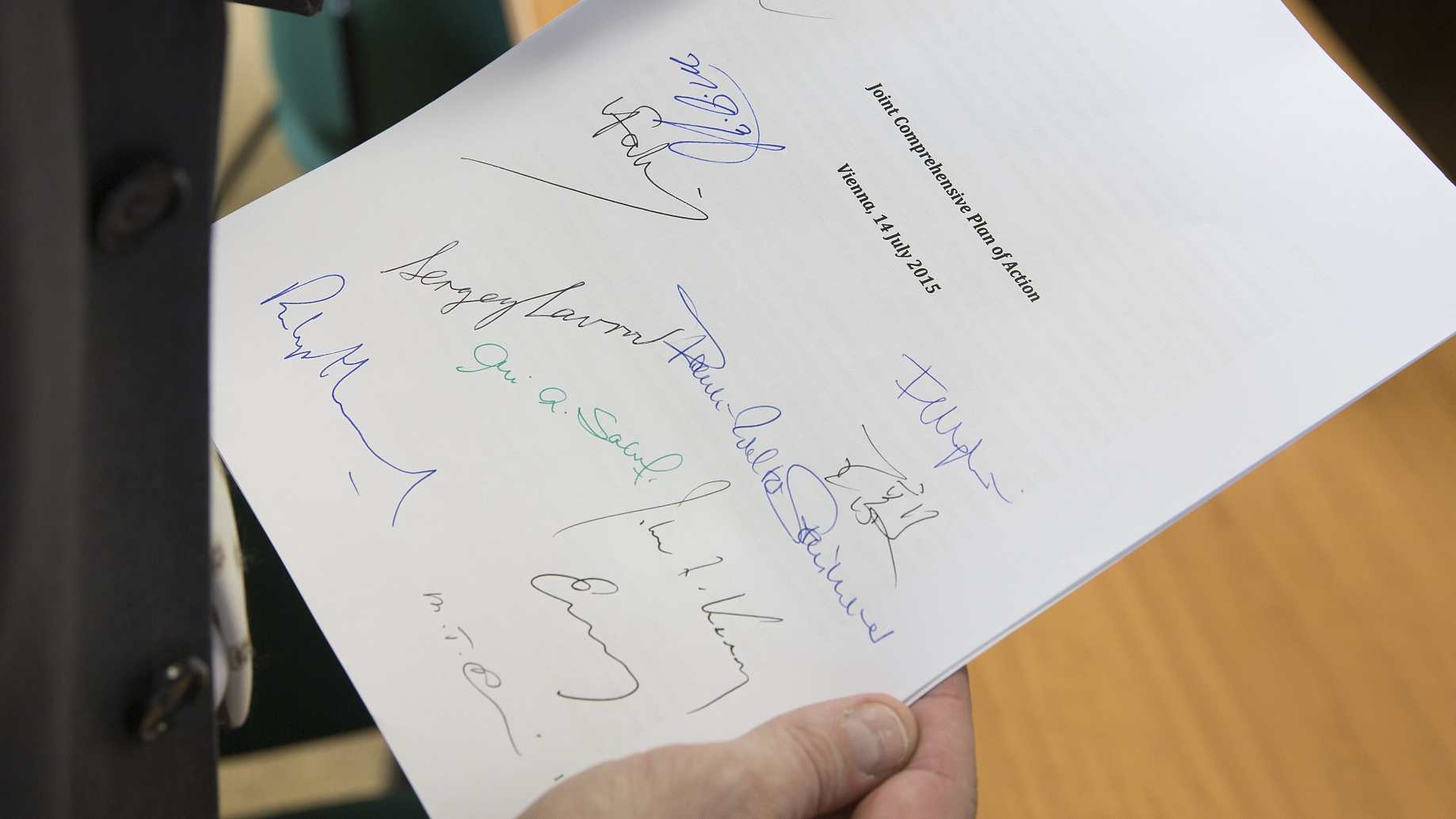
Two weeks on from the Trump administration's decision to withdraw the US from the Iran nuclear deal, the remaining signatories will meet in Vienna on Friday in search of a new strategy to save the agreement.
All sides have engaged in a whirlwind of diplomacy since May 8: the US to set the table for a new deal, the other parties -- Iran, China, Russia, France, Britain, Germany -- to keep the Joint Comprehensive Plan of Action (JCPOA) alive.
As German Foreign Minister Heiko Maas described the situation on Wednesday after meetings with US officials, "we're pursuing two completely different paths."
JCPOA?
Officials from Iran, China, Russia, France, Britain, Germany have flown around the world since the US pullout, seeking solutions that would allow Iran to retain the economic benefits of the JCPOA while keeping its nuclear program within the main restrictions imposed by the 2015 deal.
The International Atomic Energy Agency reiterated on May 24, in its eleventh report, that Tehran was keeping to its side of the bargain.
Read more
Iranian officials are expected to seek guarantees at the talks on Friday, which will be chaired by the EU, that the Europeans can protect trade and that all parties will continue to buy Iranian oil.
Europe remains "very, very united" in wanting to preserve the JCPOA, Haas said on Wednesday, despite concerns over the scope of the deal. The EU is expected to call for a "comprehensive negotiating framework" to address concerns including Iran’s ballistic missile program, its role in Middle East conflicts and what happens after the deal begins to expire in 2025.
August 6: US sanctions will be reimposed on the purchase of US dollars by the Iranian government, Iran’s trade in gold and precious metals, trade in graphite, raw or semi-finished metals, coal and industrial-related software.
November 4: US sanctions will be reimposed on Iran’s energy sector -- including oil-related transactions -- plus Iran’s shipping and shipbuilding sectors. Foreign financial institutions will face sanctions for transactions with the Central Bank of Iran.
Iran’s Foreign Minister Mohammed Javad Zarif said he expected “a new package” within the boundaries of the agreement, however, and not including “any other issues” to be presented.
Some Western companies have already stopped doing business with Iran in order to avoid getting caught in US sanctions, and Washington announced a series of new measures on Thursday.
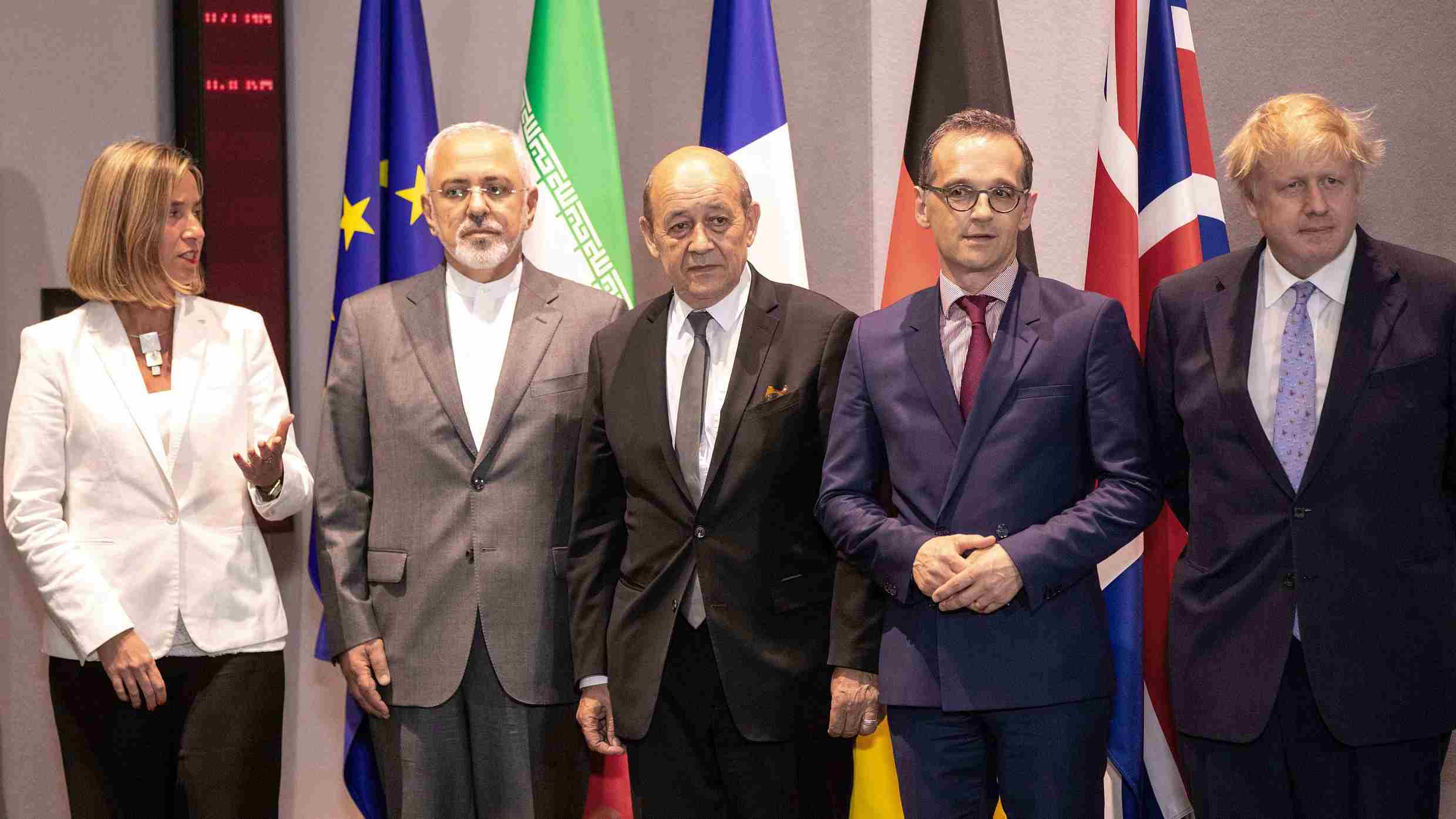
Iran's Foreign Minister Mohammad Javad Zarif (2nd R), Britain's Foreign Secretary Boris Johnson (R), France's Foreign Minister Jean-Yves Le Drian (C), Germany Foreign Minister Heiko Maas (2nd R) and EU High Representative for Foreign Affairs Federica Mogherini (L) pose before a meeting of EU/E3 with Iran at the EU headquarters in Brussels on May 15, 2018. /VCG Photo
Iran's Foreign Minister Mohammad Javad Zarif (2nd R), Britain's Foreign Secretary Boris Johnson (R), France's Foreign Minister Jean-Yves Le Drian (C), Germany Foreign Minister Heiko Maas (2nd R) and EU High Representative for Foreign Affairs Federica Mogherini (L) pose before a meeting of EU/E3 with Iran at the EU headquarters in Brussels on May 15, 2018. /VCG Photo
Chinese Foreign Ministry spokesman Lu Kang said on Wednesday, "China will remain in dialogue and negotiation with all relevant parties and stay committed to upholding and implementing the JCPOA with an objective, impartial and responsible attitude."
The talks are likely to kick off a new round of diplomacy as the two deadlines approach for broad US sanctions, on August 6 and November 4.
New deal?
The US appears in no mood to grant the carve-outs European companies need to avoid US sanctions, however, with one European diplomat telling Reuters a speech by Secretary of State Mike Pompeo on Monday was "like taking a cold shower."
Pompeo issued a list of 12 demands, including abandoning uranium enrichment and its missile program, and threatened Tehran with "the strongest sanctions in history."
The US is attempting to exert maximum pressure in order to bring Tehran back to the negotiating table, a similar strategy to that employed against the DPRK and previously against Iran before the 2015 JCPOA deal.
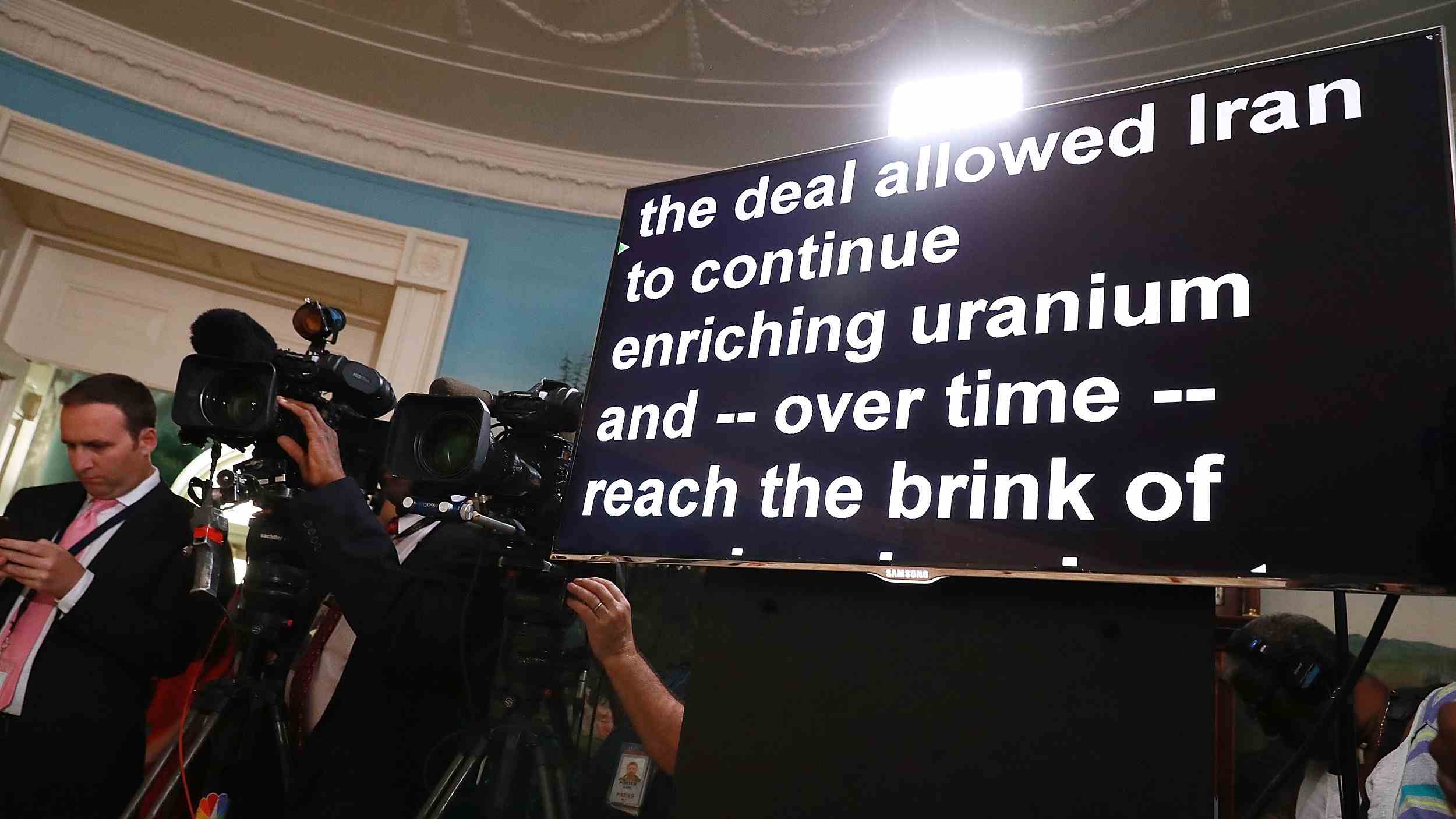
A television displays US President Donald Trump's remarks as he announces his decision to withdraw the United States from the 2015 Iran nuclear deal at the White House on May 8, 2018, in Washington, DC. /VCG Photo
A television displays US President Donald Trump's remarks as he announces his decision to withdraw the United States from the 2015 Iran nuclear deal at the White House on May 8, 2018, in Washington, DC. /VCG Photo
"There’s little to no appetite in European capitals for the type of economic sanctions the US is bringing back,” Ellie Geranmayeh, a senior fellow at the European Council on Foreign Relations, told Bloomberg. “Following Pompeo’s demands there are a lot of eyes rolling and heads fuming.”
The European position is further complicated by the trade disputes the EU is simultaneously negotiating a solution to with the US.
The US is also looking to bring more countries into a future deal, according to Pompeo, who said: "I want the Australians, the Bahrainis, the Egyptians, the Indians, the Japanese, the Jordanians, the Kuwaitis, the Omanis, the Qataris, the Saudi Arabians, South Korea, the UAE and many, many others worldwide to join in this effort."
Support for the US withdrawal from the JCPOA came from Israel, Saudi Arabia and the UAE.
What's next?
All remaining signatories are working to keep the JCPOA alive, but the risk remains that the US attempts to undermine the original deal will make it difficult for the European countries to offer enough to Iran.
No deal probably means the continuation of hardline sanctions from the US and allies. Tehran has said that if the JCPOA falls, it may begin an accelerated uranium enrichment program. For now, the exhaustive "shuttle diplomacy" will continue.

 ["other"]