
Opinions
17:35, 16-Aug-2018
Opinion: US military strategies: Making sure global volatility lasts forever
Updated
17:15, 19-Aug-2018
 ["china"]
Share







Copied
Editor's note: Ghanbar Naderi is an Iranian columnist and political commentator. The article reflects the author's opinions, and not necessarily the views of CGTN.
According to several international polls, the United States is viewed by people around the world to be the biggest threat to world peace and stability.
For example, an end-of-the-year WIN/Gallup International survey in 2017 found that “people in 65 countries believe the US is the greatest threat to world peace.”
Also recently, a Pew Research Center issued results of their polling of 30 nations in which respondents had been asked: “Do you think that the United States’ power and influence is a major threat?” The “major threat” category was selected by 35 percent of respondents worldwide for the US. More respondents among the 30 sampled countries also saw the US as “a major threat,” than saw either Russia or China that way.
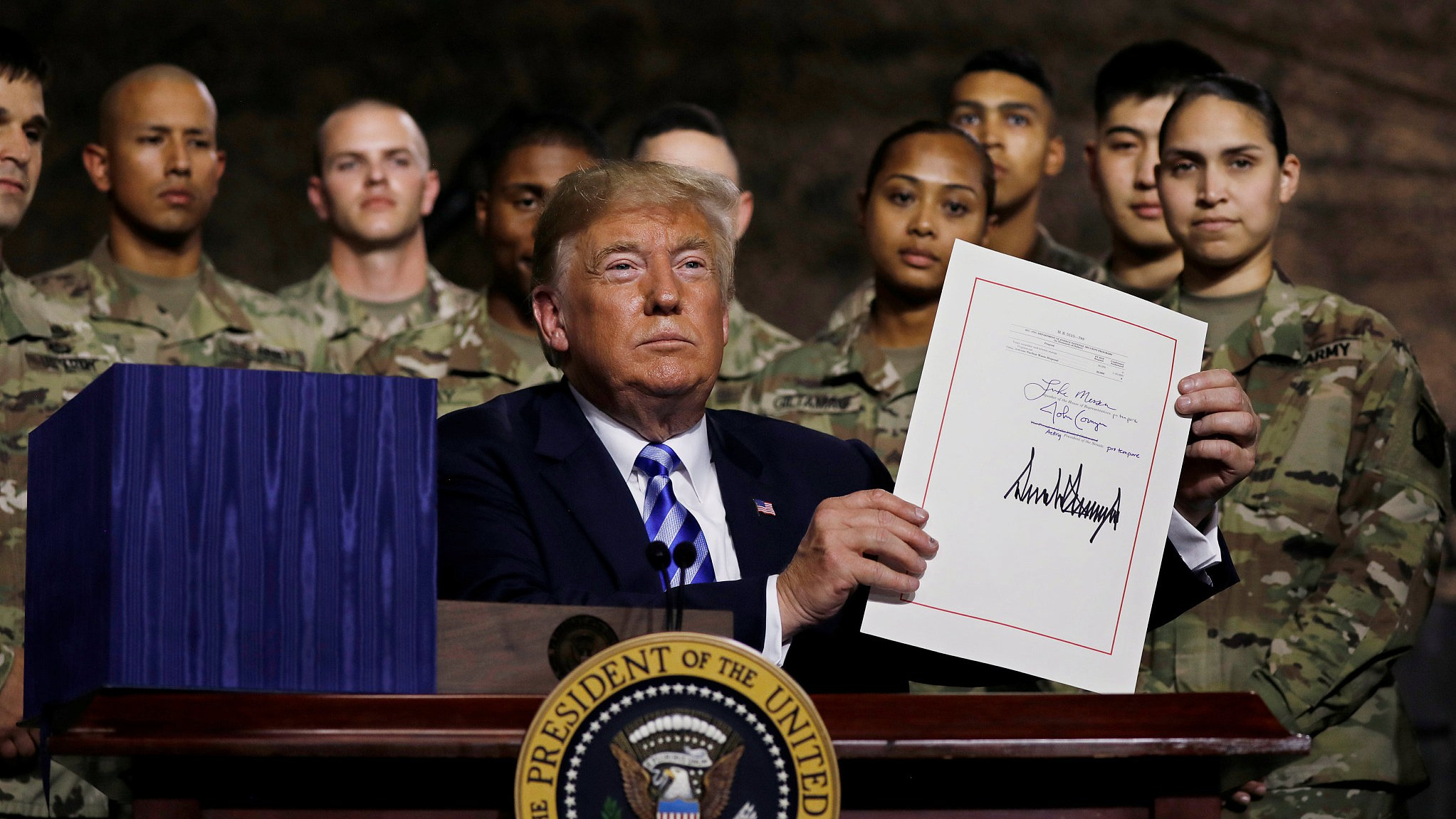
Still, that didn’t stop US President Donald Trump from singling out Russia, the Democratic People's Republic of Korea (DPRK), China and Iran as “adversaries” that need to be countered. He made that claim on Monday, August 13, after signing the 2019 US military spending bill into law, authorizing the Defense Department to invest 716 billion US dollars – the largest in US history – into military strategies.
The myth of a China threat
It is a Trump myth that China has become the new world hegemony. China’s economic and military growth certainly has changed the world. But China’s growth is not a strategic threat to the US or any other country. In many respects, it is quite positive.
China’s Belt and Road initiative – the country’s investment in numerous infrastructure projects along the old Silk Road across Eurasia – could lead to greater regional integration, more prosperity, and a decline in ethnic/religious tensions.
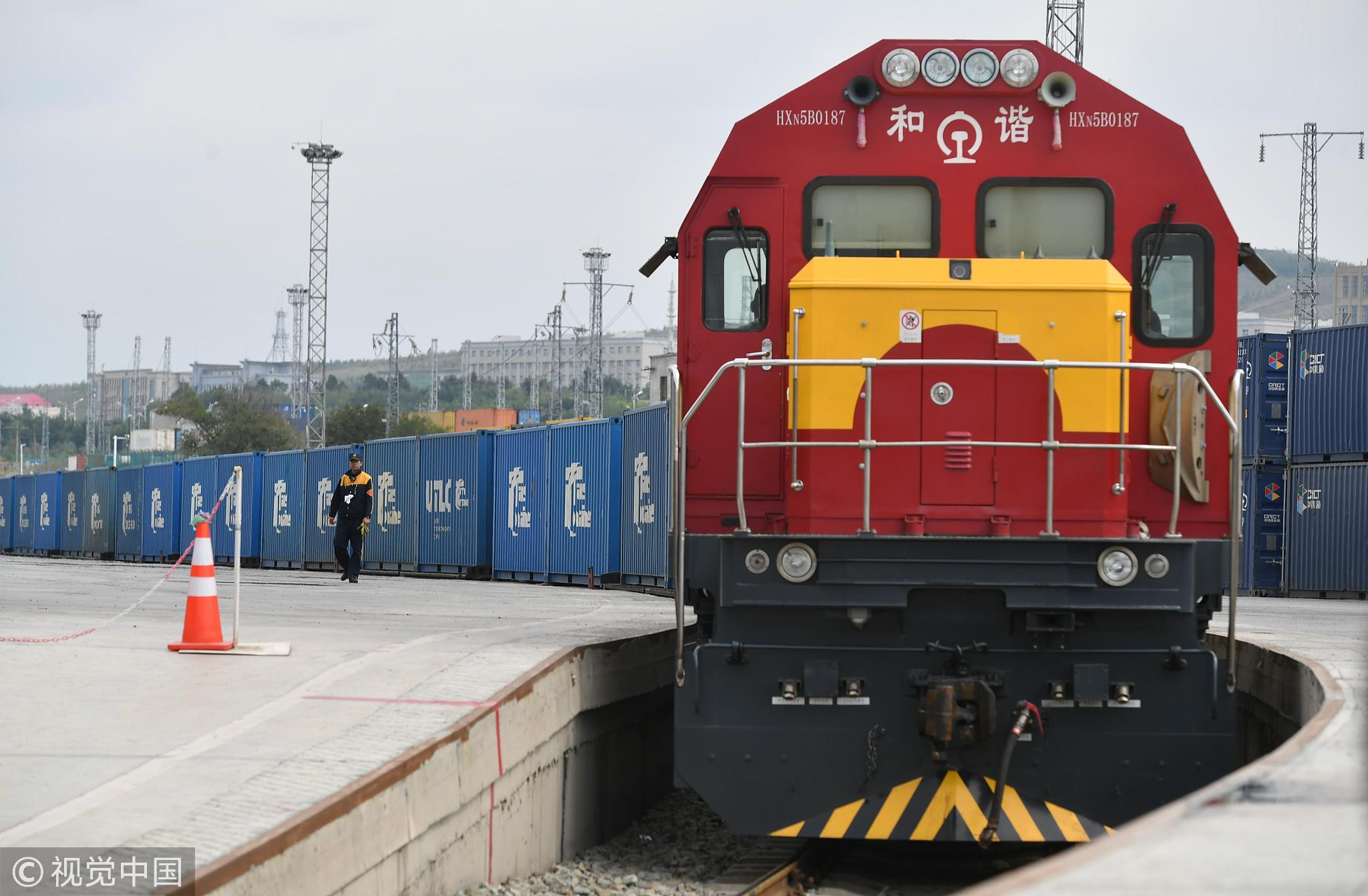
The X9401 train from Urumqi, China, to Moscow loaded with cargo moves out of the China Railway Express assembly center on August 13, 2018. /VCG Photo
The X9401 train from Urumqi, China, to Moscow loaded with cargo moves out of the China Railway Express assembly center on August 13, 2018. /VCG Photo
China is similarly investing in major infrastructure projects in a host of Middle Eastern and African countries. Common sense dictates this should be highlighted not criticized.
China’s economic growth has been beneficial overall for the global economy. Economic figures by the United Nations and the World Bank indicates that the world is much better off with a growing China. While Trump would like to suggest that some American manufacturing jobs may have been lost to China, these jobs would have been lost to other nations anyway.
The same argument could be made about China’s military growth. Like any other nation, China has the right to defend its interests and its defense doctrine poses no challenge whatsoever to any country. The US must begin to think of how to manage this new reality in a productive way. Going against the One-China policy, damaging the development of Sino-US military-to-military relations, and undermining mutual trust and cooperation is not the way forward.
Russia menace is overblown
The “threat of Russia” has been seriously overblown. To be sure, Russia is expanding its regional influence, but there is no reason to believe it’s on the cusp of becoming an “Empire of Bases” that could rival the likes of the US in the Middle East and beyond. Russian forces are in Syria to fight terrorists and keep the war-torn country as a unitary state. They are not there to challenge the US.
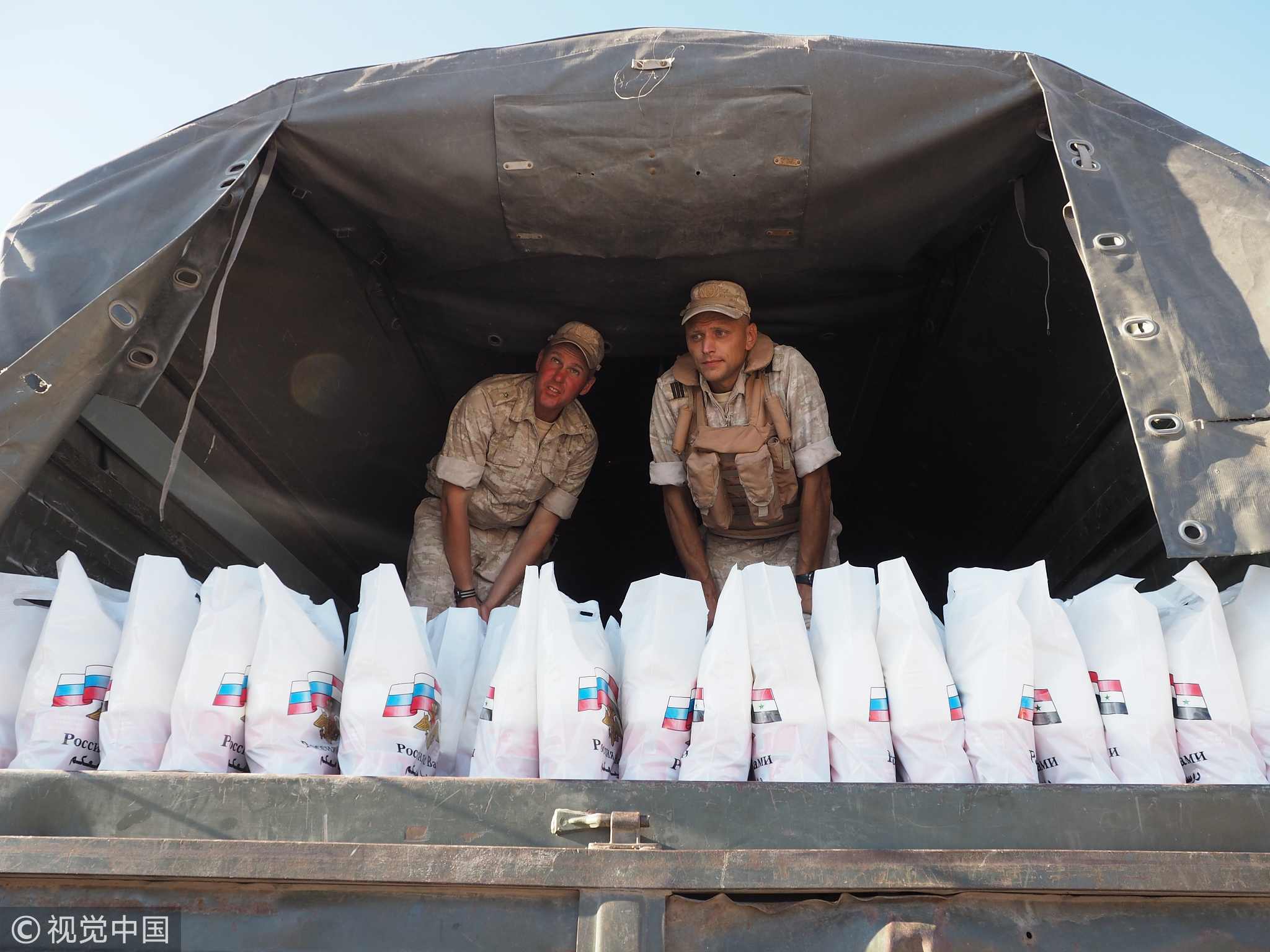
Russian servicemen give out humanitarian aid in the town of Al-Rastan on August 15, 2018. /VCG Photo
Russian servicemen give out humanitarian aid in the town of Al-Rastan on August 15, 2018. /VCG Photo
Washington is right to spawn suspicions that Moscow is seeking to split Europe and America. EU leaders keep going to Moscow in response to overtures from the Kremlin plus the fact that they don’t want a long-drawn-out US proxy war in Europe.
DPRK favors diplomacy
The pivot-to-Asia hoodlums have familiar things in mind as regards the DPRK. They are the ones that voided the 2015 Iran nuclear deal. Now they want the DPRK to disarm but won’t give anything in return. Pyongyang wants to talk and to have UN sanctions lifted; a sign that it has no intention of destabilizing the Peninsula because it knows exactly how high the stakes are.
The world public heartily supports diplomacy. Reports suggest that Trump is still looking for a diplomatic solution. As the Pentagon’s top commander in the Pacific, Adm. Harry B. Harris Jr, once told the House Armed Services Committee, “We want to bring Kim Jong Un to his senses, not to his knees.”
If true, this should be welcome news. Unfortunately, Trump’s sanctions, blusters and threats have the potential to derail Pyongyang’s genuine desire for peaceful resolution.
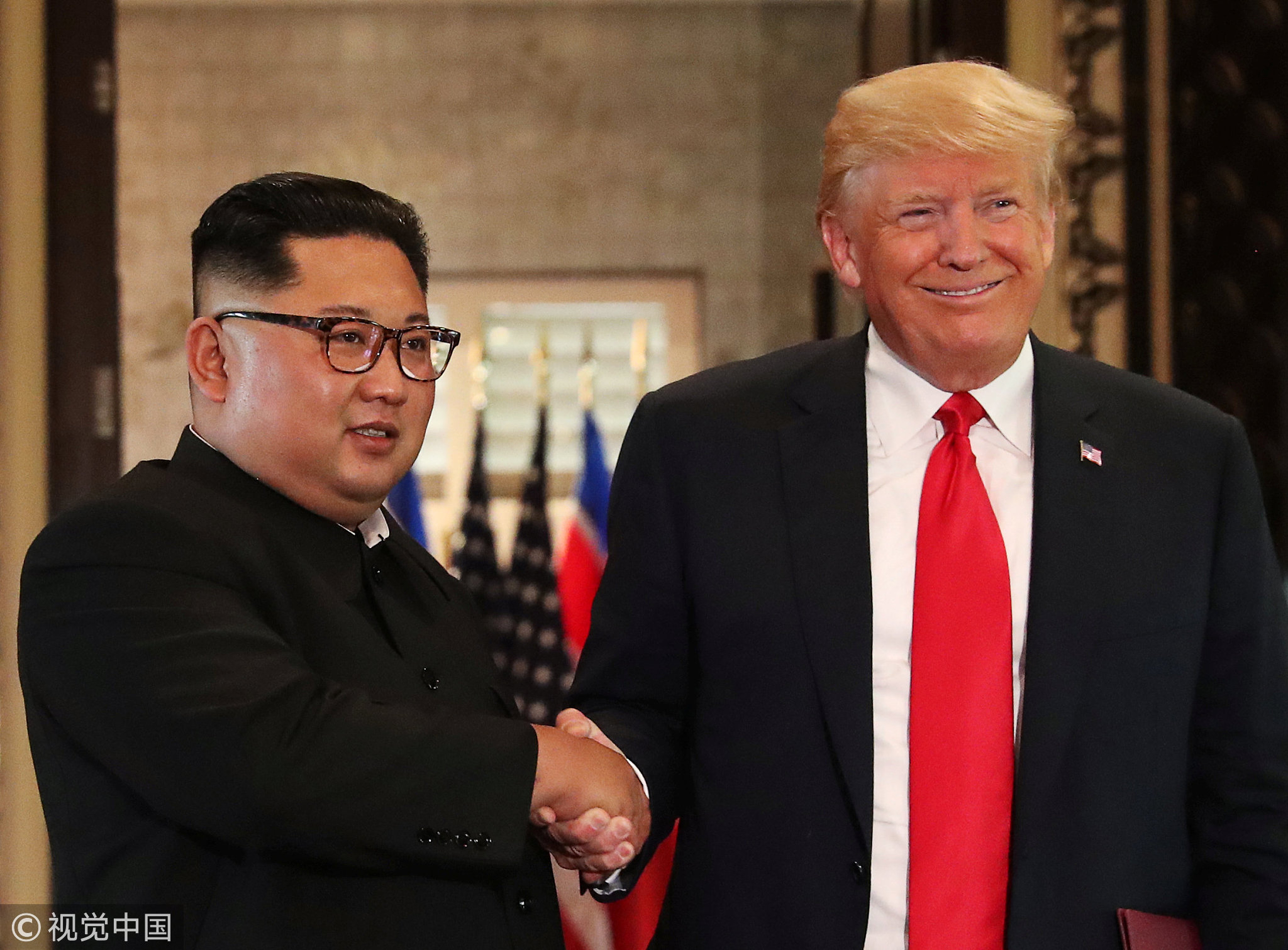
U.S. President Donald Trump and North Korea's leader Kim Jong Un shake hands after signing documents during a summit at the Capella Hotel on the resort island of Sentosa, Singapore June 12, 2018. /VCG Photo
U.S. President Donald Trump and North Korea's leader Kim Jong Un shake hands after signing documents during a summit at the Capella Hotel on the resort island of Sentosa, Singapore June 12, 2018. /VCG Photo
Iran requires strategic patience
Trump has already shown a clear preference for a muscular approach to Middle Eastern affairs. Although the appeal of high military expenditures and force is understandable given America’s overwhelming advantage on the battlefield, the most challenging problems facing the US in the region are not amenable to military solutions.
Iran, like North Korea (the DPRK), is a situation that cannot be resolved through military means. Not only would an attack on Iran risk the use of military force to close the Strait of Hormuz; it could also provoke Tehran to unleash its conventional missiles on Washington’s Arab allies living within striking range in the Persian Gulf. In both cases, the conclusion reached by the international civil society is that strategic patience and diplomacy are the only real options on the table.
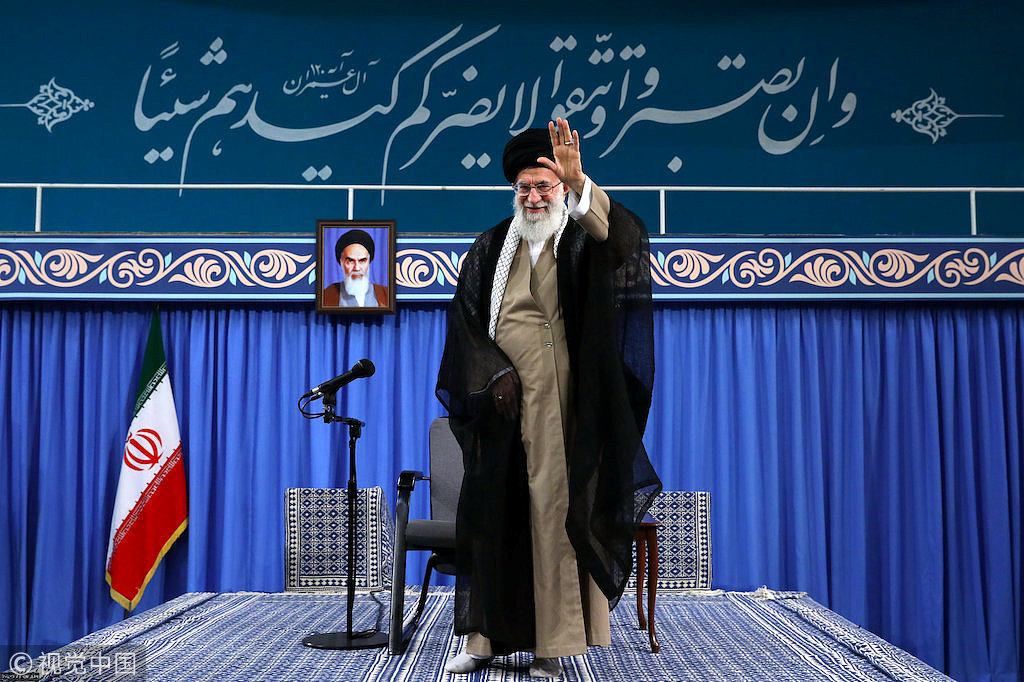
Iran's Supreme Leader Ayatollah Ali Khamenei is seen at the Hussayniyeh of Imam Khomeini in Tehran, Iran, August 13, 2018. /VCG Photo
Iran's Supreme Leader Ayatollah Ali Khamenei is seen at the Hussayniyeh of Imam Khomeini in Tehran, Iran, August 13, 2018. /VCG Photo
A final takeaway is that diplomacy – not higher military spending and sending more marines – is actually quite popular. After his recent hawkish rhetoric on Russia, China, Iran and the DPRK, Trump may worry that his supporters will abandon him if he pursues diplomacy.
New polls suggest just the opposite.
The polls make clear that the American public sees broader diplomacy as the more attractive option when dealing with Trump’s so-called “adversaries,” an alternative of which could be perpetual conflict – indeed the most to be dreaded, because it comprises and develops the germ of every other with surprise endings and unexpected human, geopolitical and financial consequences.