
Business
16:07, 10-May-2018
World Bank: Economic mobility stalling in China, developing world
 ["china"]
Share







Copied
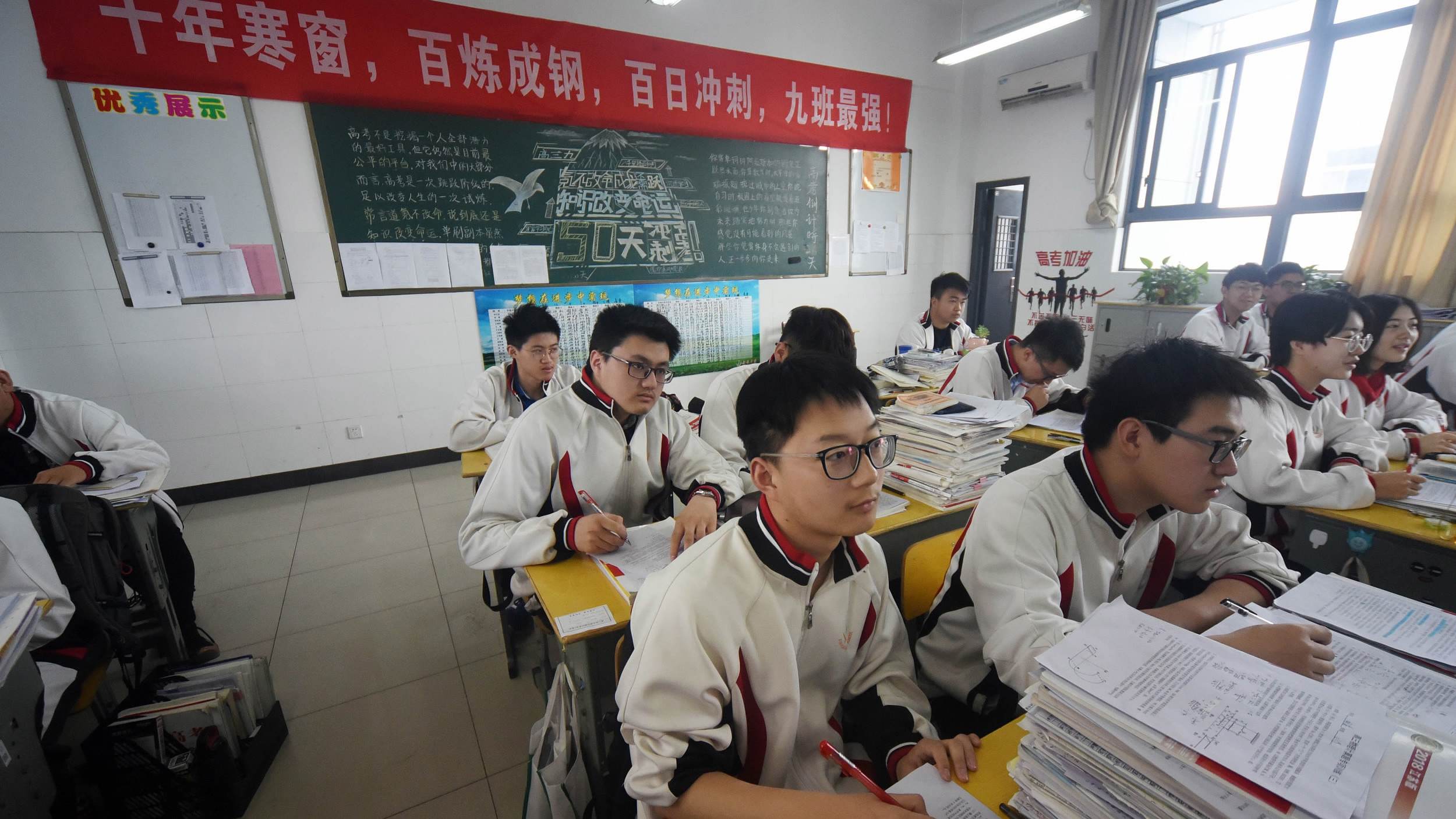
Despite much-improved living standards in recent decades, economic mobility has stalled in China and other developing countries, according to a new report by the World Bank.
Focused on six developing countries – Brazil, China, Egypt, India, Indonesia and Nigeria – the report looked at mobility for generations born between the 1940s and the 1980s, and found that progress on economic mobility has either slowed down or – in the case of China and Nigeria – fallen.
While incomes have improved compared to previous generations, the World Bank report found that “some 47 percent of the 1980s generation in an average developing economy have more education than their parents, which is almost unchanged from the 1960s generation.”
The lack of progress means the gap between high-income and developing countries in terms of education remains the same as it did 40 years ago.
The report also found that relative mobility in China has fallen – meaning that compared to one’s parents, it is harder now than decades before to move up the economic ladder.
For example, a post-80s Chinese child born in the bottom 20 percent income bracket has less of a chance of moving into the next quintile, than someone from the post-60s generation previously did.
The World Bank study also highlights that China is the only country that has more mobility in its poorer regions than richer cities and provinces – likely a result of rural-registered residents who have migrated to cities in search of higher incomes and better opportunities.
However, previous reports by the World Bank have suggested rural-urban migration in China over recent decades is “symptomatic of persistent barriers to population mobility.”
The report also underlines the role of "guanxi" or personal connections in China, saying “social networks can distort labor markets even in economies with healthy, growing labor demand,” with such relationships acting as barriers to economic mobility.
Commenting on the report, Francisco Ferreira, a senior adviser on poverty and inequality at the World Bank, said “the average developing country has very low rates of economic mobility across generations and, most worryingly, there has been no real improvement in the last three decades.”
Previous studies have shown that many Chinese young people, particularly in cities, are increasingly financially reliant on their parents, a phenomenon also seen in many developed countries where economic mobility is decreasing.
Last year, HSBC released a report that suggested 40 percent of Chinese property buyers seek parental help with high deposits or mortgage repayments.
An earlier study by China Research Center suggested that 30 percent of Chinese urban adults require financial help from their parents to support part of, or even all of, their monthly living expenses.
Talking to China Daily in April 2017, Fang Changchun, an associate professor at the School of Social and Behavioral Sciences, Nanjing University, said that while progress has been made on mobility in China, “more measures have to be taken to more fairly distribute social resources, and to encourage free competition.”
The 2017 Global Youth Wellbeing Index, a study of young people from 29 different countries, found that 53 percent of young Chinese people felt they would be economically better off than their parents.