
Politics
08:58, 01-Jul-2018
Merkel to face judgment of her Bavarian allies
Updated
08:10, 04-Jul-2018
 ["china"]
Share







Copied
00:44
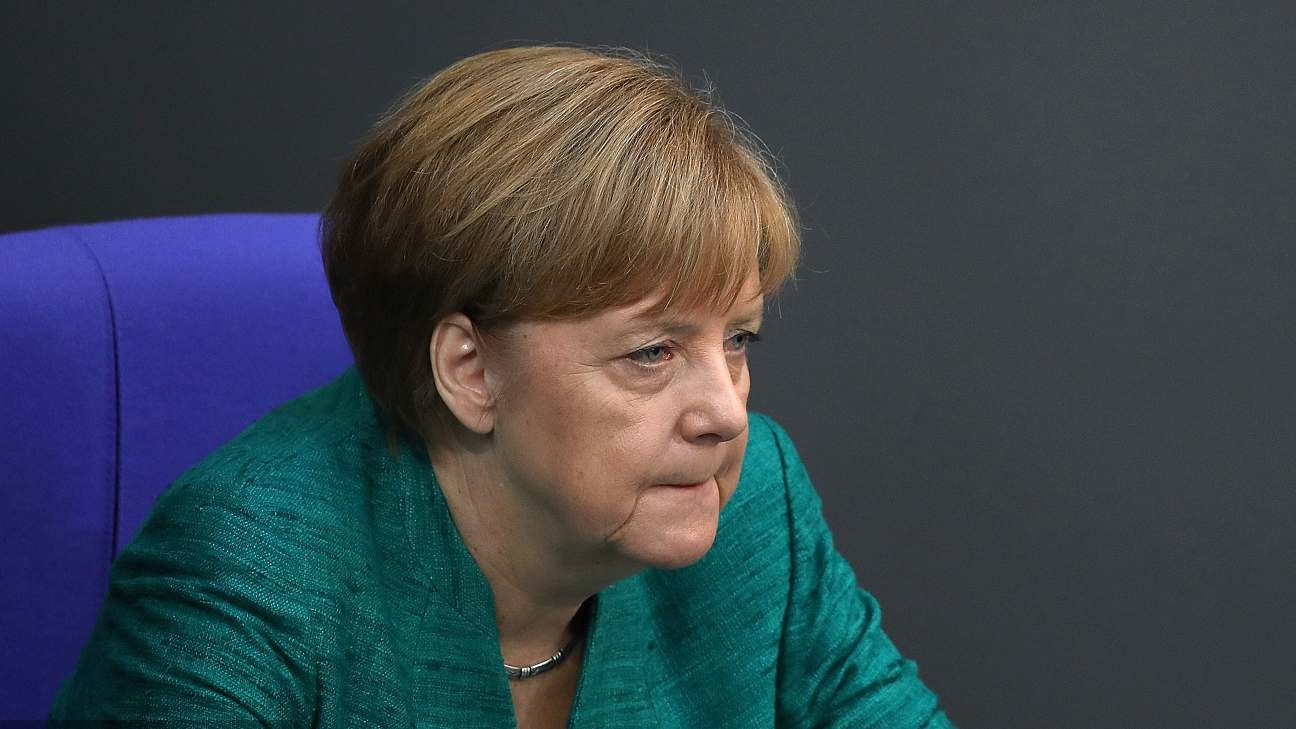
German Chancellor Angela Merkel’s political future rests in the hands of the Christian Social Union (CSU) whose leadership meets on Sunday to decide whether to accept migration deals she brought back from Brussels.
Nine months after elections that saw her lose votes to the far right, a bleary-eyed Merkel was forced to turn to European Union neighbors to help resolve a conflict with her Bavarian allies after they rebelled against her immigration policy.
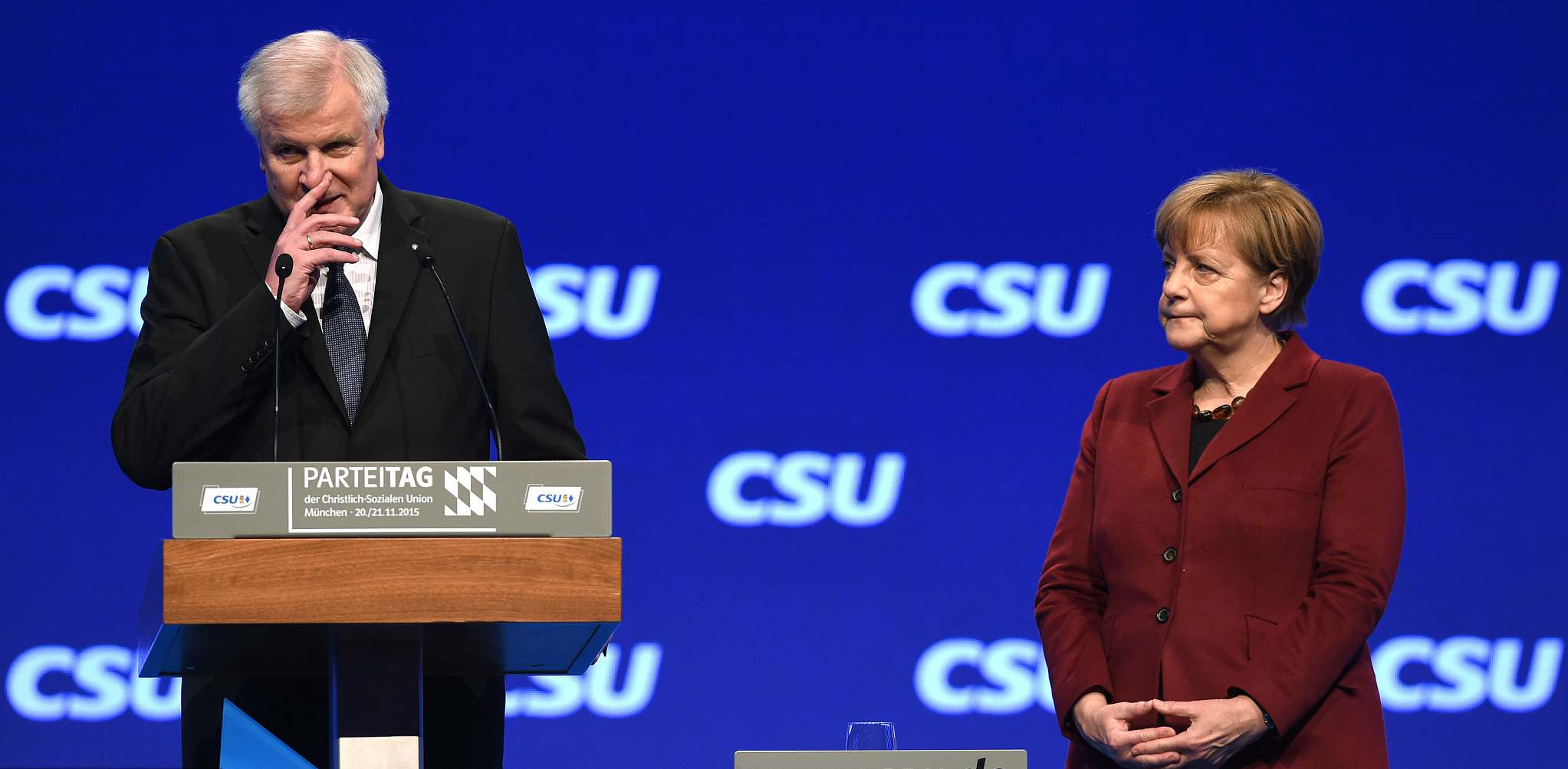
November 20, 2015: Horst Seehofer, then Bavarian State Premier and party leader of the Christian Social Union Party (CSU), and German Chancellor Angela Merkel stand on the stage during a CSU party congress in Munich, Germany. /VCG Photo
November 20, 2015: Horst Seehofer, then Bavarian State Premier and party leader of the Christian Social Union Party (CSU), and German Chancellor Angela Merkel stand on the stage during a CSU party congress in Munich, Germany. /VCG Photo
The party’s leader and interior minister Horst Seehofer threatened to turn migrants back from the Bavarian border, a move that would almost certainly precipitate a government collapse.
After marathon talks, the EU leaders reached a compromise deal on migration and agreed to establish voluntary screening centers on European soil, to ease the burden on some countries.
Separately, Merkel announced deals with 16 EU countries for returning some refugees and proposed setting up reception centers where others would undergo an accelerated asylum procedure, in a hardening of the open-door asylum policy she introduced in 2015.
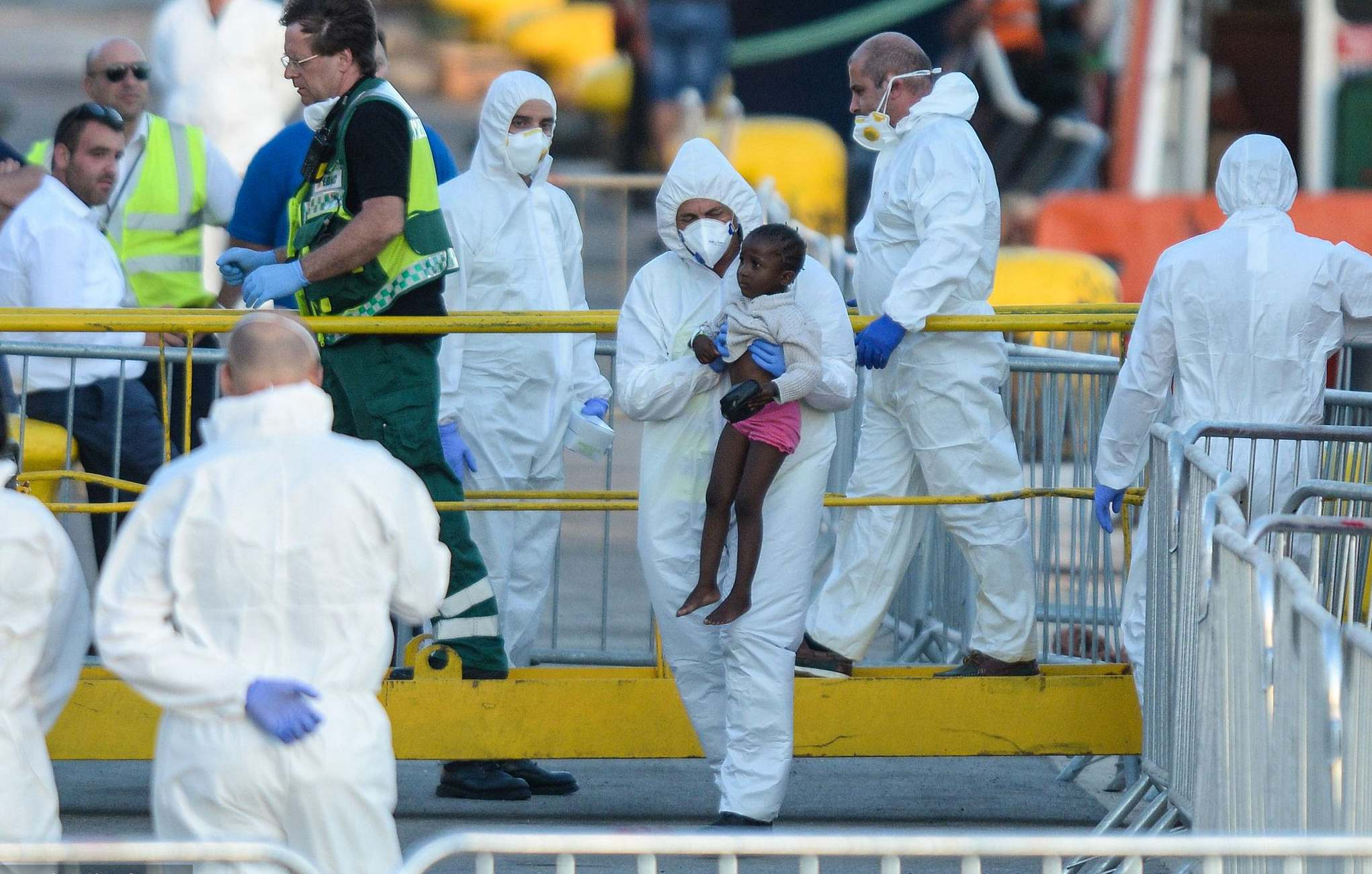
June 27, 2018: A migrant child gets assistance upon arriving aboard "Lifeline", a vessel for the German charity Mission Lifeline, in the harbor of Valletta, Malta. /VCG Photo
June 27, 2018: A migrant child gets assistance upon arriving aboard "Lifeline", a vessel for the German charity Mission Lifeline, in the harbor of Valletta, Malta. /VCG Photo
Bavaria’s premier Markus Soeder, mindful of October's regional elections in which he faces a stiff challenge from the anti-immigration Alternative for Germany (AfD), took credit for pressuring Merkel to reach a deal.
“It goes absolutely in the right direction,” he said but added he would keep up the pressure to obtain more clarity on the details.
(Cover: German Chancellor Angela Merkel sits down after she delivered a government declaration at the Bundestag ahead of the upcoming EU summits on June 28, 2018, in Berlin, Germany. /VCG Photo)
(With input from Reuters)