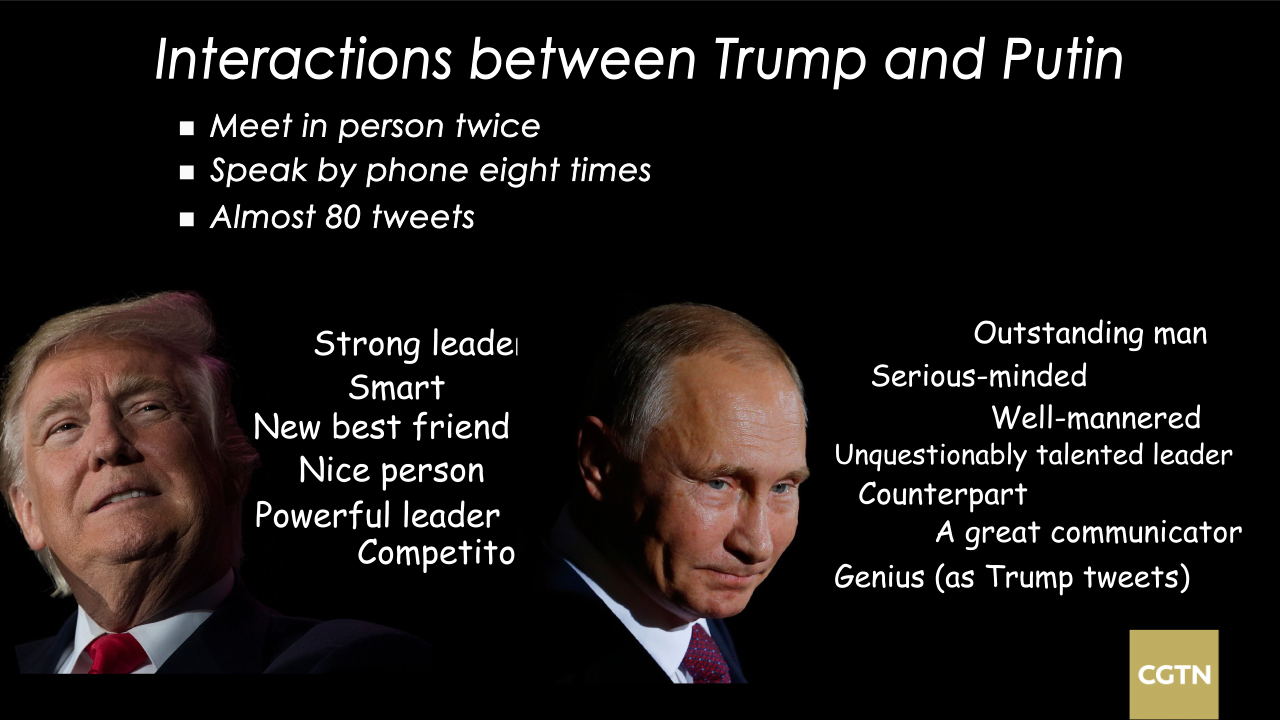
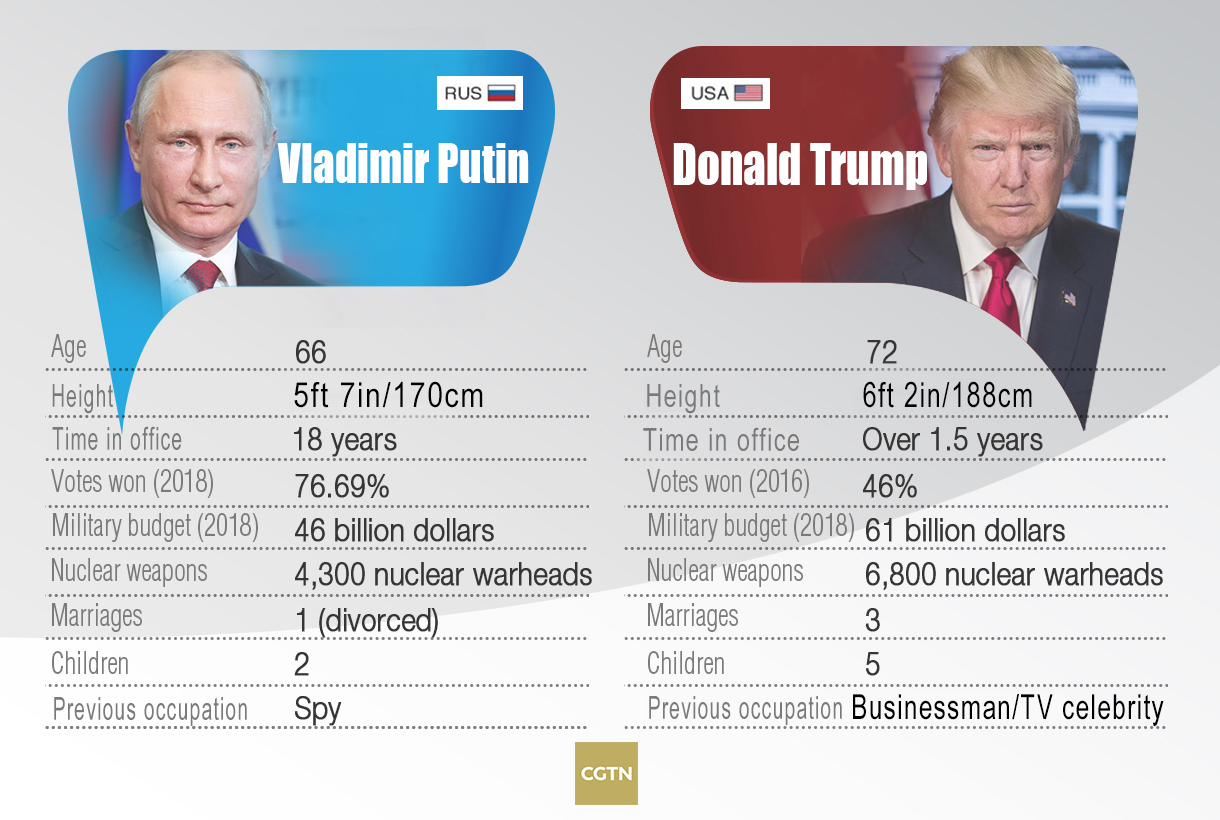
“There’s no one Trump loves more than Vladimir Putin,” said Edward Snowden, who exposed eavesdropping practice by the US National Security Agency five years ago.
Though the two leaders only met twice in their lifetime, the bromance hasn’t stopped; President Trump has tweeted about Putin more than 70 times during the past years.
In Helsinki on July 16, can a new chapter be written into the Trump-Putin story?
Familiar strangers meet again
A two-hour-and-16-minute talk on July 7, 2017, at the G20 summit in Hamburg opened the first chapter. The two leaders held a formal, over two-hour bilateral meeting in which Trump later said Putin denied allegations that he directed efforts to meddle in the 2016 US presidential election.
The second conversation between the two took place later during a dinner for the Group of 20 heads of state and their spouses. Trump got up from his seat halfway through dinner and spent about an hour talking “privately and animatedly” with Putin, “joined only by Putin’s own translator (interpreter).”
Four months later in the same year, the two met again and held a brief meeting during the Asia-Pacific Economic Cooperation summit in Danang, Vietnam.
Casually talking while walking to a photo-op at the Asian-Pacific Rim summit, the atmosphere was reported to be good. Trump said that talking "feels good," while Putin said Trump is a "very polite" person.
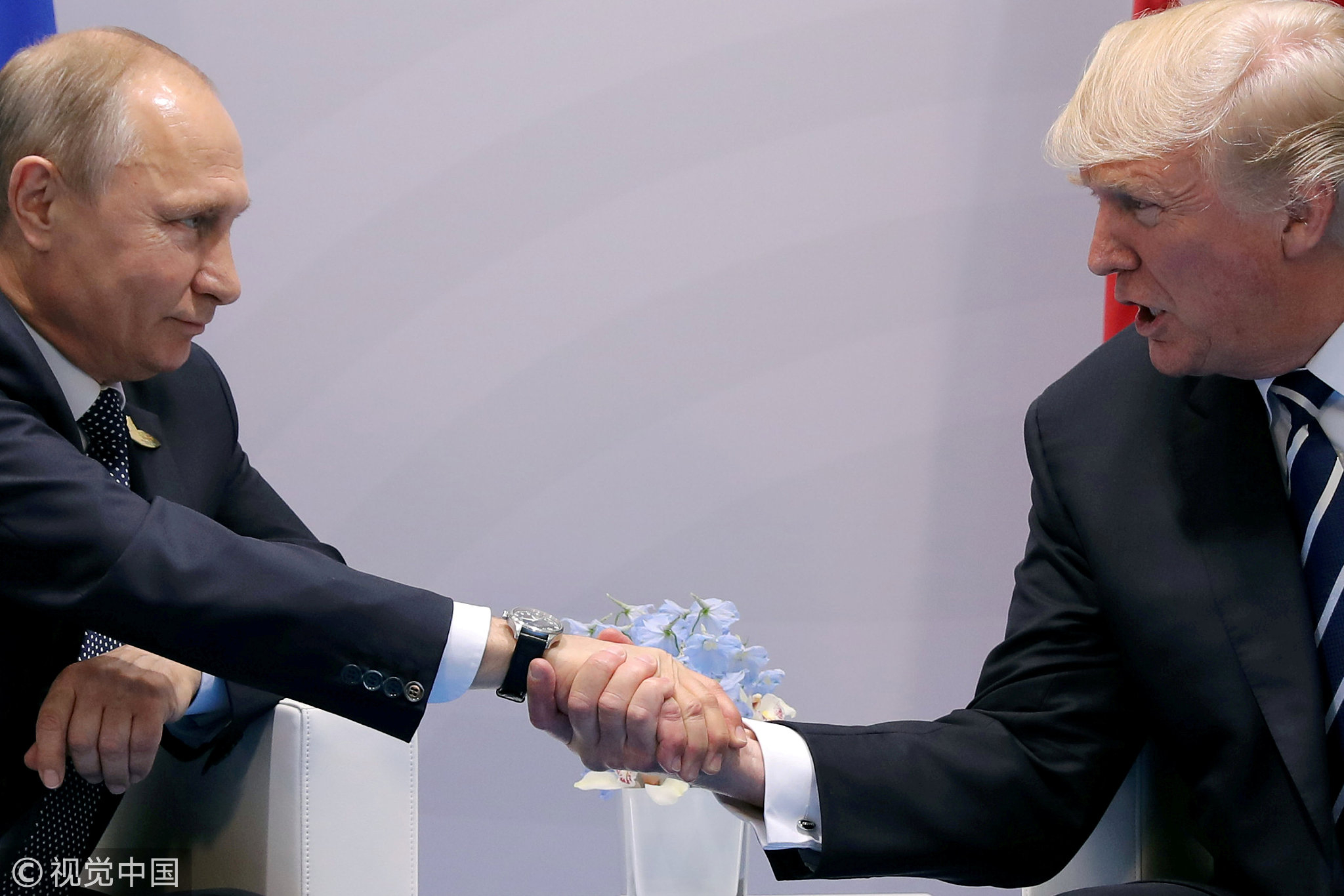
US President Donald Trump shakes hands with Russian President Vladimir Putin during their first meeting, at the G20 summit in Hamburg, Germany, July 7, 2017. /VCG Photo
US President Donald Trump shakes hands with Russian President Vladimir Putin during their first meeting, at the G20 summit in Hamburg, Germany, July 7, 2017. /VCG Photo
If the time or venue wasn’t right for a complete conversation, then the third meet may provide them with the chance.
Competitor and counterpart during coming third meet?
Trump said Thursday during a press conference on the sidelines of a NATO summit in Brussels that he sees Putin as a "competitor," not an "enemy" when asked about the coming summit.
"Someone said, 'Is he an enemy?' No, he's not my enemy. Is he your friend? No, I don't know him well enough, but the couple of times I've gotten to meet him we got on very well," Trump said.
A day later, Kremlin spokesman Dmitry Peskov responded that Putin regards Trump as a negotiation partner, "The president of the United States is a counterpart at the talks scheduled for Monday," he said.
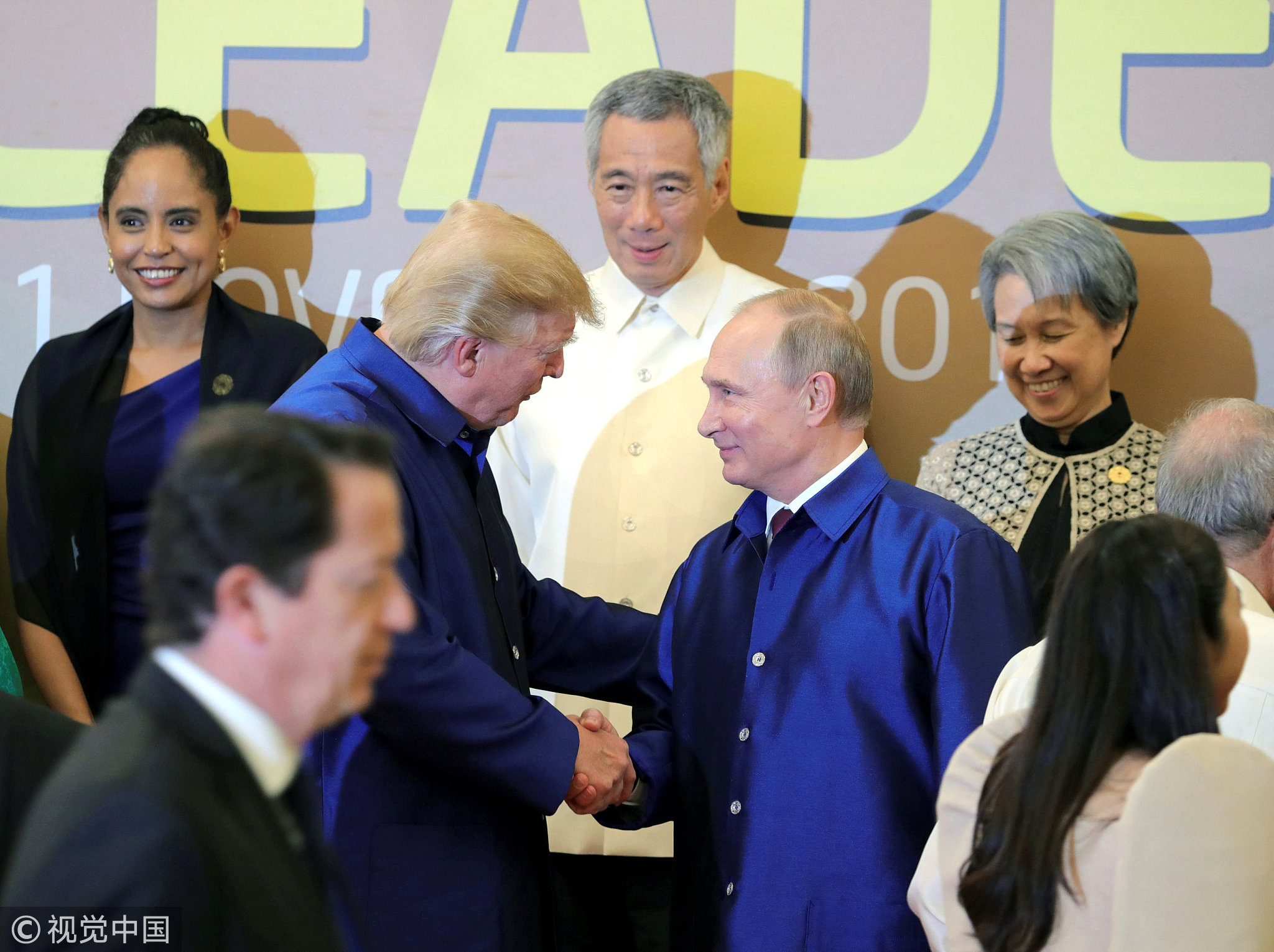
US President Donald Trump and Russian President Vladimir Putin shake hands as they take part in a family photo at the APEC summit in Danang, Vietnam, November 10, 2017. /VCG Photo
US President Donald Trump and Russian President Vladimir Putin shake hands as they take part in a family photo at the APEC summit in Danang, Vietnam, November 10, 2017. /VCG Photo
No matter how they see each other, contradictions lie ahead for the coming summit. Considering the situation in Ukraine, the Syria crisis, the Iran nuclear agreement, the sanctions against Russia and the NATO military exercises, how will the two bargain? Is it possible to accept the red lines from each other?
Meddling in US 2016 election
Though the Trump-Putin summit is on the way, chaos surrounding Russia's alleged meddling in the US 2016 election continues.
Twelve Russian intelligence officers were charged on Friday with hacking Hillary Clinton's 2016 presidential campaign and the Democratic Party.
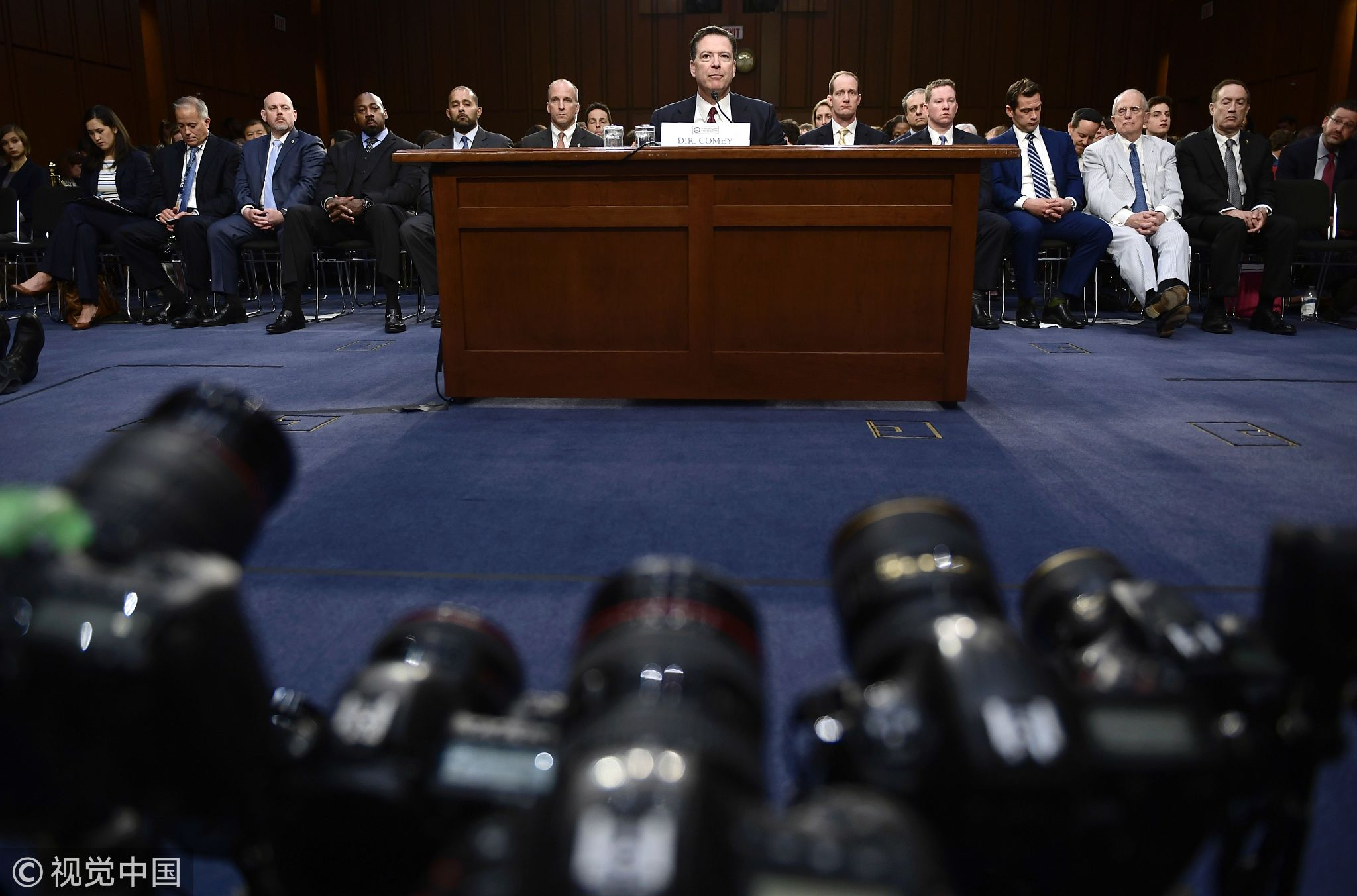
Former FBI Director James Comey testifies during a US Senate Select Committee on Intelligence hearing on Capitol Hill in Washington, DC, June 8, 2017. The fired FBI director took the stand in the crucial Senate hearing, repeating explosive allegations that President Donald Trump badgered him over the highly sensitive investigation into Russia's meddling in the 2016 election. /VCG Photo
Former FBI Director James Comey testifies during a US Senate Select Committee on Intelligence hearing on Capitol Hill in Washington, DC, June 8, 2017. The fired FBI director took the stand in the crucial Senate hearing, repeating explosive allegations that President Donald Trump badgered him over the highly sensitive investigation into Russia's meddling in the 2016 election. /VCG Photo
Trump said he’ll “of course” mention it during the summit, but expects Putin to push back. “What am I going to do? He may deny it,” Trump told reporters at the NATO summit on Thursday. “All I can do is say, ‘Did you?’ And, ‘Don’t do it again.’ But he may deny it.”
Recognition of Crimea
One of the biggest issues is Crimea.
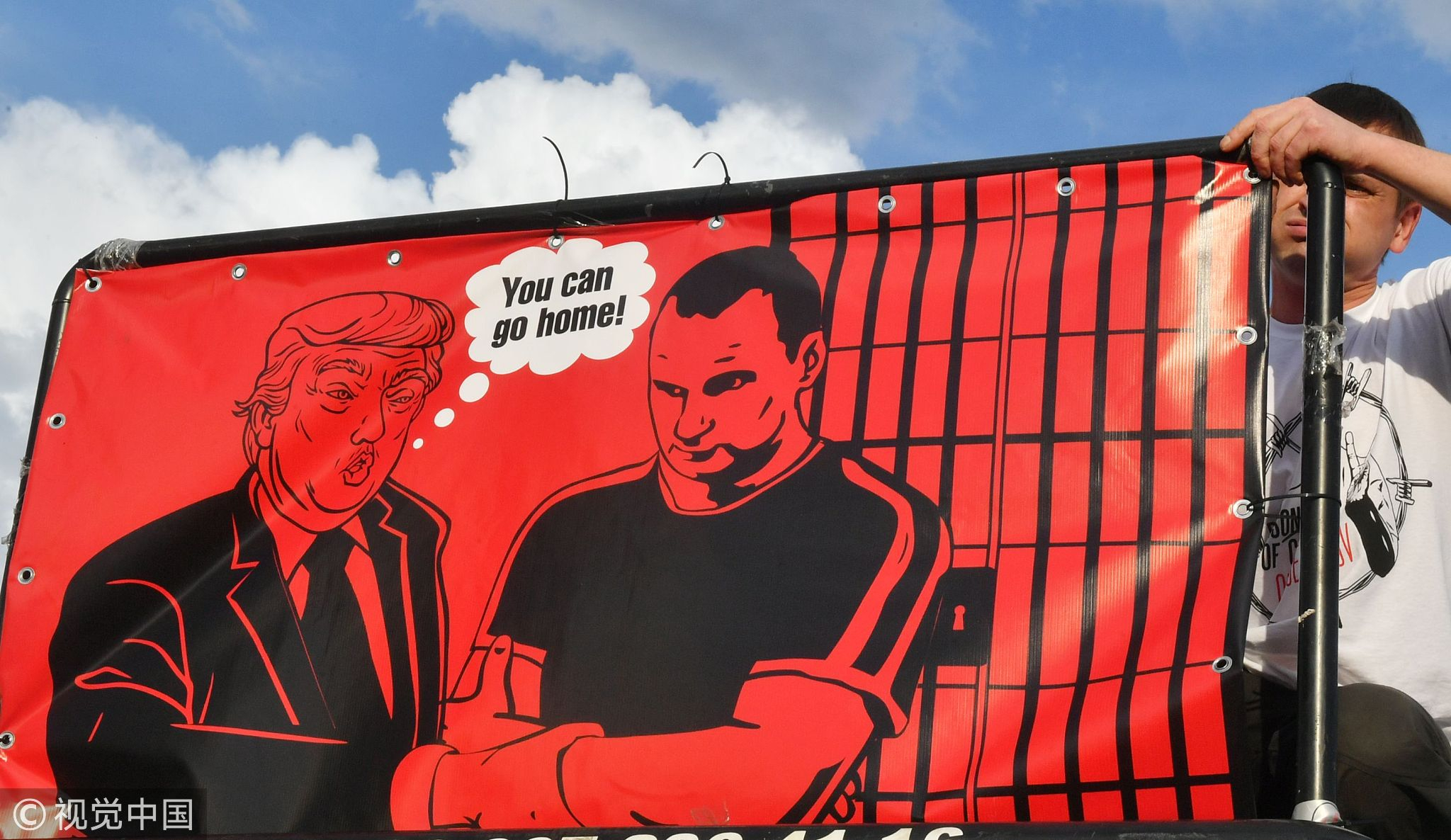
An activist displays a banner depicting US President Donald Trump (L) saying to Oleg Sentsov, "You can go home!" during a rally at Independence Square in the Ukrainian capital of Kiev, marking Oleg Sentsov's birthday on July 13, 2018. /VCG Photo
An activist displays a banner depicting US President Donald Trump (L) saying to Oleg Sentsov, "You can go home!" during a rally at Independence Square in the Ukrainian capital of Kiev, marking Oleg Sentsov's birthday on July 13, 2018. /VCG Photo
The US president was asked if he would be prepared to recognize Crimea as part of Russia after it was separated from Ukraine and rejoined Moscow in 2014 following a local referendum.
Some news reports and analysts have suggested Trump might be prepared to concede the territory to Putin in exchange for cooperation in Syria.
"What will happen to Crimea from this point on? That I can't tell you, but I'm not happy about Crimea." Trump blamed his predecessor Barack Obama "who allowed it to happen."
US out of Syria
Putin’s foreign affairs adviser Yuri Ushakov said Friday that Syria and the Iranian presence there will feature high on the agenda of the summit in Helsinki on Monday.
Read more:
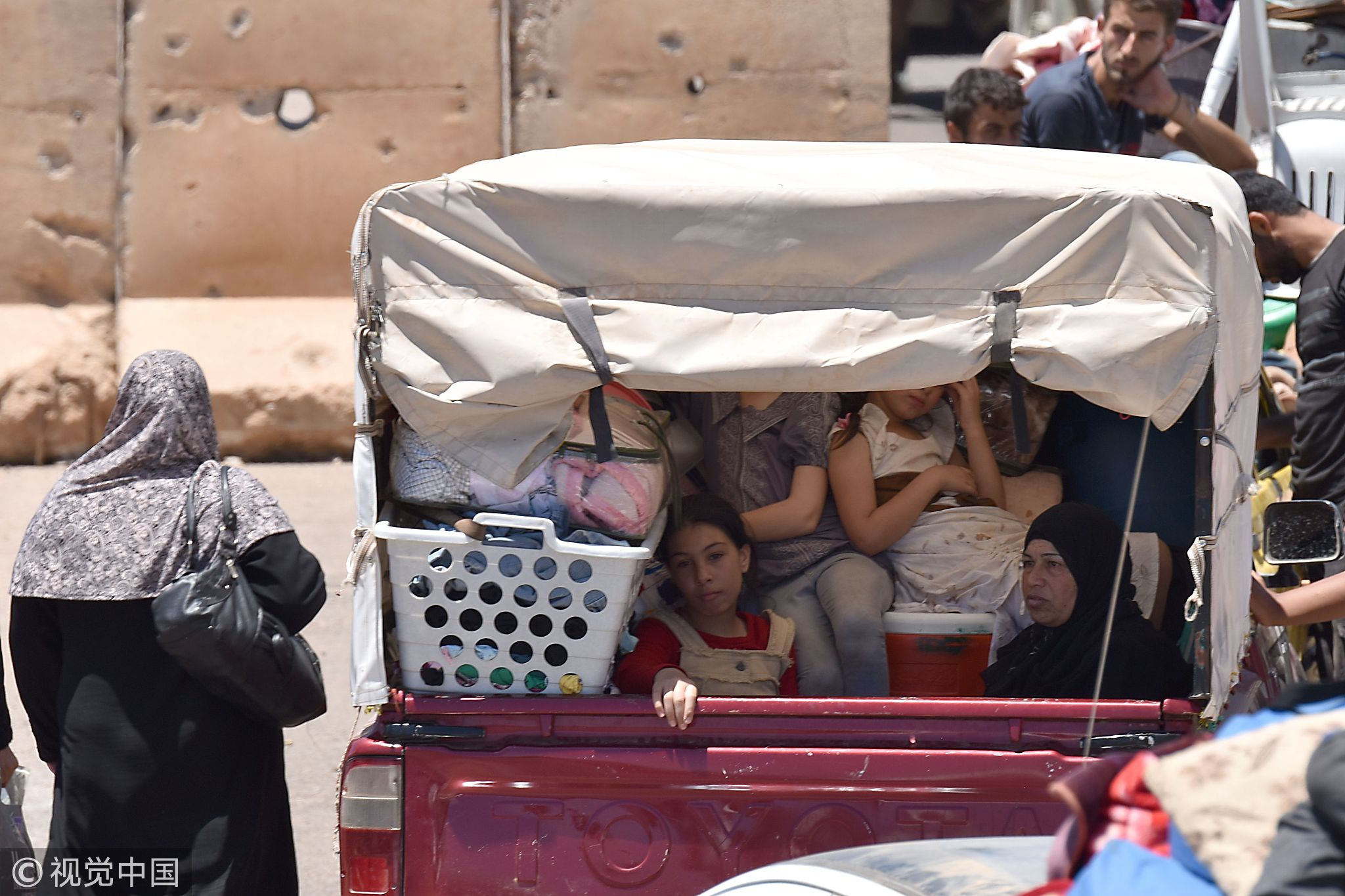
Displaced Syrians from the Daraa province come back to their hometown in Bosra, southwestern Syria, on July 11, 2018. /VCG Photo
Displaced Syrians from the Daraa province come back to their hometown in Bosra, southwestern Syria, on July 11, 2018. /VCG Photo
Trump wants US troops out of Syria. Putin wants his ally, Syrian President Bashar al-Assad, to stay in power after seven years of civil war.
"We’ll see what happens when the two of them get together,” said John Bolton, Trump’s national security adviser, fresh off a trip to Moscow to finalize plans for the summit.
Nuclear weapons
The extension of the New Start nuclear treaty between the US and Russia can be expected, a treaty between the United States of America and the Russian Federation on Measures for the Further Reduction and Limitation of Strategic Offensive Arms.
The treaty is currently in effect until 2021, but there’s an option for the leaders of both countries to extend the accord up to five years.
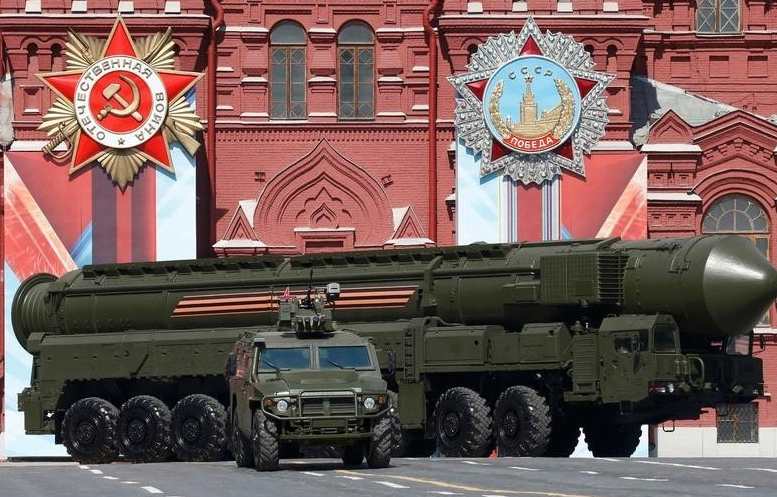
A Russian Yars RS-24 intercontinental ballistic missile system at the Victory Day parade in Moscow to mark the end of World War II. /Reuters Photo
A Russian Yars RS-24 intercontinental ballistic missile system at the Victory Day parade in Moscow to mark the end of World War II. /Reuters Photo
The US military proposed in February diversifying its nuclear arsenal and developing new, smaller atomic bombs, largely to counter Russia.
Sanctions relief
Since 2014, the US has imposed travel bans, asset freezes and finance and trade restrictions against hundreds of Russian individuals and companies, as a multinational effort to punish Putin’s government for allegedly making trouble beyond its borders and online.
However, the Kremlin does not really expect sanctions relief. It knows that Trump’s hands are tied by Congress. There's little chance that sanctions relief will happen with Trump's answer, "Let's see what Russia is going to do."
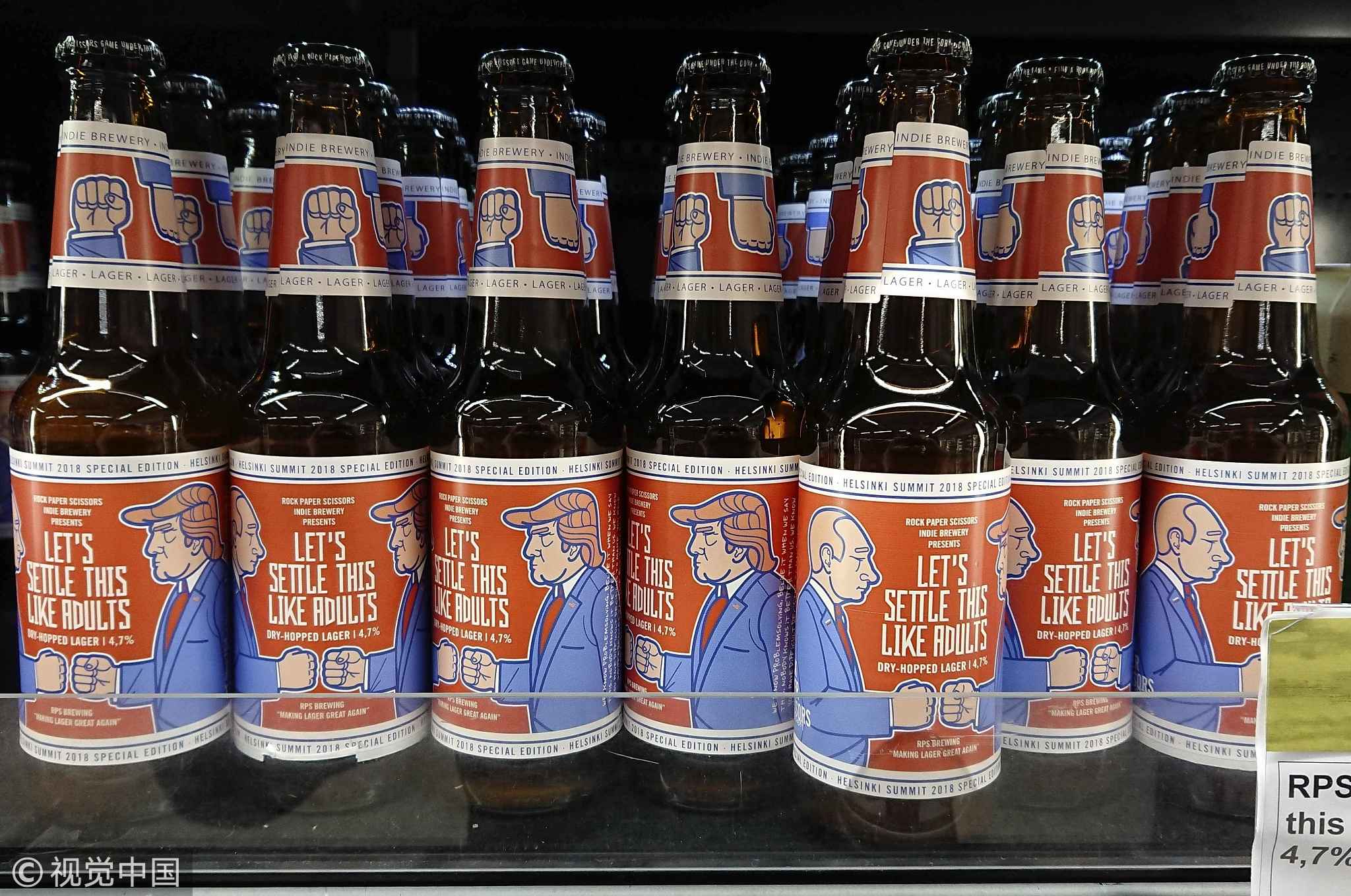
Beer bottles with labels depicting Russian President Vladimir Putin (L) and US President Donald Trump and bearing the slogan "Let's Settle This Like Adults" by Finnish craft brewery Rock, Paper, Scissors are pictured in a supermarket in Helsinki, on July 11, 2018. /VCG Photo
Beer bottles with labels depicting Russian President Vladimir Putin (L) and US President Donald Trump and bearing the slogan "Let's Settle This Like Adults" by Finnish craft brewery Rock, Paper, Scissors are pictured in a supermarket in Helsinki, on July 11, 2018. /VCG Photo
Can bromance create better Russia-US relations?
"The goal of the upcoming meeting is to finally begin efforts to improve the negative situation in Russia-US relations, to take concrete steps to normalize them, to rebuild a more or less acceptable level of trust, and to try to outline steps that will make it possible to resume mutually beneficial cooperation on matters of mutual interest," Russian presidential aide Yuri Ushakov said when briefing the media about details of the meeting.
No time limit has been set for the top-level talks, and it is up to Putin and Trump whether to sign a joint communiqué after the talks, he added.
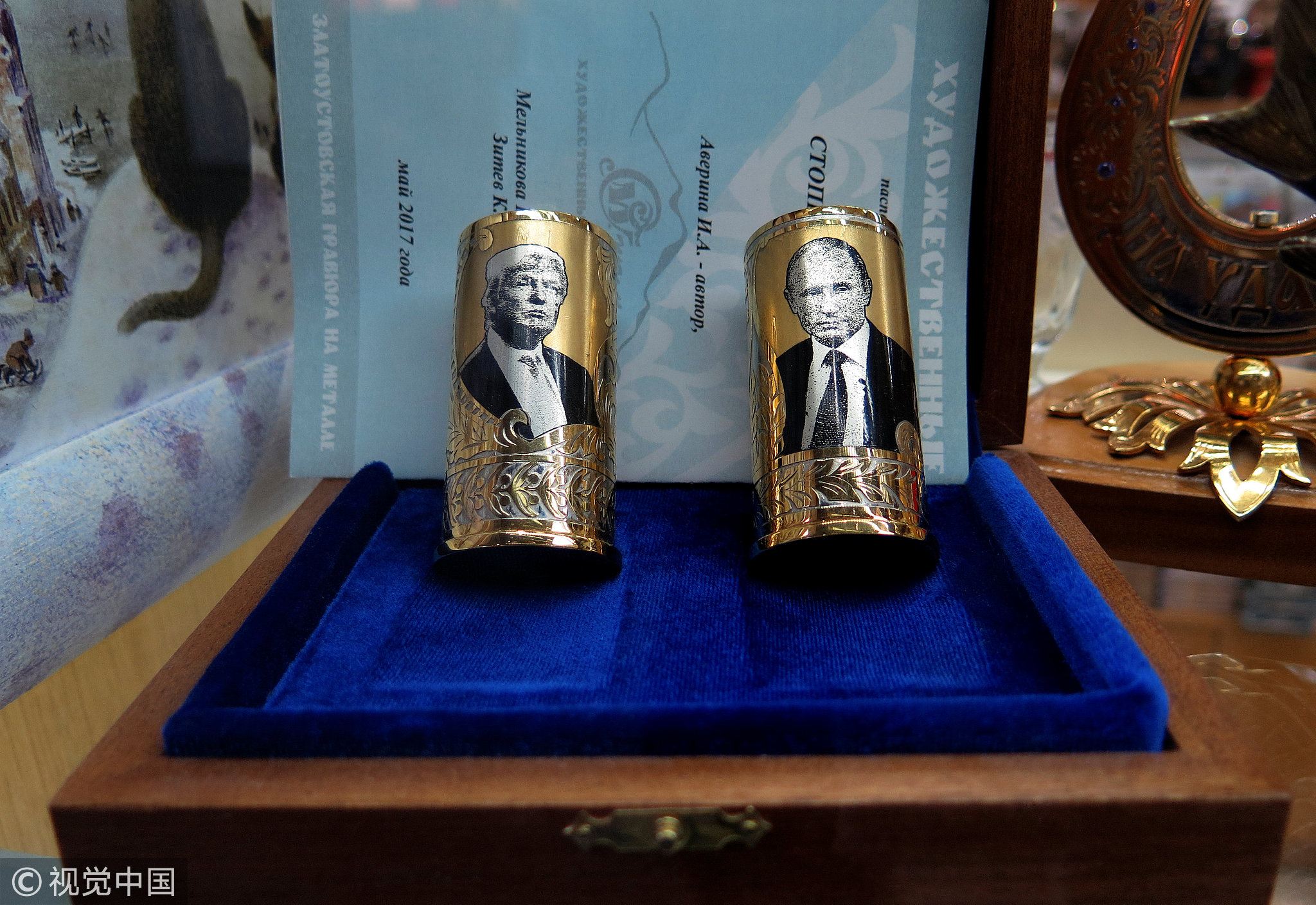
A souvenir depicting Russian President Vladimir Putin and US President Donald Trump is seen at the airport in Saint Petersburg, Russia, July 5, 2018. /VCG Photo
A souvenir depicting Russian President Vladimir Putin and US President Donald Trump is seen at the airport in Saint Petersburg, Russia, July 5, 2018. /VCG Photo
Experts warned against over-optimism about the results of the summit or short-term prospects of Russia-US relations due to the deep-rooted "systemic confrontation" between the two sides.
Most media also reported that though the two leaders "cherish" each other, they cannot give each other much. The coming summit may focus more on the form rather than the content.

 ["china"]