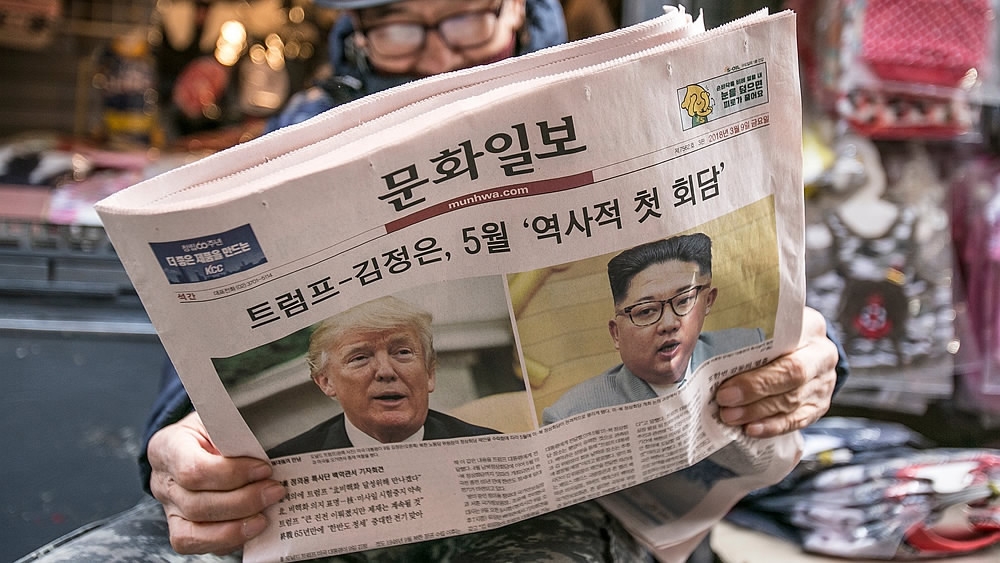
US President Donald Trump acknowledged on Wednesday it was unclear if his summit with leader of the Democratic People's Republic of Korea (DPRK) Kim Jong Un would go ahead after
Pyongyang threatened to pull out of the unprecedented meeting, a move that could deny him a potentially major foreign policy achievement.
"We'll have to see," Trump told reporters in the Oval Office when asked if the summit was still on, though he insisted he would not back down from his demand for DPRK's denuclearization.
"No decision, we haven't been notified at all... We haven't seen anything, we haven't heard anything," he said.
01:45
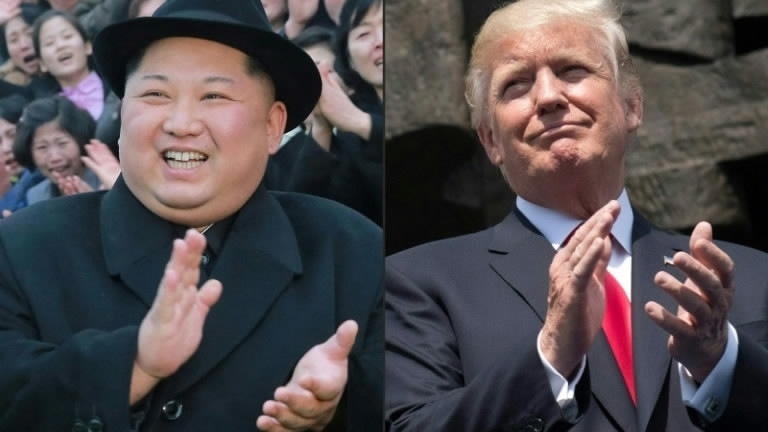
The DPRK threw the June 12 summit between Kim and Trump into doubt on Wednesday, saying it might not attend if Washington continues to demand it unilaterally abandon its nuclear arsenal. The DPRK also called off talks with the Republic of Korea (ROK) scheduled for Wednesday, blaming US-ROK military exercises.
Trump's relatively muted response was in marked contrast to just a few days ago when he exulted over DPRK's release of three Americans, welcoming them home with praise for Kim and an expression of high hopes that the summit would produce "something very meaningful."
Cancellation of the summit, the first between US and DPRK leaders, would deal a major blow to what would be the biggest diplomatic achievement of Trump's presidency.
Read more:
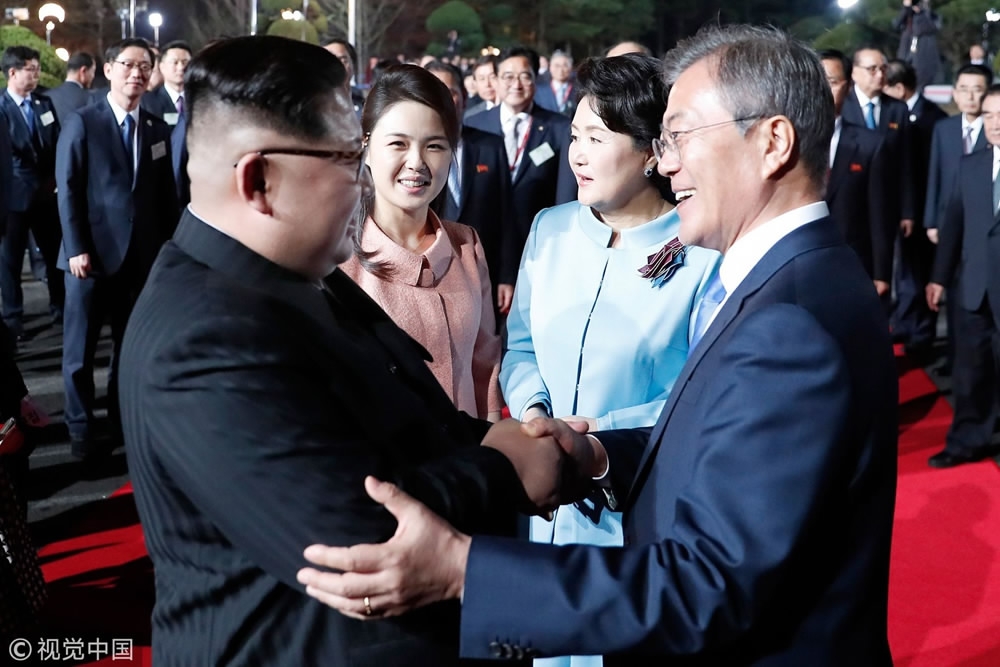
April 27, 2018: DPRK leader Kim Jong Un (L) and ROK President Moon Jae-in (R) bid farewell during the closing ceremony of the inter-Korean summit in the truce village of Panmunjom. /VCG Photo
April 27, 2018: DPRK leader Kim Jong Un (L) and ROK President Moon Jae-in (R) bid farewell during the closing ceremony of the inter-Korean summit in the truce village of Panmunjom. /VCG Photo
The White House said it was still hopeful the summit would take place, but Trump was prepared for a tough negotiation.
"The president is ready if the meeting takes place," White House spokeswoman Sarah Sanders told Fox News. "If it doesn't, we'll continue the maximum pressure campaign that's been ongoing."
Sanders said Pyongyang's comments were "not something that is out of the ordinary in these types of operations."
US officials have repeatedly claimed credit for Washington's "maximum pressure" policy for bringing Pyongyang to the negotiating table.
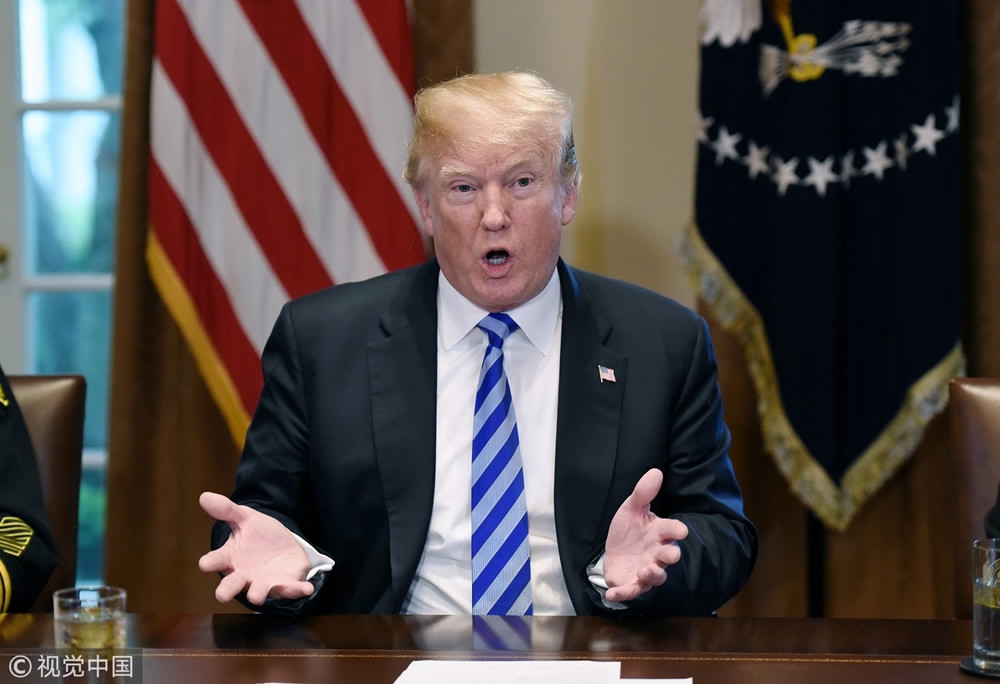
US President Donald Trump insists on maintaining "maximum pressure" against the DPRK until its complete and irreversible denuclearization. /VCG Photo
US President Donald Trump insists on maintaining "maximum pressure" against the DPRK until its complete and irreversible denuclearization. /VCG Photo
Pyongyang's change of tone
After months' of rapprochement with Seoul and Washington, Pyongyang changed its tone on Wednesday, condemning the "Max Thunder" joint military exercise being held between the US and ROK.
A report from DPRK's official KCNA news agency said that the air force drills are a "rehearsal for invasion of the North and a provocation."
A news reader for DPRK's Korean Central Television stated, "The United States will also have to undertake careful deliberations about the fate of the planned DPRK-US summit in light of this provocative military ruckus jointly conducted with the South Korean authorities."
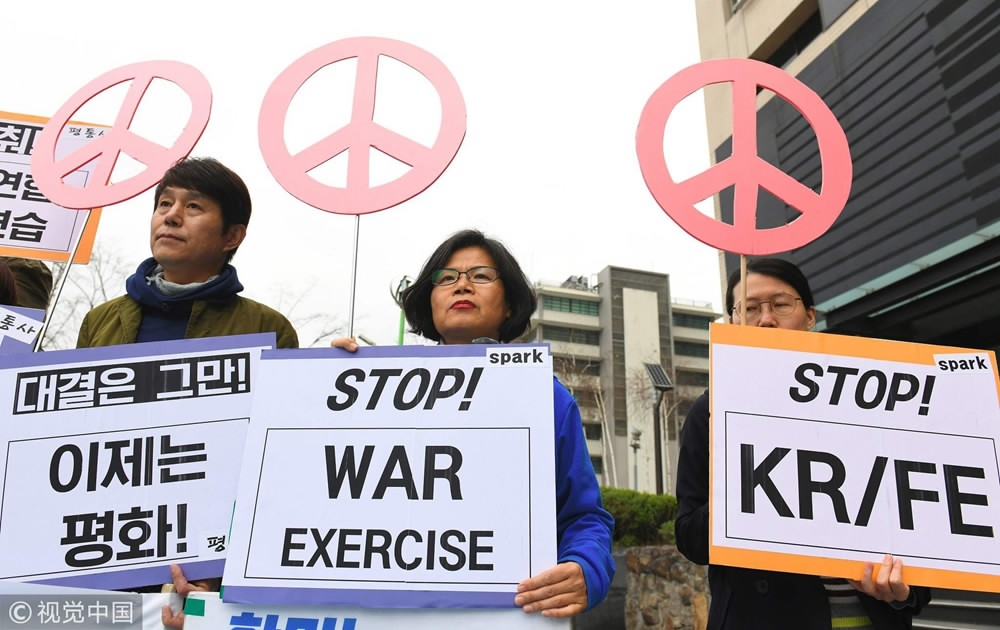
April 1, 2018: Anti-war activists hold signs during a rally denouncing the annual "Foal Eagle" joint military drill near the US embassy in Seoul, ROK. /VCG Photo
April 1, 2018: Anti-war activists hold signs during a rally denouncing the annual "Foal Eagle" joint military drill near the US embassy in Seoul, ROK. /VCG Photo
Pyongyang also insisted on sanctions being eased throughout potential negotiations – not at the end.
In the past, Pyongyang has demanded the withdrawal of US troops stationed in ROK, and an end to Washington's nuclear umbrella over its security ally.
DPRK's First Vice Minister of Foreign Affairs, Kim Kye Gwan, cast doubt on whether the summit, which is set for Singapore, would be held.
He specifically criticized US national security adviser John Bolton, who has called for the DPRK to quickly give up its nuclear arsenal in a deal that would mirror Libya's abandonment of its program for weapons of mass destruction.
"If the US is trying to drive us into a corner to force our unilateral nuclear abandonment, we will no longer be interested in such dialogue and cannot but reconsider our proceeding to the... summit," he said.
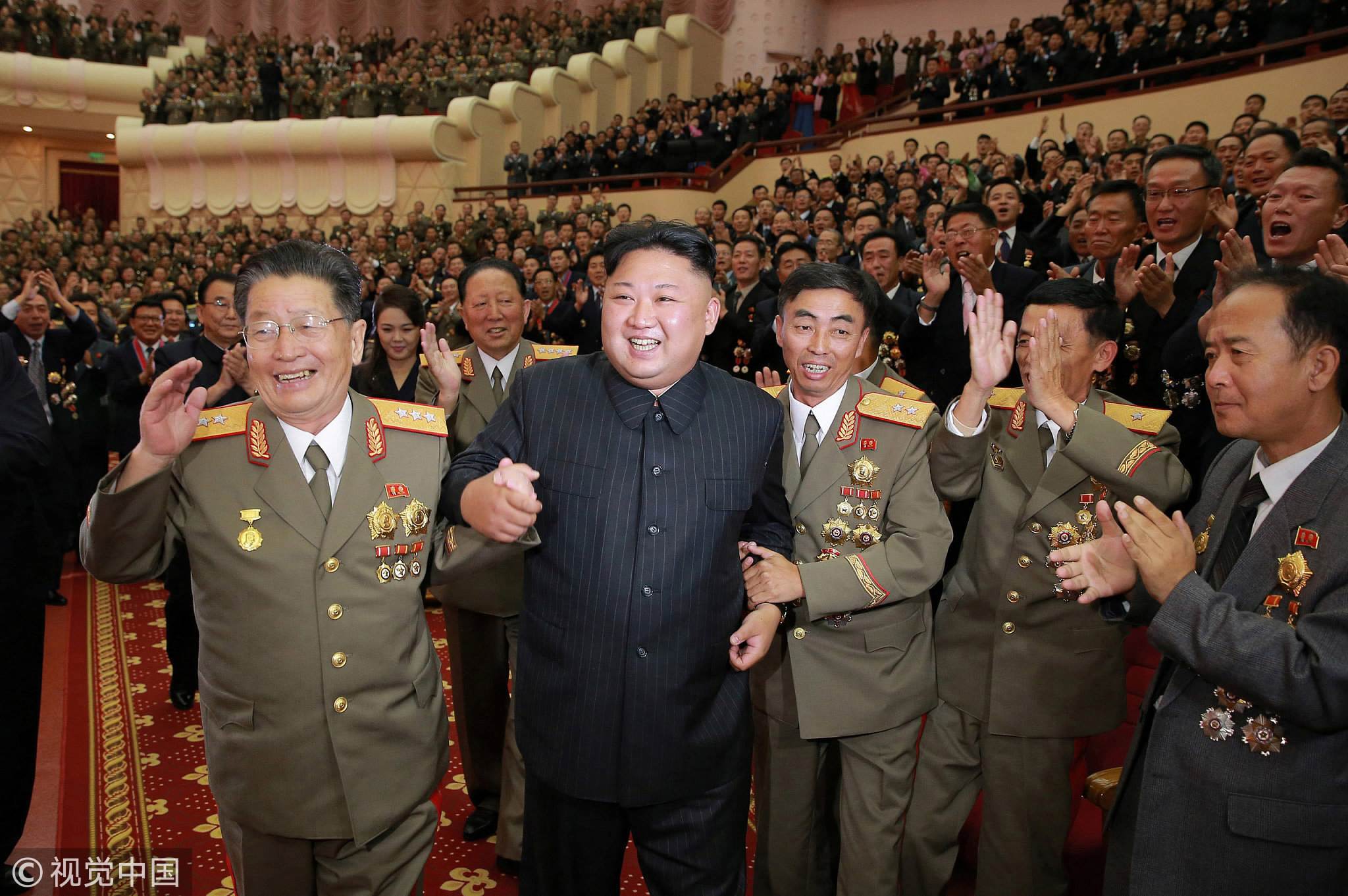
September 10, 2017: DPRK leader Kim Jong Un (L2, front) attends a celebration for nuclear scientists and engineers who contributed to a hydrogen bomb test in September 2017. /KCNA Photo via VCG
September 10, 2017: DPRK leader Kim Jong Un (L2, front) attends a celebration for nuclear scientists and engineers who contributed to a hydrogen bomb test in September 2017. /KCNA Photo via VCG
'Diplomatic tactic' by Pyongyang?
"It's a diplomatic tactic," said Kim Hyun-wook, professor at the Korea National Diplomatic Academy, calling it "brinkmanship to change the US position."
"It looks like Kim Jong Un was pushed into accepting US demands for 'denuclearization-first' but is now trying to change its position after normalizing North Korea-China relations and securing economic assistance," he added.
Joshua Pollack of the Middlebury Institute for International Studies said Pyongyang had been irritated by the "triumphalist tone."
"The North Koreans aren't happy with what they're seeing and hearing," he said. "There is still a yawning gulf between expectations for diplomacy in Pyongyang and Washington, DC."
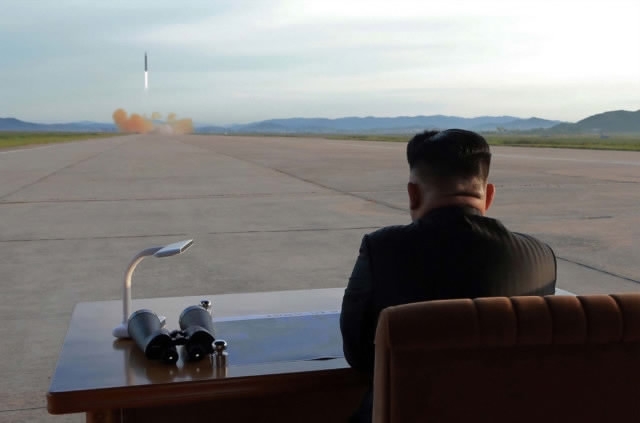
September 2017: DPRK leader Kim Jong Un guides the launch of a Hwasong-12 missile. /KCNA Photo via Reuters
September 2017: DPRK leader Kim Jong Un guides the launch of a Hwasong-12 missile. /KCNA Photo via Reuters
He said Pyongyang appeared irritated by the US administration’s vow to maintain sanctions in spite of the DPRK's concessions.
"The North Koreans want a change in tone from the US, and at least so far, they're not hearing one," he said.
Lv Chao, a Chinese expert of inter-Korean relations at the Liaoning Academy of Social Sciences, said that the statement made by the DPRK was not totally unexpected. Pyongyang was conveying an important message: The turnaround is a strategic decision of its top leader, and is a change that the DPRK has taken on its own initiative instead of a passive response to pressure from the US, he explained.
Frida Ghitis from CNN said the DPRK is testing how much Trump is willing to give up to prevent the collapse of the summit.
An opportunity for peace
China called on the DPRK and the US to create good conditions for the meeting between their leaders and make active efforts to achieve denuclearization and lasting peace on the Korean Peninsula.
The detente on the Korean Peninsula should be cherished by all relevant parties, said Lu Kang, spokesman for China's Ministry of Foreign Affairs, calling on those involved to maintain composure and show goodwill.
"In order to continue and consolidate the easing momentum on the peninsula, relevant parties should maintain composure, show goodwill and avoid actions that would provoke each other," Lu said.
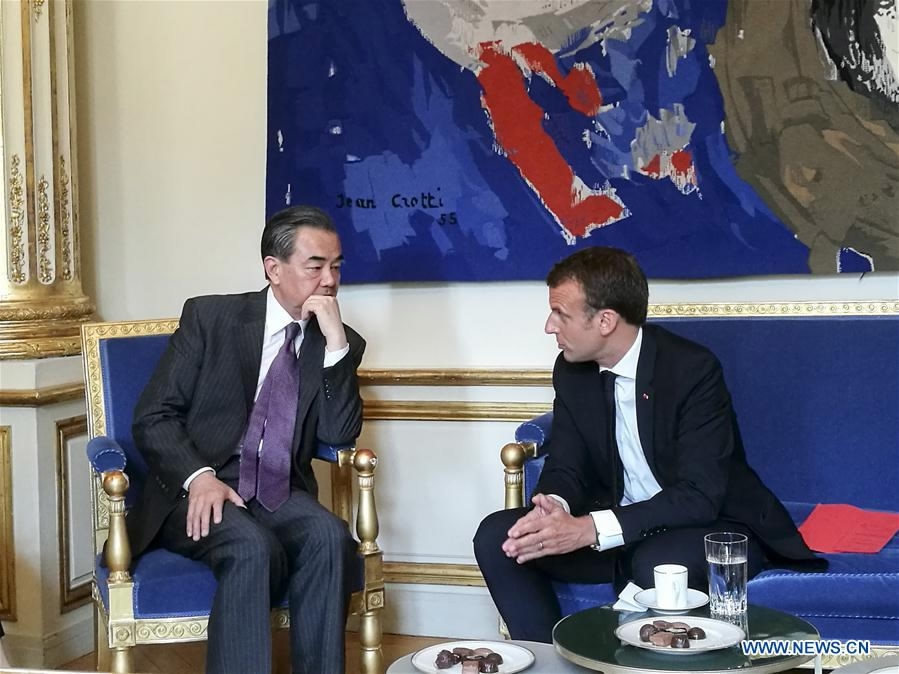
French President Emmanuel Macron (R) meets with visiting Chinese State Councilor and Foreign Minister Wang Yi at the Elysee Palace in Paris, France, May 16, 2018. /Xinhua Photo
French President Emmanuel Macron (R) meets with visiting Chinese State Councilor and Foreign Minister Wang Yi at the Elysee Palace in Paris, France, May 16, 2018. /Xinhua Photo
Wang Yi, Chinese State Councilor and Foreign Minister, urged all parties involved to move toward each other on Wednesday during his visit to France.
Wang hailed DPRK's previous moves to defuse tensions and urged the US to cherish the opportunity of peace.
While one side is showing flexibility, the other side should not be taking an increasingly hardline stance, he stressed.
The DPRK has announced plans to dismantle its nuclear test site next week.
(With inputs from Reuters)

 ["china"]