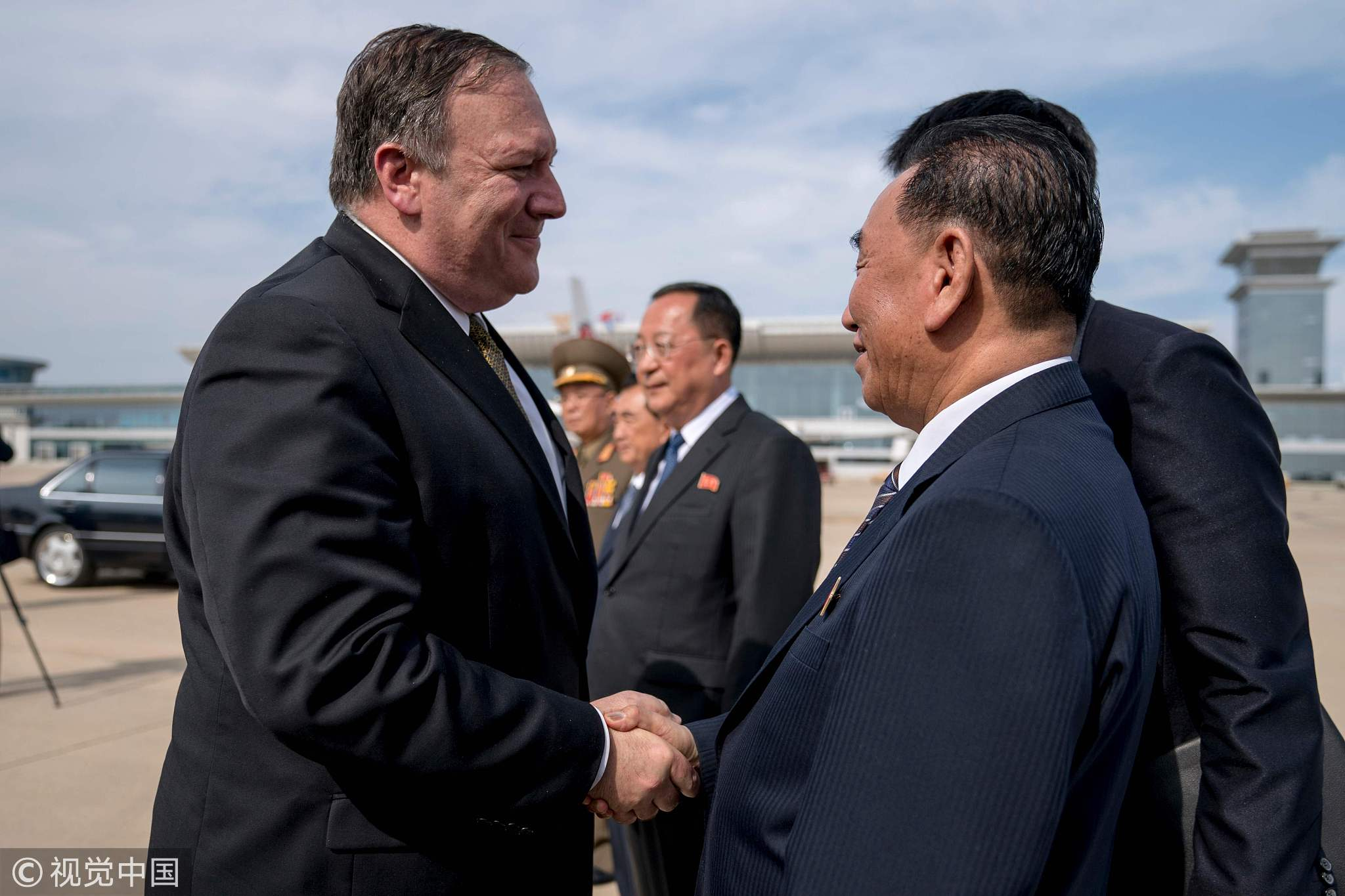
DPRK calls results of Pompeo's visit 'regrettable'
Updated
20:58, 10-Jul-2018
CGTN
["china"]
Share
Copied
01:35
The Democratic People's Republic of Korea (DPRK) expressed its disappointment on Saturday over the results of the visit by US Secretary of State Mike Pompeo, in a contradictory account to that of the US envoy.
"The US attitude and positions at the high-level talks on Friday and Saturday were extremely regrettable," the DPRK official news agency Korean Central News Agency (KCNA) said in a statement citing the country's foreign ministry.
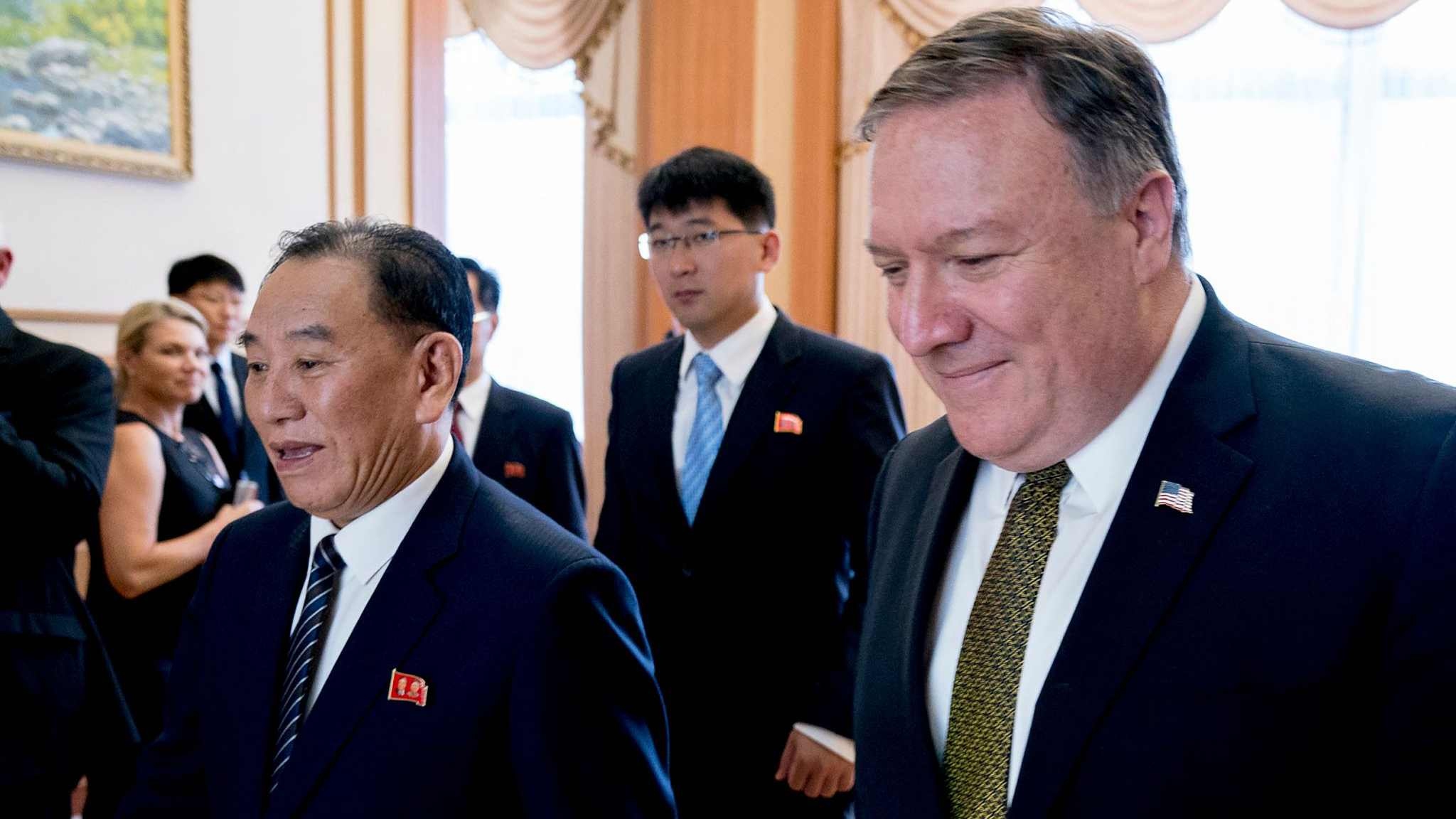
US Secretary of State Mike Pompeo (R) and Kim Yong Chol, a DPRK senior ruling party official, arrive for a lunch at the Park Hwa Guest House in Pyongyang, July 7, 2018. /VCG Photo
US Secretary of State Mike Pompeo (R) and Kim Yong Chol, a DPRK senior ruling party official, arrive for a lunch at the Park Hwa Guest House in Pyongyang, July 7, 2018. /VCG Photo
The statement came hours after US Secretary of State Mike Pompeo wrapped up his two-day trip to Pyongyang, announcing he had made progress "on almost all of the central issues" in talks with the DPRK, including on setting a timeline for its denuclearization.
Pyongyang criticized the US' "unilateral and gangster-like demand for denuclearization," saying the result of the talks with the delegation headed by Pompeo was "extremely troubling."
The DPRK's "firm, steadfast" resolve to give up its nuclear programs could falter after the US demanded unilateral denuclearization during two days of talks in Pyongyang.
"The US side came up only with its unilateral and gangster-like demand for denuclearization" as a complete, verifiable, irreversible denuclearization, also known as CVID, without making mention of "establishing a peace regime on the Korean Peninsula."
These run against the spirit of the Singapore summit between the DPRK leader Kim Jong Un and US President Donald Trump, the statement said.
Another letter from Kim to Trump
The DPRK side also asked Pompeo to pass on a "personal letter" from Kim to Trump, in which he expressed his hope to "consolidate good personal relations" with the US president forged during their summit on June 12.
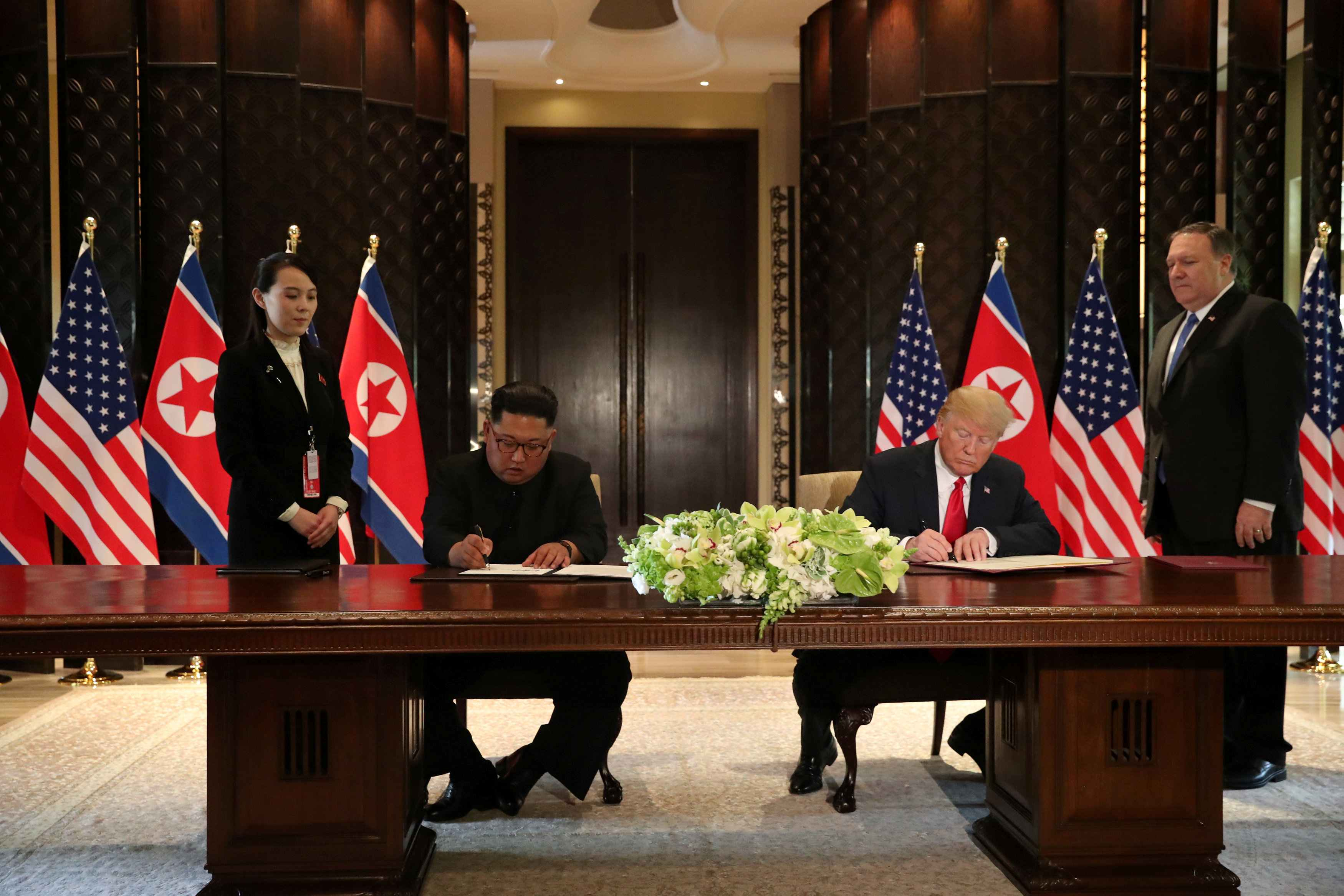
US President Donald Trump (R) and DPRK leader Kim Jong Un sign a joint document after their summit at the Capella Hotel in Singapore, June 12, 2018. /Reuters Photo
US President Donald Trump (R) and DPRK leader Kim Jong Un sign a joint document after their summit at the Capella Hotel in Singapore, June 12, 2018. /Reuters Photo
The DPRK side said it hopes to "seek a balanced implementation of all the provisions of the Joint Statement" signed during the meeting.
The "fastest way" to achieve a nuclear-free Korean Peninsula is through a phased approach under which both sides take steps at the same time, KCNA said.
The US however gave a different account, with Pompeo saying he spent "a good deal of time" discussing a timeline for denuclearization and destruction of the DPRK's nuclear and missile facilities.
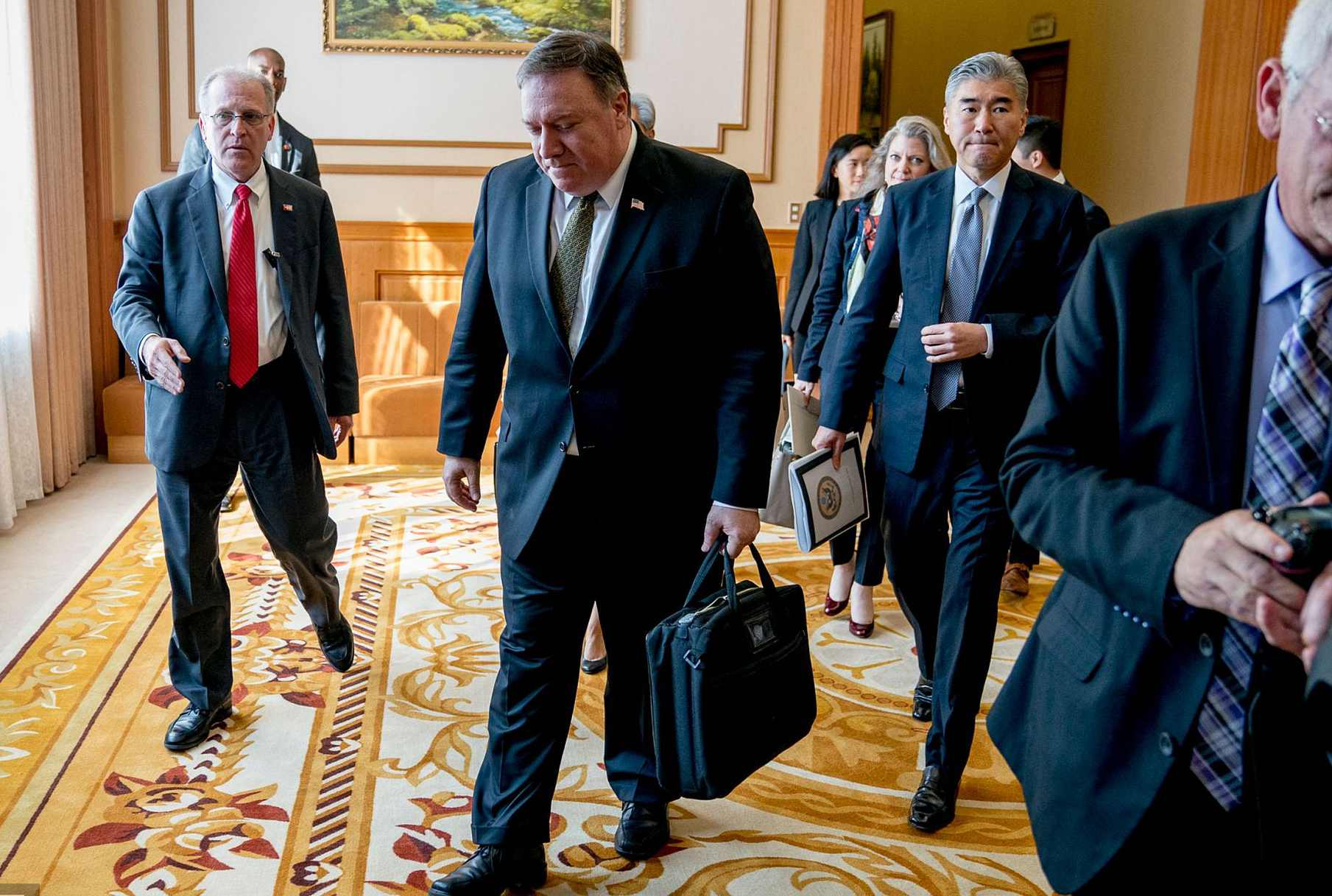
US Secretary of State Mike Pompeo (C) accompanied by US Ambassador to the Philippines Sung Kim (R) arrive for a meeting with Kim Yong Chol, a DPRK senior ruling party official (not pictured), for a second day of talks at the Park Hwa Guest House in Pyongyang, July 7, 2018. /VCG Photo
US Secretary of State Mike Pompeo (C) accompanied by US Ambassador to the Philippines Sung Kim (R) arrive for a meeting with Kim Yong Chol, a DPRK senior ruling party official (not pictured), for a second day of talks at the Park Hwa Guest House in Pyongyang, July 7, 2018. /VCG Photo
Pompeo's visit was aimed at hashing out measures to implement the June 12 summit agreement, in which the two countries' leaders agreed to work towards a complete denuclearization of the Korean Peninsula, without elaborating.
Pompeo said before arriving in Pyongyang he was seeking to "fill in" some details on the DPRK's commitments and maintain the momentum towards implementing the agreement from the summit.
The State Department says pressure will remain until the DPRK denuclearizes but, in statements this week, it redefined the US goal as "the final, fully verified denuclearization" of the country.
US State Department spokeswoman Heather Nauert said there had been no softening in the US position, although she would not explain why the department no longer defines its aim as CVID.
"Our policy hasn’t changed," she said several times when questioned about CVID. "Our expectation is exactly what the president and Kim Jong Un jointly agreed to in Singapore, and that is the denuclearization of North Korea (DPRK)."
US Secretary of State Mike Pompeo (L) says goodbye to DPRK senior official Kim Yong Chol, before boarding his plane at Sunan International Airport in Pyongyang, July 7, 2018. /VCG Photo
US Secretary of State Mike Pompeo (L) says goodbye to DPRK senior official Kim Yong Chol, before boarding his plane at Sunan International Airport in Pyongyang, July 7, 2018. /VCG Photo
Pompeo had previously said that Trump would reject anything short of CVID.
Pompeo said the two sides agreed to hold discussions on July 12 on the repatriation of the remains of the Americans killed in the 1950-53 Korean War, and also discussed "modalities" for the destruction of a missile engine testing facility.
Nauert said the July 12 meeting, which Pompeo said would take place at the inter-Korean border, would be at working level and involve US Defense Department officials.
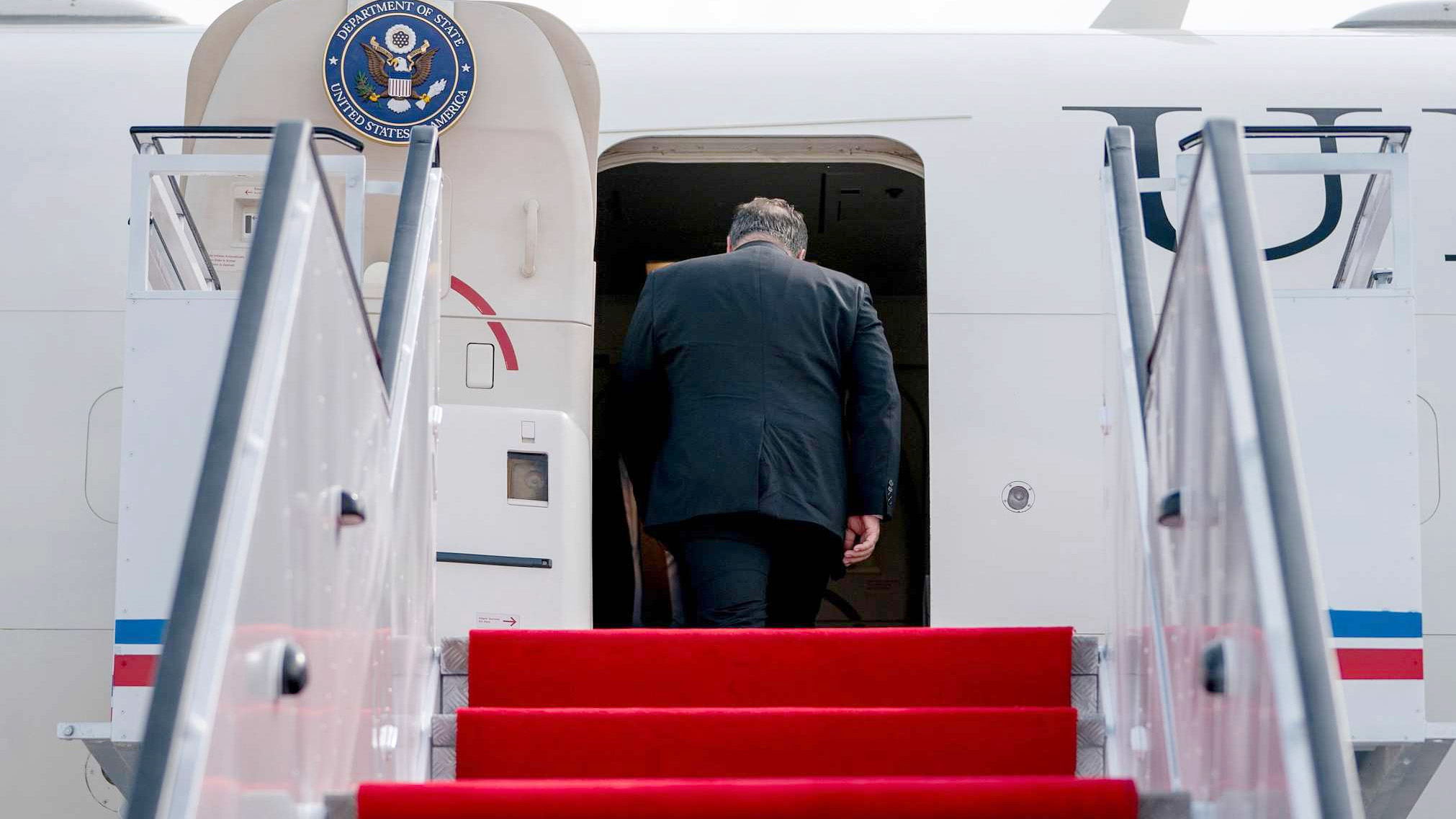
(Front image: US Secretary of State Mike Pompeo boards his plane at Sunan International Airport in Pyongyang, July 7, 2018. /VCG Photo)

 ["china"]