
Tech & Sci
15:03, 25-Apr-2018
Experts meet to settle bitter issues of chocolate industry
 ["europe"]
Share







Copied
Experts at a conference in Berlin are trying to resolve the issue of fair pricing for farmers and child labor as well as discussing the role of women in the cocoa and chocolate sector in an exclusive forum.
Farmers are grappling with the declining price of cocoa, after a bumper production of the crop, over the last few years. The prices hit a 10-year low last December to stabilize at 1,917 US dollars.
According to the International Cocoa Organization (ICCO), the organizers of the Cocoa Conference, cocoa prices are at their lowest level since October 2007 and are not recovering. The low pricing has nearly driven cocoa farmers to the brink of poverty and hunger.
Plummeting prices and other factors have forced more than 2.1 million children to work in cocoa fields in Cote d'Ivoire and Ghana alone. Both the countries produce nearly 60 percent of the world’s cocoa reserves. Experts claim that global chocolate majors and governments' commitments to reduce child labor by 70 percent by 2020 are facing uncertainty due to this ongoing crisis.
Confectionery and chocolate giants including Nestle, Mondelēz, Tony Chocolonely, and Cargill held a session on Wednesday on the practical implementation of Child Labor Monitoring and Remediation Systems (CLMRS) initiated by the International Cocoa Initiative.
While chocolate manufacturers have claimed a 51 percent reduction in child labor in the last three years, non-profits have argued that CLMRS is only able to cover 15 to 20 percent of child labor involved in the farming.
Apart from falling prices, aging cocoa trees, diseases and climate change have already reduced annual crop production by more than 30 percent. Joseph Boahen Aidoo, chief executive of the Ghana Cocoa Board during the conference maintained, plummeting prices are driving farmers in Ghana out of cocoa farming. “Farmers are gradually moving into growing cashew crop, rubber and also getting in illegal mining,” he said during an address.
Non-profits and chocolate companies trying to improve cocoa farmers’ livelihood oppose each other on the sustainability and production issues. Companies want to increase productivity through the high yielding variety of cocoa plants, but activists claim, the current crisis is a result of overproduction leading to declining prices.
Non-profits want better cocoa and cacao pricing for farmers and minimum replacement of the original variety of the trees. Company delegates at the conference also pointed out that chocolate demand is set to rise in the coming years. Emerging economies like China may consume only 50 grams of chocolate per person every year; this demand is likely to soar.
At present Europe and the US are major consumers of chocolate with an annual consumption of 9 kg and 6 kg per person every year. Senior executives of the largest multinational chocolate companies, including Mars Wrigley, Ritter Sport, and Barry Callebaut, are also attending the conference.
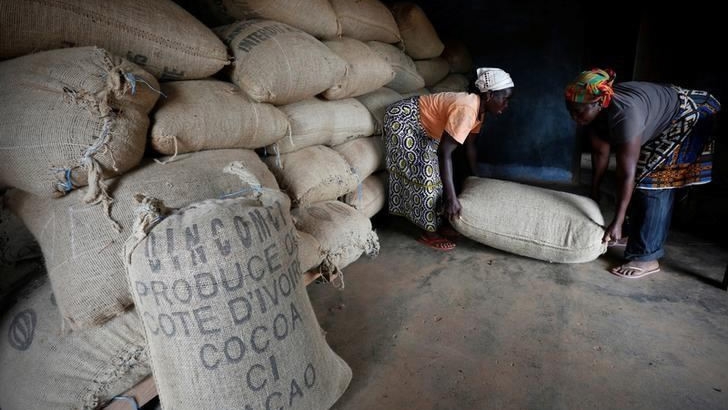
[Cover Photo: Women from a local cocoa farmers association lift a sack in a cocoa warehouse in Djangobo, Ivory Coast, November 17, 2014. /Reuters]