
Opinion
21:22, 16-May-2019
EU-U.S. relations at a crossroads
 ["china"]
Share







Copied
Editor's note: Nuño Rodríguez is a political scientist and analyst, and director of the political consultancy Quixote Communications. The article reflects the author's opinions, and not necessarily those of CGTN.
It seems there had always been an agreement between U.S. and European foreign policies, but today it is evident this is not true. The EU has shown there exist several differences regarding key points in U.S. foreign policies.
One of the points relies on the U.S. relationship with Iran and the Joint Comprehensive Plan of Action (JCPOA). Since the U.S. had exited from the JCPOA with Iran, there have been disagreements between the EU and U.S. regarding the sanctions the U.S. had imposed on Iranian products. Since these sanctions were imposed by the EU, Iran had sought to sell oil and products in grey markets.
The EU had kept the JCPOA active and tried to bypass U.S. sanctions in different ways. Trump had made clear in his campaign that rejecting the JCPOA signed by Obama was the first thing on his list when coming to power.
This act by the Trump administration revealed how weak the EU global power is. The EU wasn't able to set a different trading frame for Iranian products; it was China, Russia, and India which helped most to bypass U.S. sanctions.
In fact, the U.S. does not consider the EU as a whole, since Mike Pence send this week an ultimatum to exit the JCPOA not to the EU, but only to Germany, France, and the UK. These three countries are at the true core of the EU decision making.
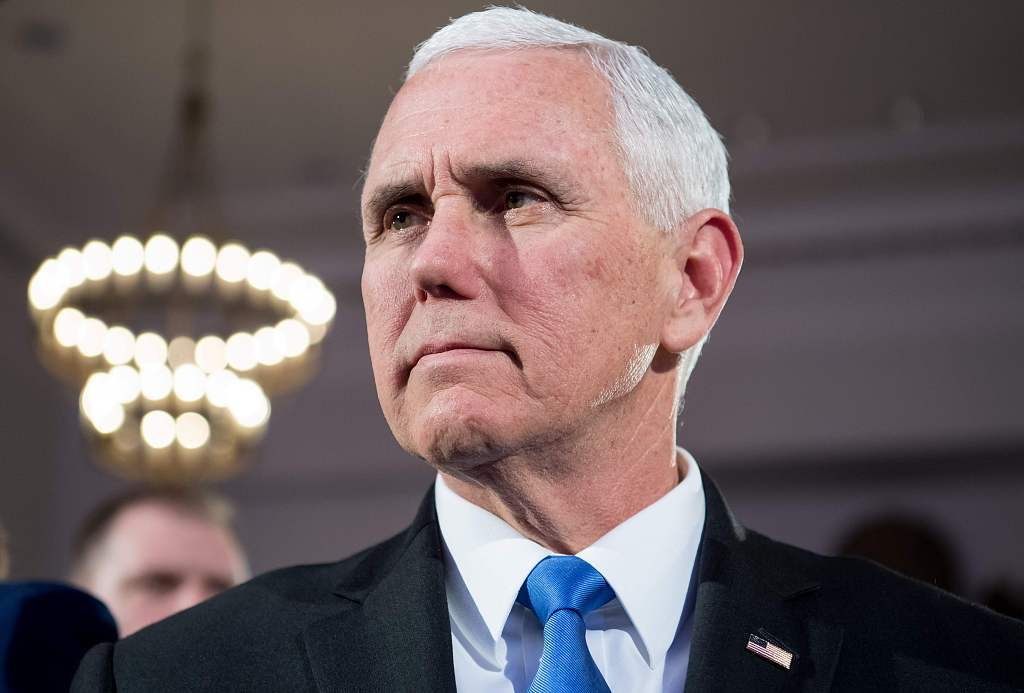
U.S. Vice President Mike Pence arrives at the Bavarian regional parliament on the sidelines of the 55th Munich Security Conference (MSC) in Munich, southern Germany, February 15, 2019. /VCG Photo
U.S. Vice President Mike Pence arrives at the Bavarian regional parliament on the sidelines of the 55th Munich Security Conference (MSC) in Munich, southern Germany, February 15, 2019. /VCG Photo
The struggle between the EU decision core and the U.S. seems to be turning to the U.S. side. Germany has withdrawn the landing rights of Iranian carrier Mahan Air. Germany accused this private company of transporting military equipment to Syria and other conflict zones. The country has also arrested an Afghan interpreter accused of spying for Iran.
Germany announced Tuesday that it is suspending its training of Saudi forces to fight terrorism in the Middle East amid U.S.-Iran tensions, by the way denouncing that Teheran is behind terrorist activities inside Europe.
Since that German statement, countries like the Netherlands or Denmark suddenly found evidence showing how Iran was behind terrorist actions. This German move drove the EU to follow the U.S. and adopt sanctions against Iran.
However, the EU does not cut back on its ambition to gain global influence and is pushing forward a European army, aimed at self-defense.
The France President Macron had declared the intention of creating a European army, Angela Markel quickly backed that proposal. The France-Germany axis is confident of setting up a permanent army structure, with the nuclear power of France as an umbrella to defend Europe.
The European army idea is a problem for the Trump Administration, because an independent Europe may be an obstacle to U.S. foreign policies. The EU already has a lot of projects pushing forward an integrated European army.
U.S. President Donald Trump speaks at a press conference, March 29, 2019. /VCG Photo
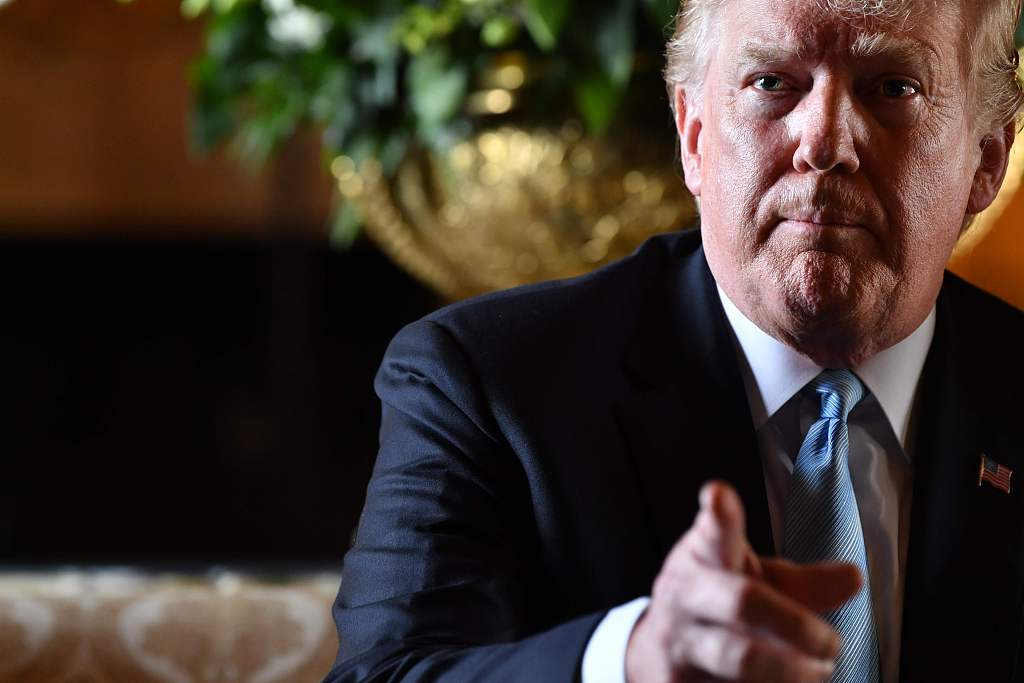
U.S. President Donald Trump speaks at a press conference, March 29, 2019. /VCG Photo
From Brussels there are a lot of projects working to develop a Permanent Structured Cooperation (PESCO); from Intelligence Schools to armament factories. This EU strength has been troubling NATO. The military alliance has been in charge of European defense since 1949, but under the Trump Administration, this safeguarding function was not ensured.
The U.S. has demanded more investments from its European partners in NATO because the U.S. was reportedly providing more resources to the alliance. A deep analysis shows how the U.S. provides funds to buy U.S. arms. The position the U.S. has as main resources provider allowed the country to lead the alliance to defend its own foreign policies, instead of having collective goals.
At the moment, the U.S. seems more interested in having a confrontation with Iran than in European defense. So, this demand from the U.S. seems to have had a different outcome than expected. NATO and the U.S. are to retain the EU without autonomous defense and with NATO dependency.
European countries have a long way to go to develop self-defense capability. In fact, to develop an autonomous defense system would be more expensive than the request by NATO of 2 percent of GDP.
To achieve that goal, the European Commission has set up a European Defence Fund (EDF) that will invest 13 billion euros (about 14.5 billion U.S. dollars) until 2021. This seems to be an aggrievance to the U.S. because the main part of this investment will rely on European firms. The EDF is open to investing in non-EU firms, but this must be decided unanimously.
To defend Europe has been a very profitable business for the U.S. For that reason, the Trump Administration treats the EU with sanctions in arms trade if the document issued by the EDF is not revised.
United States President Donald Trump speaks at a joint press conference with the President of the European Commission Jean-Claude Juncker in the White House Rose Garden in Washington, D.C., July 25, 2018. /VCG Photo
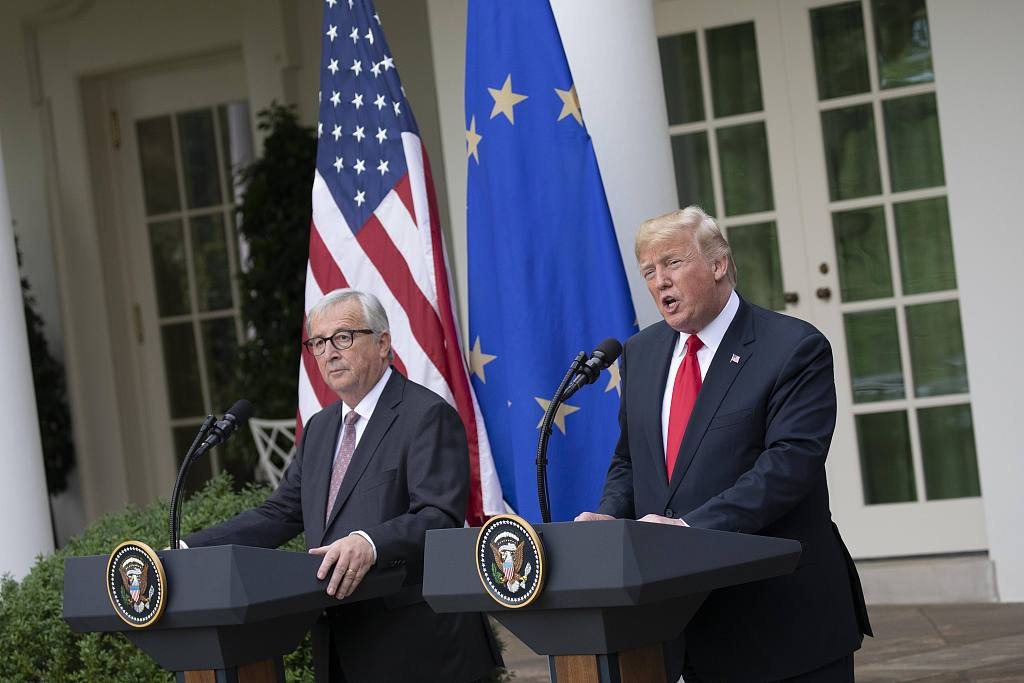
United States President Donald Trump speaks at a joint press conference with the President of the European Commission Jean-Claude Juncker in the White House Rose Garden in Washington, D.C., July 25, 2018. /VCG Photo
If the PESCO becomes a reality, the EU would have the second largest army in the world. The EU has the funds, know-how, research investment, human resources as well as the will.
The Trump Administration has open conflicts with the DPRK, Venezuela, Iran, China, and Russia. It is hard to believe, but now it's opening a new front with the EU.
The U.S. has labeled Iran Revolutionary Guard Corps (IRGC) as an international terrorist organization, at the same time it is concentrating troops in the Middle East. This provoked the Netherlands and Germany to suspend their military training missions in Iraq due to tension escalation.
Also, the Spanish Minister of Defence Margarita Robles has ordered the temporary withdrawal of the Spanish frigate Méndez Núñez from the combat group led by the aircraft carrier USS Abraham Lincoln.
Whatever will happen in the Middle East, it will be an issue involving Israel, the United Arab Emirates (UAE) and Saudi Arabia. It is very likely that the Trump Administration won't be able to succeed in all the conflicts it is involved.
(If you want to contribute and have specific expertise, please contact us at opinions@cgtn.com.)