
Culture
13:41, 03-Aug-2018
Tibet's largest joint archaeological excavation to explore region's ancient civilizations
Updated
13:11, 06-Aug-2018
 ["china"]
Share







Copied
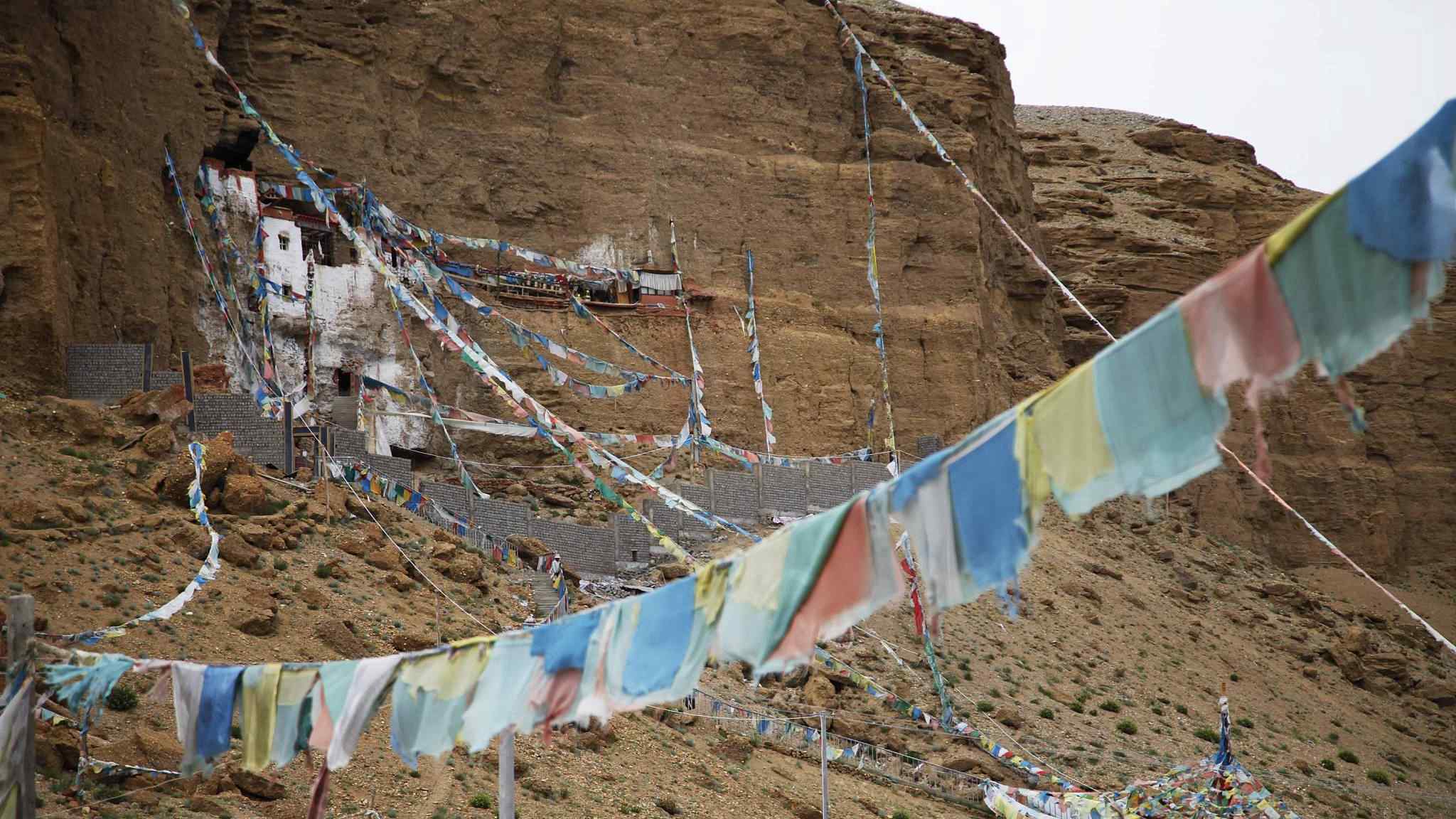
Chinese archaeologists from across the country have recently embarked on a joint archaeological project in the southwestern Tibet Autonomous Region's Ngari Prefecture – the largest operation of its kind that the region has ever seen
Organized by China's State Administration of Cultural Heritage (SACH) and Tibet's Administration of Cultural Heritage, the excavations that kicked off in early July are focusing on ancient archaeological sites located in the prefecture's Langqen Zangbo Valley and the Zanda Earth Forest areas.
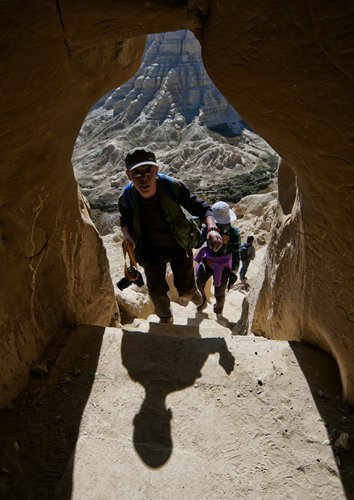
Scholars and journalists visit the Guge Empire ruins in Tibet, southwest China. /Photo from Global Times
Scholars and journalists visit the Guge Empire ruins in Tibet, southwest China. /Photo from Global Times
This year's work will also include sites dating from the Early Metal Age (ca. 2000 BC-300 AD), which overlapped six ancient China dynasties, China Tibet News reported, quoting the region's cultural heritage watchdog.
Key historical sites
"The reason why we chose to launch the joint excavation in Ngari Prefecture is that the area has a significant place in Tibet's history," Huo Wei, head of Sichuan University's School of History and Culture and a member of the project, told the Global Times on Wednesday.
Ngari Prefecture, located in the northern part of the Qinghai-Tibet Plateau, is home to numerous major sites that are connected to some of Tibet's earliest civilizations, including the Zhang Zhung culture (1500 BC-AD 645) – which is believed to be the origin of the local Bon religion that later influenced Tibetan Buddhism, the Tibetan Empire (7th-9th century) as well as the Guge (9th-17th century) culture.
"Many Tibetan civilizations that we know of today can be traced back to the Ngari Prefecture; sites located in the prefecture provide major evidence that gives us insight into subjects such as the origin and the development of the Bon religion and the connections the early civilizations taking shape here had with neighboring cultures," Huo said, adding that the project is estimated to take at least two years to complete.
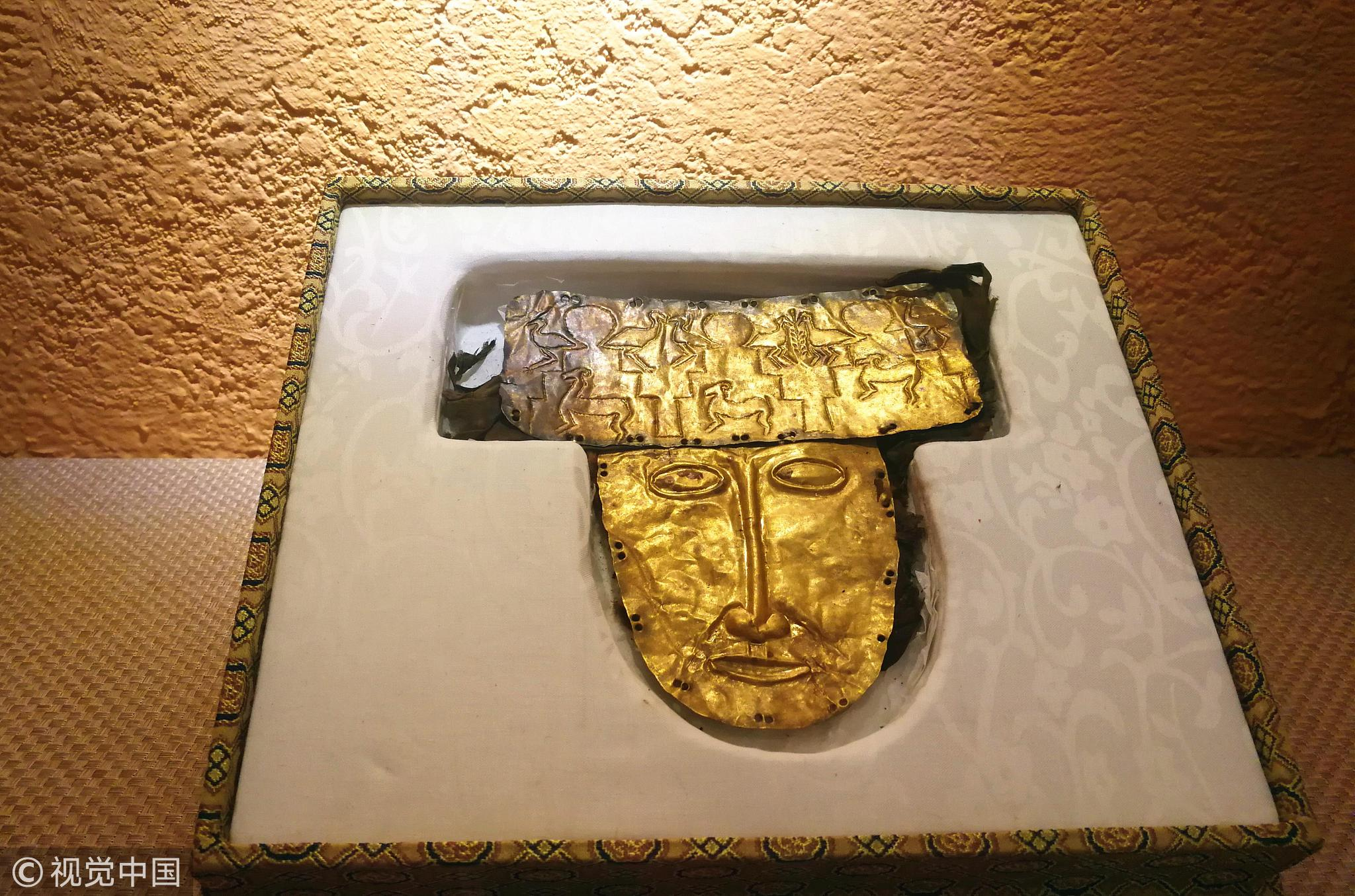
A Zhang Zhung gold mask unearthed in the Ngari Prefecture in Tibet. /VCG Photo
A Zhang Zhung gold mask unearthed in the Ngari Prefecture in Tibet. /VCG Photo
During the course of the project, local archaeologists will team up with experts from Beijing and archeological institutes in the neighboring Shaanxi and Sichuan provinces to continue exploring a number of the region's ancient sites, including the Piyang and Dungkar Site – a key Guge site, to learn more about the region's ancient history, China Central Television reported on Tuesday
Moreover, the joint excavation will also try to tackle these sites' relations with neighboring cultures.
"A major excavation site in this joint program, the Piyang and Dungkar Site has already unearthed a number of bronze swords that showcase close relations with areas in Central and South Asia," Huo, also the head of the Piyang and Dungkar Site project told the Global Times
Aside from the Piyang and Dungkar Site, archaeologists have also in recent years found gold masks, silk items and wooden containers at the prefecture's other ancient sites that provide evidence of the region's connections with its neighbors in ancient times.
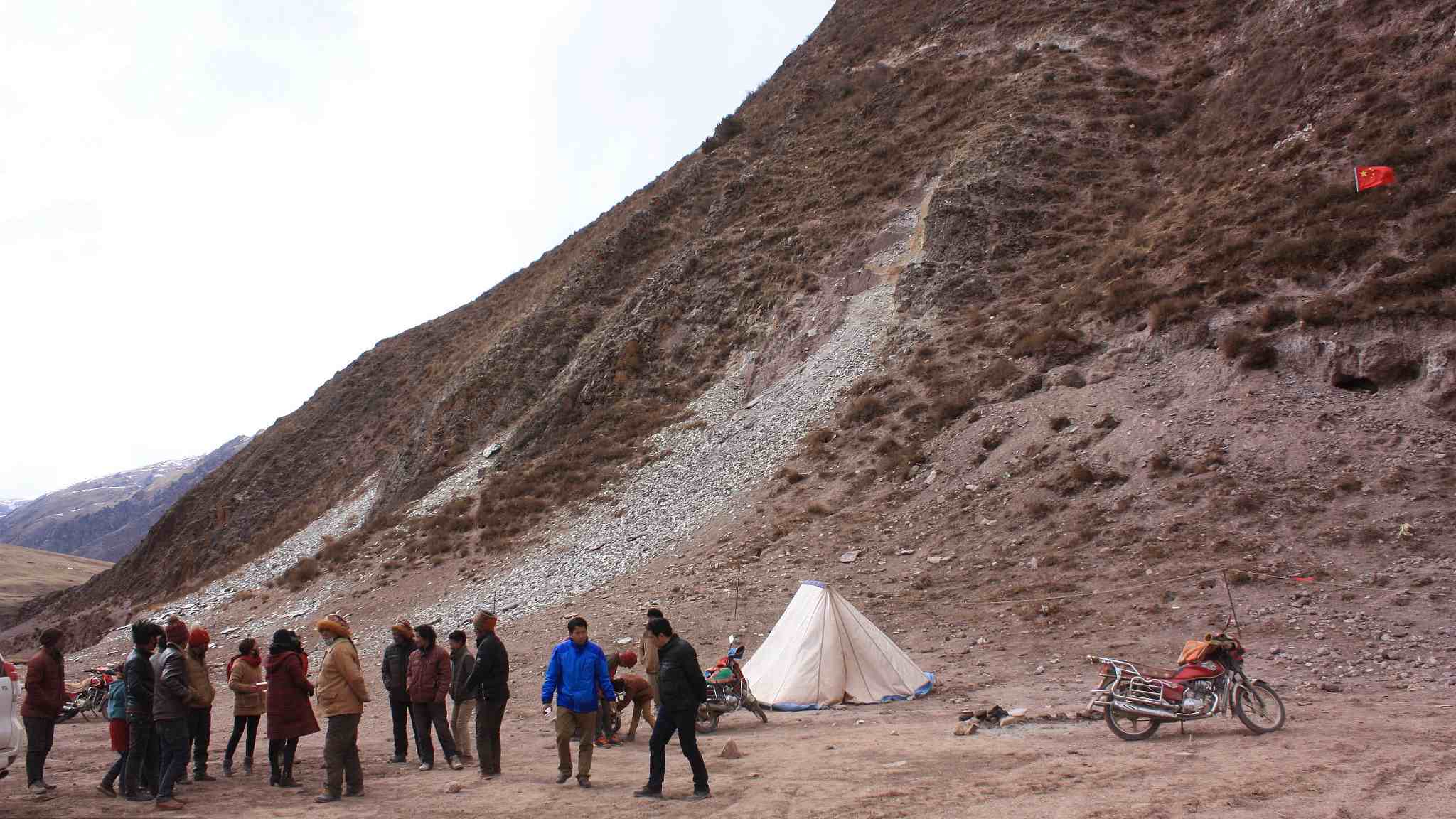
Scholars in Tibet /VCG Photo
Scholars in Tibet /VCG Photo
"We expect to find more evidence that showcases these links during this joint project," Huo said
Based on the items unearthed at a number of ancient sites in the Ngari Prefecture since 2014, experts theorize that the Qinghai-Tibet Plateau had already entered an era of advanced civilization even before Buddhism was introduced into the region during the 7th century, CCTV reported.
History on display
Aside from the joint excavation project, a new exhibition in the Ngari Prefecture that showcases some of the region's latest archaeological finds has also captured the attention of the public.
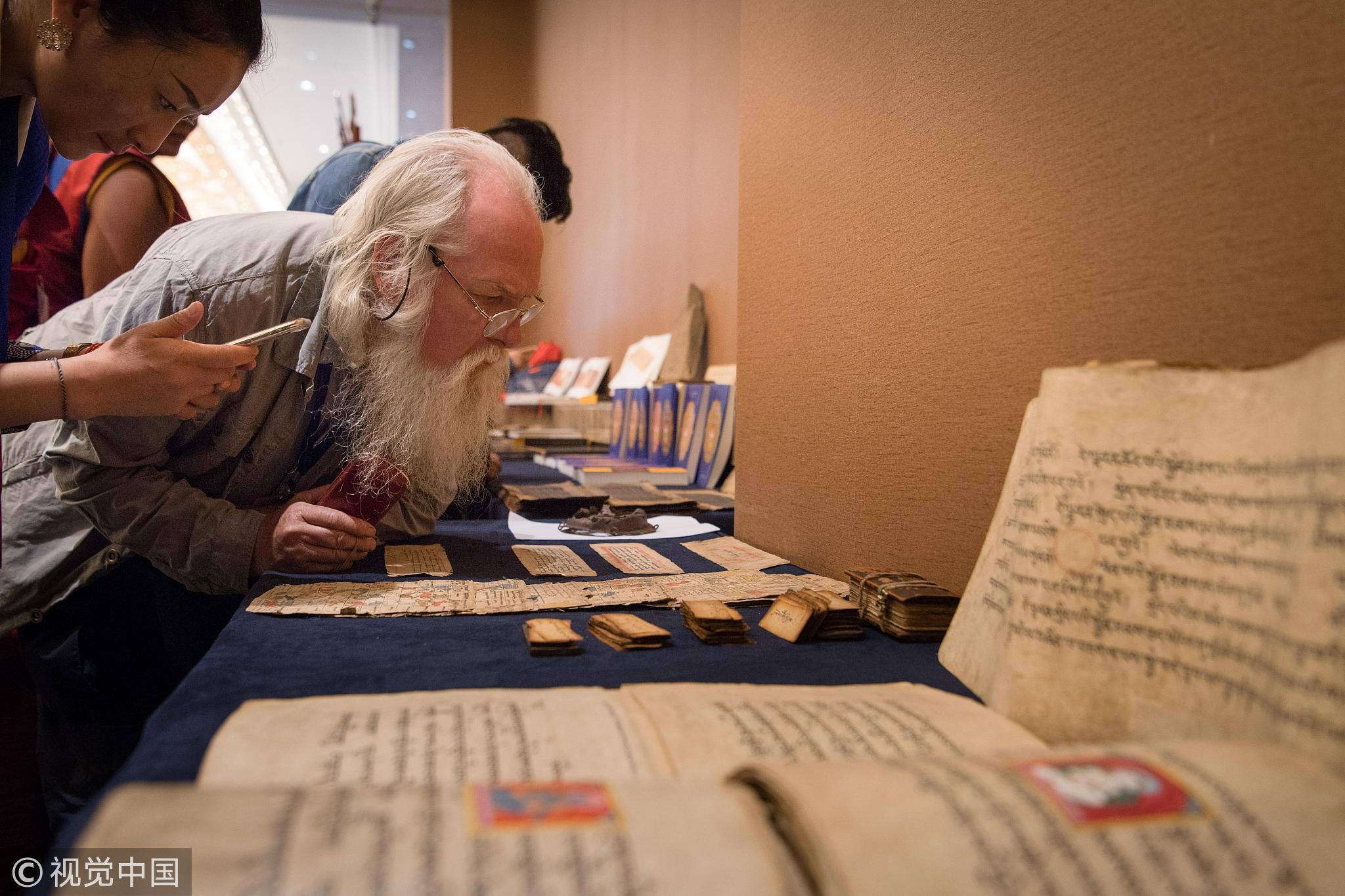
An expert reads the ancient books unearthed in the Ngari Prefecture in Tibet. /VCG Photo
An expert reads the ancient books unearthed in the Ngari Prefecture in Tibet. /VCG Photo
The exhibition that kicks off on Saturday puts on display for the first time in Tibet more than 60 precious artifacts found at ancient sites in the region in recent years, including a renowned Zhang Zhung gold mask and the earliest silk items found in Tibet, the China News Service reported on Sunday.
"Based on the discovery of the earliest silk items in Tibet, which were brought to the region from the central plains through the northwestern regions, we may be able to reconstruct the history of the part of the Silk Road that passed through the western part of the Qinghai-Tibet Plateau," Tong Tao, an archaeologist from the Chinese Academy of Social Sciences' Institute of Archaeology, told the China News Service.
Source(s): Global Times