
World
19:50, 03-Jun-2018
US customs seizes 64-year-old immigrant's life savings
 ["north america"]
Share







Copied
A battle between a US immigrant family and the US Customs and Border Protection (CBP) for civil forfeiture laws has recently made headlines.
The family’s life saving, 58,100 US dollars in cash, was seized by the CBP without charging them with a crime, while they were traveling.
Rustem Kazazi, 64, born in Albania and living in suburban Cleveland, traveled back to his home country with his family last October. With plans to make repairs on a property in Albania and potentially purchase a vacation home, Kazazi decided to pack his life savings in his carry-on.
“Albanian contractors often prefer dollars and euros over the local currency”, said Kazazi to the Washington Post.

Kazazi is living in suburban Cleveland with his wife and son. /Photo credits to the Institute for Justice
Kazazi is living in suburban Cleveland with his wife and son. /Photo credits to the Institute for Justice
However, Kazazi was stopped on their first leg of the flight and searched by customs at the Cleveland Hopkins International Airport, according to the Washington Post.
After the money was found by the CBP in Cleveland, Kazazi said he was led into a room “where he was strip-searched," but the CBP agent found no drugs, contraband or any evidence of illegal activity, according to the lawsuit.
“A man wearing rubber gloves then started searching different areas of my body,” he said, “I felt my rights violated.”
Since the agent didn’t find evidence that Kazazi was committing a crime, they claimed that they could not return the money. Instead, they gave Kazazi a receipt for an unspecified amount of US currency.
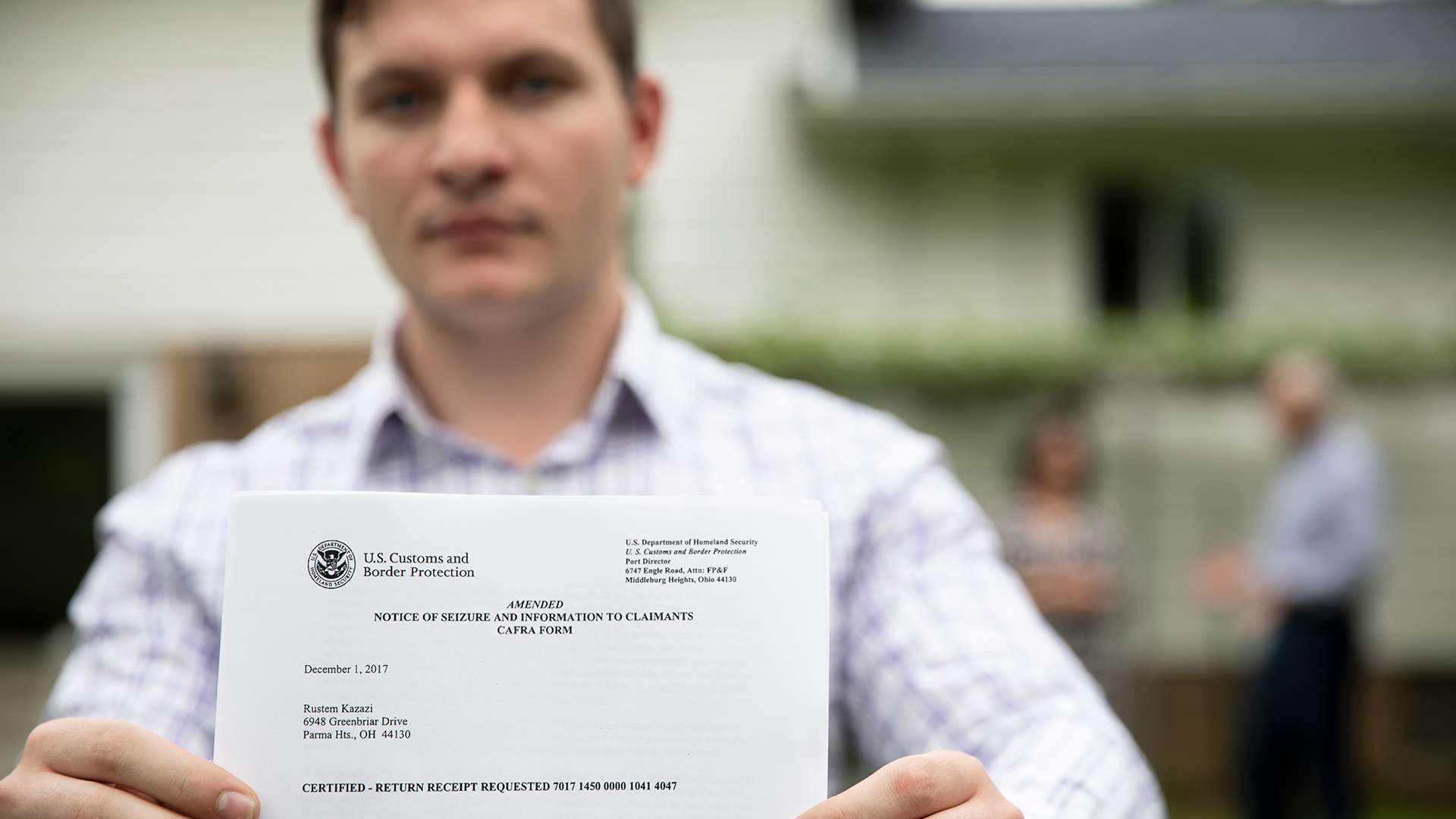
One month later, CBP sent Kazazi a notice saying the agent decided to seize the cash since it was “involved in a smuggling/drug trafficking/money laundering operation” through a process known as civil asset forfeiture, a law enforcement technique allowing authorities to take cash and property from people who are never convicted or charged with crime.

The notice Kazazis received from CBP one month later after the mony was seized. /Photo credits to the Institute for Justice
The notice Kazazis received from CBP one month later after the mony was seized. /Photo credits to the Institute for Justice
Seven months on, Kazazi still hasn't received his money.
“I began to worry that they were trying to steal the money for themselves,” Kazazi said in the court declaration.
“Because the Kazazis did nothing wrong, the government had to make something up. That is why, more than a month after the seizure, CBP tried to justify its action,” the Institute for Justice, a non-profit libertarian public interest law firm in the US said in a statement.
“If people traveling…carrying more than $10,000 in currency or negotiable monetary instruments, they must fill out a report of international transportation of currency and monetary instrument,” said the CBP on its website.
But it has not mentioned whether the money needed to be declared on the first leg of the trip or before leaving the US, CNN said.
“If they (the agents) are concerned that he was not complying with the reporting compliance, they did not note it on the paperwork at the time of the seizure,” Johanna Talcott, an attorney for the Institute for Justice said.
After retiring from the local police office in Albania, Kazazi and his wife came to US on a lottery visa in 2005. Five years later, Kazazi and his wife became US citizens.