
Politics
13:52, 15-May-2018
China's Tibetan legislators wrap up visit to US
 ["china"]
Share







Copied
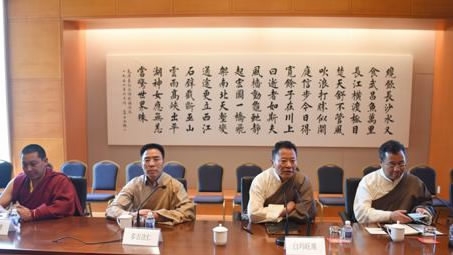
A National People's Congress (NPC) delegation of legislators from southwest China's Tibet Autonomous Region wrapped up its six-day visit to the United States on Monday.
The delegation, led by Baima Wangdui, deputy of the autonomous region's National People's Congress and member of the standing committee of the Communist Party of China (CPC) regional committee, met US Senator Dan Sullivan, Congressmen Darin LaHood, Rick Larsen, Jim McGovern and State Department officials in Washington, DC.
Baima Wangdui, who is also the secretary of the CPC Lhasa municipal committee, held discussions with assistants of US lawmakers and experts at the research department of US Congress.
In San Francisco, the delegation exchanged ideas with local overseas Chinese and Tibetan representatives.
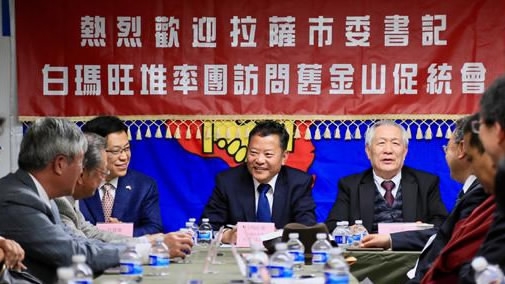
Led by Baima Wangdui, deputy of the National People's Congress of the Tibet Autonomous Region, NPC delegation exchange ideas with local overseas Chinese and Tibetan representatives in San Francisco on May 13, 2018. /People's daily Photo
Led by Baima Wangdui, deputy of the National People's Congress of the Tibet Autonomous Region, NPC delegation exchange ideas with local overseas Chinese and Tibetan representatives in San Francisco on May 13, 2018. /People's daily Photo
During meetings with the US side, Baima Wangdui said China attaches great importance to China-US relations.
He said that Chinese President Xi Jinping has maintained close contact with his US counterpart Donald Trump, and the two leaders have reached important consensuses on a broad range of issues, which guided the China-US relations to major progress.
He also pointed out that some differences and sensitive issues still exist between that need to be handled properly.
The Tibet Autonomous Region is willing to implement the important consensuses reached between the two heads of state, strengthen exchanges and cooperation with the US side, and enhance mutual understanding so as to serve the overall interests of China-US relations, he said.
Over the past 60 years since Tibet's peaceful liberation, remarkable progress has been made in various areas, and people's rights and freedom have been fully guaranteed, which is a fact obvious to all, he said.
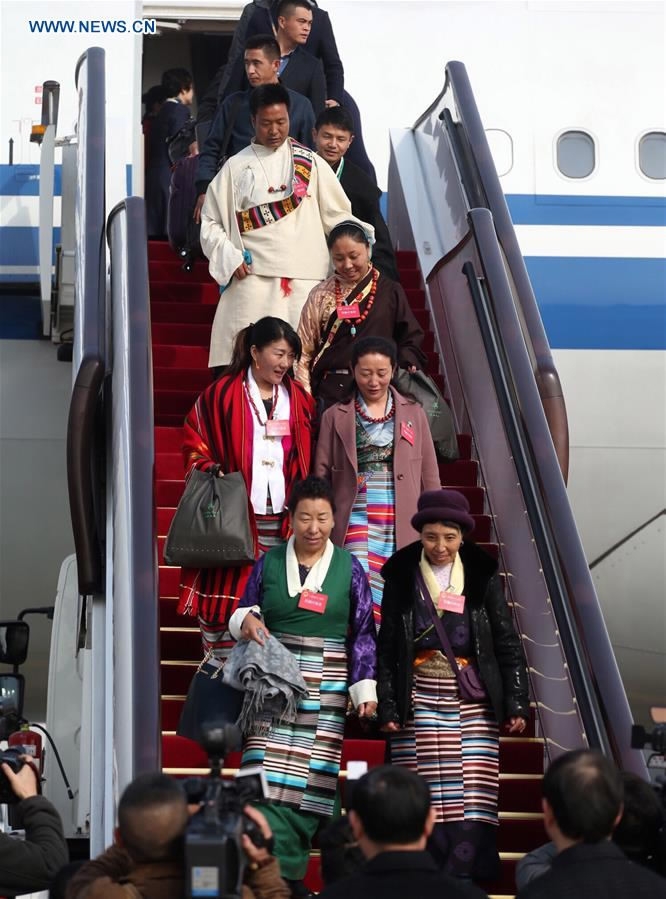
Deputies to the 13th National People's Congress (NPC) from Tibet Autonomous Region, arrive in Beijing, capital of China, March 2, 2018. /VCG Photo
Deputies to the 13th National People's Congress (NPC) from Tibet Autonomous Region, arrive in Beijing, capital of China, March 2, 2018. /VCG Photo
He stressed that the Tibet issue is a matter concerning China's sovereignty and territorial integrity, the core interests of China.
The Tibet issue is an internal affair of China which brooks no intervention from any foreign country, he noted.
More than three million Tibetans living in Tibet are the most qualified to speak about what happens there, Baima Wangdui said.
He hoped that the US side fully recognizes the extreme sensitivity of the Tibet issue and the anti-China nature of the Dalai clique, earnestly respect the core interests and major concerns of China, allow no visits by the heads of the Dalai clique, refrain from whatever contact with it, offer no support and convenience to its anti-China separatist activities, and handle the Tibet issue in a discreet and proper way, so as not to disturb China-US relations.
The US side said that both China and the United States are great countries, and their relations are generally moving ahead though they experienced some ups and downs occasionally.
The United States expects to build a constructive and result-oriented China-US relationship, strengthen cooperation with China and constantly achieve new outcome.
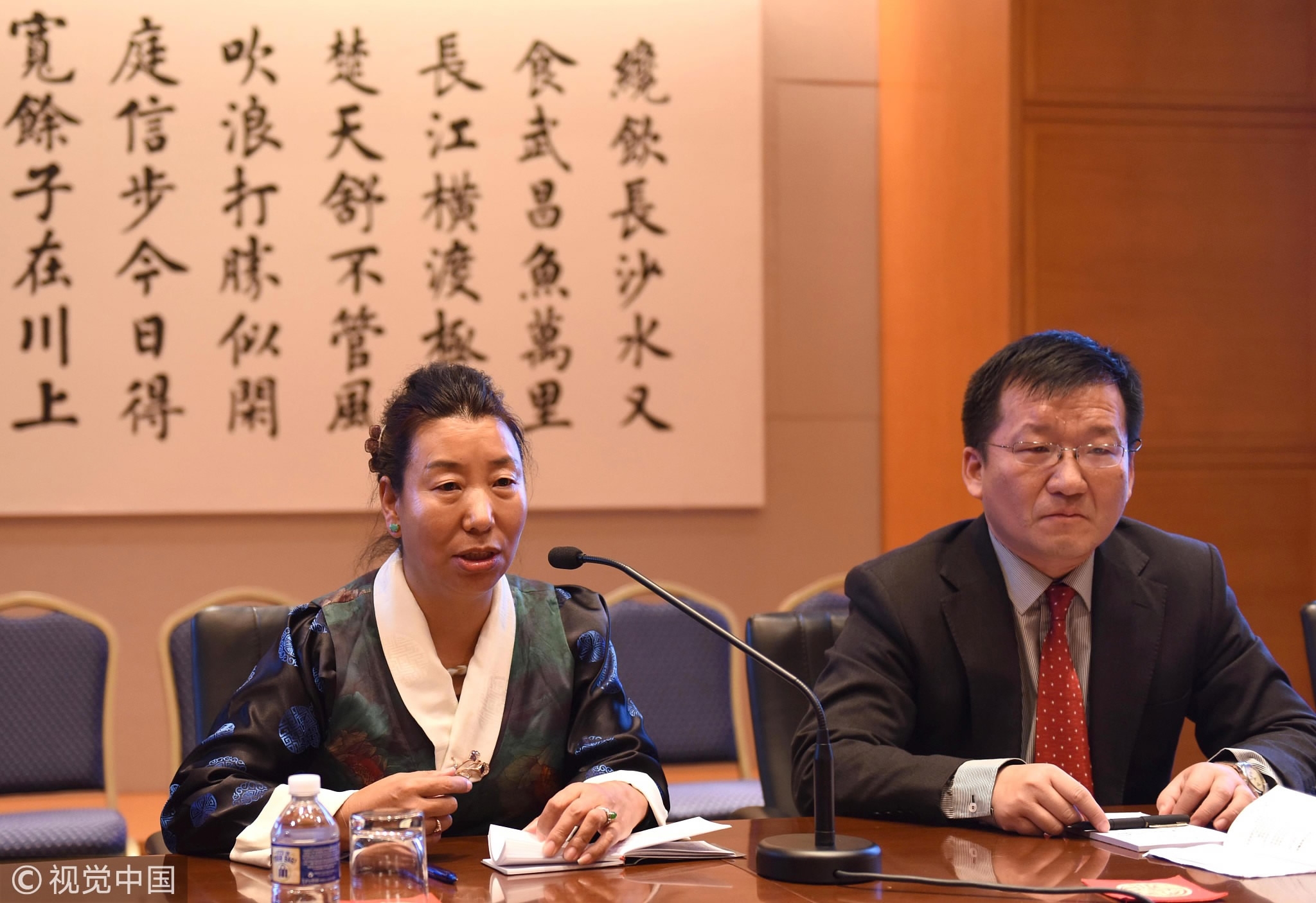
File photo: The Tiebetan NPC delegation meets US Senators and other State Department officials in Washington, DC, on December 5, 2017. /VCG Photo
File photo: The Tiebetan NPC delegation meets US Senators and other State Department officials in Washington, DC, on December 5, 2017. /VCG Photo
The US side recognizes that Tibet is part of China and it will not support "Tibet independence", and this position has remained unchanged.
In meetings with local overseas Chinese and Tibetan representatives, the delegation briefed on the historic changes and achievements back in China.
Baima Wangdui said that under the strong leadership of the CPC and the government, it took Tibet only several decades to advance from backwardness to progress, from poverty to affluence, and from seclusion to openness.
Tibet has made a historic stride in terms of its social system and witnessed earth-shaking social changes, he said, adding that today's Tibet is at its best period in history.
The overseas Chinese and Tibetan representatives took great pride in the achievements made in various sectors of Tibet, and expressed their readiness to continue to work for the mutual understanding between China and the United States and to contribute to development and prosperity of their motherland and hometowns.
Source(s): Xinhua News Agency