
Politics
16:06, 02-Oct-2018
Japan's Abe reshuffles cabinet, retains key ministers
Updated
15:18, 05-Oct-2018
 ["china"]
Share







Copied
00:35
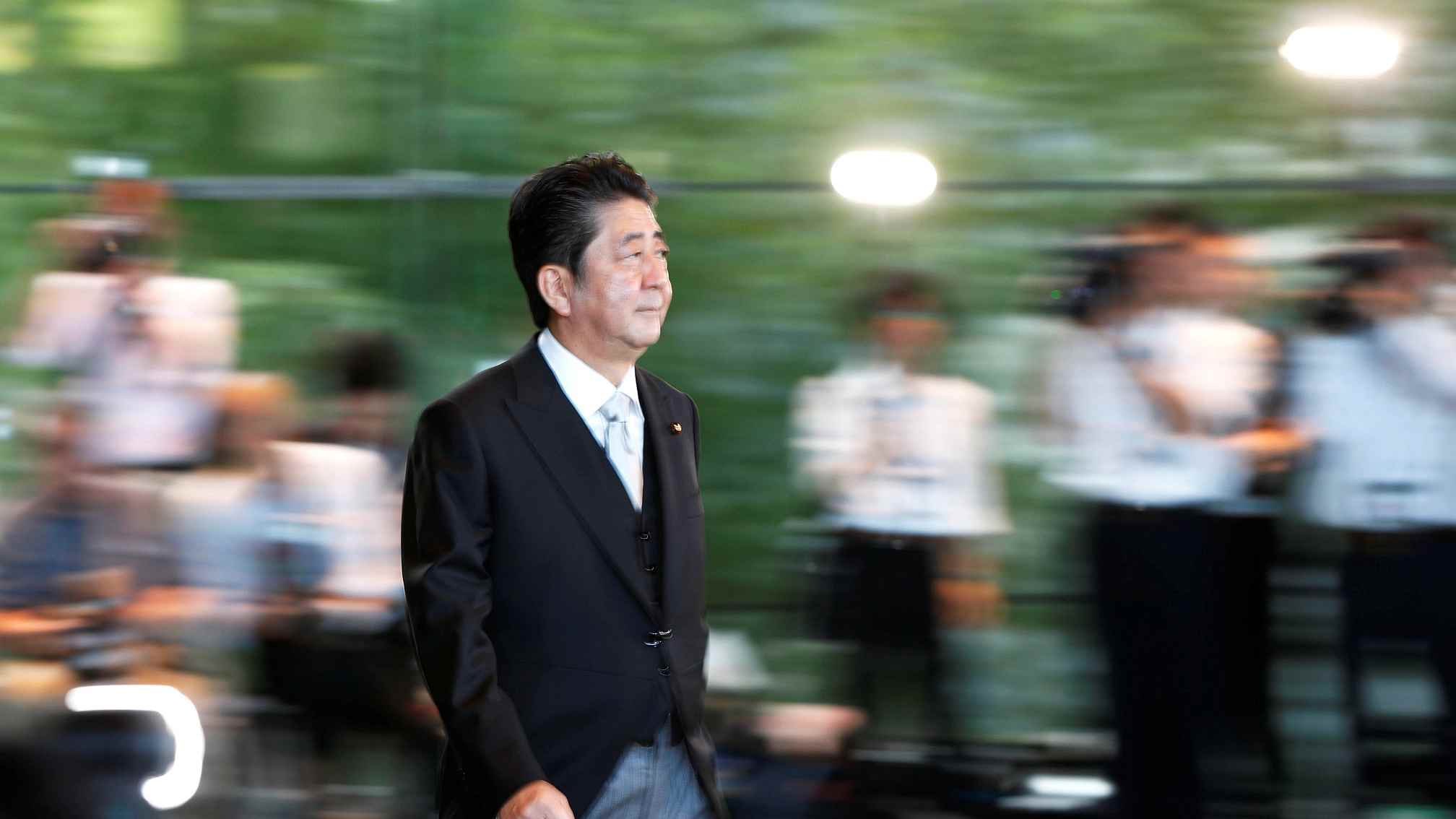
Japanese Prime Minister Shinzo Abe reshuffled his Cabinet on Tuesday.
According to the 19-member list announced by Chief Cabinet Secretary Yoshihide Suga, the prime minister reappointed six current Cabinet members, including Suga, Deputy Prime Minister Taro Aso, who doubles as finance minister, and Foreign Minister Taro Kono.
The prime minister also picked 12 newcomers and one with ministerial experience for his Cabinet.
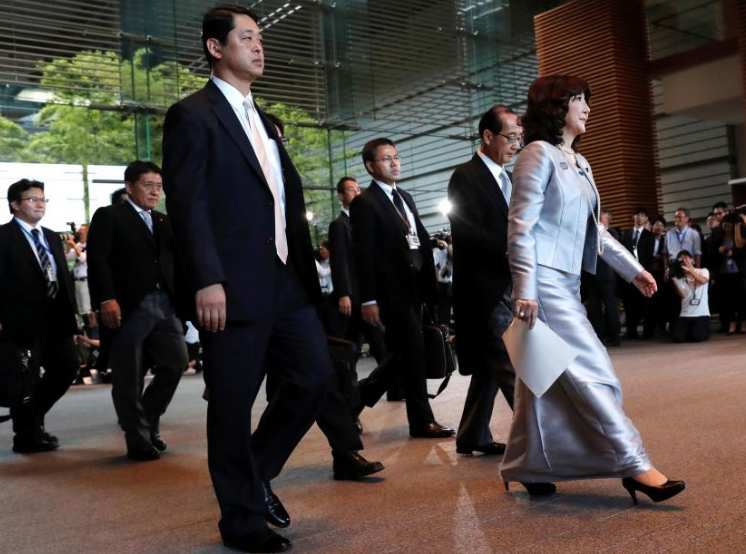
Japan's new minister in charge of local economic revitalization Satsuki Katayama wearing formal costume leaves Prime Minister Shinzo Abe's official residence with other ministers to attend an attestation ceremony at the Imperial Palace, in Tokyo, Japan, October 2, 2018. /Reuters Photo
Japan's new minister in charge of local economic revitalization Satsuki Katayama wearing formal costume leaves Prime Minister Shinzo Abe's official residence with other ministers to attend an attestation ceremony at the Imperial Palace, in Tokyo, Japan, October 2, 2018. /Reuters Photo
Abe, who returned to office in December 2012 after a troubled 2006-2007 term as premier, was re-elected leader of his Liberal Democratic Party (LDP) last month, putting him on track to become Japan's longest-serving prime minister.
Read more:
Abe's reshuffle appeared to focus on stability as he prepares to push ahead with his controversial attempt to revise the post-war, pacifist constitution, political experts said.
"He's appointed old friends and reliable allies and kept people in key portfolios to buy stability," said Jeffrey Kingston, director of Asian studies at Temple University's Japan campus.
Abe appointed one lawmaker - Justice Minister Takashi Yamashita - from the LDP faction led by former defense minister Shigeru Ishiba, whom he defeated in the LDP leadership race.
Abe chose Takeshi Iwaya, a former parliamentary vice defense minister, to replace Itsunori Onodera as defense minister. Iwaya was known recently for backing the legalization of casinos in Japan.
Close ally Akira Amari, a former economics minister who resigned to take responsibility for a funding scandal in 2016, was appointed LDP executive for election strategy ahead of critical upper house elections next year, party officials said.
Abe has made clear that he wants to forge ahead with his politically divisive plan to amend the constitution's Article 9 to clarify the ambiguous status of its military, known as the Self-Defense Forces (SDF).
But his immediate challenges are to manage fractious trade ties with Washington and keep an economic recovery on track.
Last week, Abe and US President Donald Trump agreed to open new talks on a bilateral trade agreement that would see Washington refraining from raising tariffs on Japanese car exports for now, but Trump could revive the threat if progress is slow.
Source(s): Reuters