
11:02, 12-Nov-2017
APEC Traditions: Leaders have been wearing the local attire over the years
 []
[]
Share







Copied
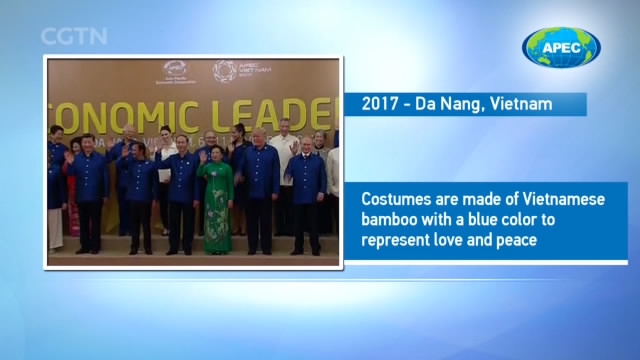
After discussing issues ranging from innovation and climate change, to food security and clothing, the leaders at this year's APEC meeting also carried on the tradition of wearing the local attire. Let's take a look back at some APEC fashion and other light-hearted moments over the past few years.
Wearing a host country's traditional clothing is a symbol of unity
2005 - Busan, South Korea Durumagi The silk robe was decorated with embroidery symbolizing longevity and luck
2006 - Hanoi, Vietnam Ao dai Blue, red, yellow and green ao dais were worn by male leaders while women wore pink
2007 - Sydney, Australia Driza-Bone raincoat The jackets are favored by Australian field workers Driza-Bone originates from the phrase dry as a bone
2008 - Lima, Peru Peruvian poncho Ponchos are made from the wool of a wild South American animal Some joked that they looked like potato sacks
2013 - Bali, Indonesia Endek The Endek is a traditional woven textile from Bali
2014 - Beijing, China New Chinese-style outfits They featured patterns that symbolize sea waves
2015 - Manila, the Philippines Barong Tagalog The shirts were sheer and made from pineapple fiber and silk
2017 - Da Nang, Vietnam Costumes are made of Vietnamese bamboo with a blue color to represent love and peace