POLITICS


Erdogan 'unlikely to reverse Trump’s decision to arm Kurds'
2017-05-17 21:30 GMT+8






Editor
Zhao Hong
By CGTN's Zhou Jiaxin
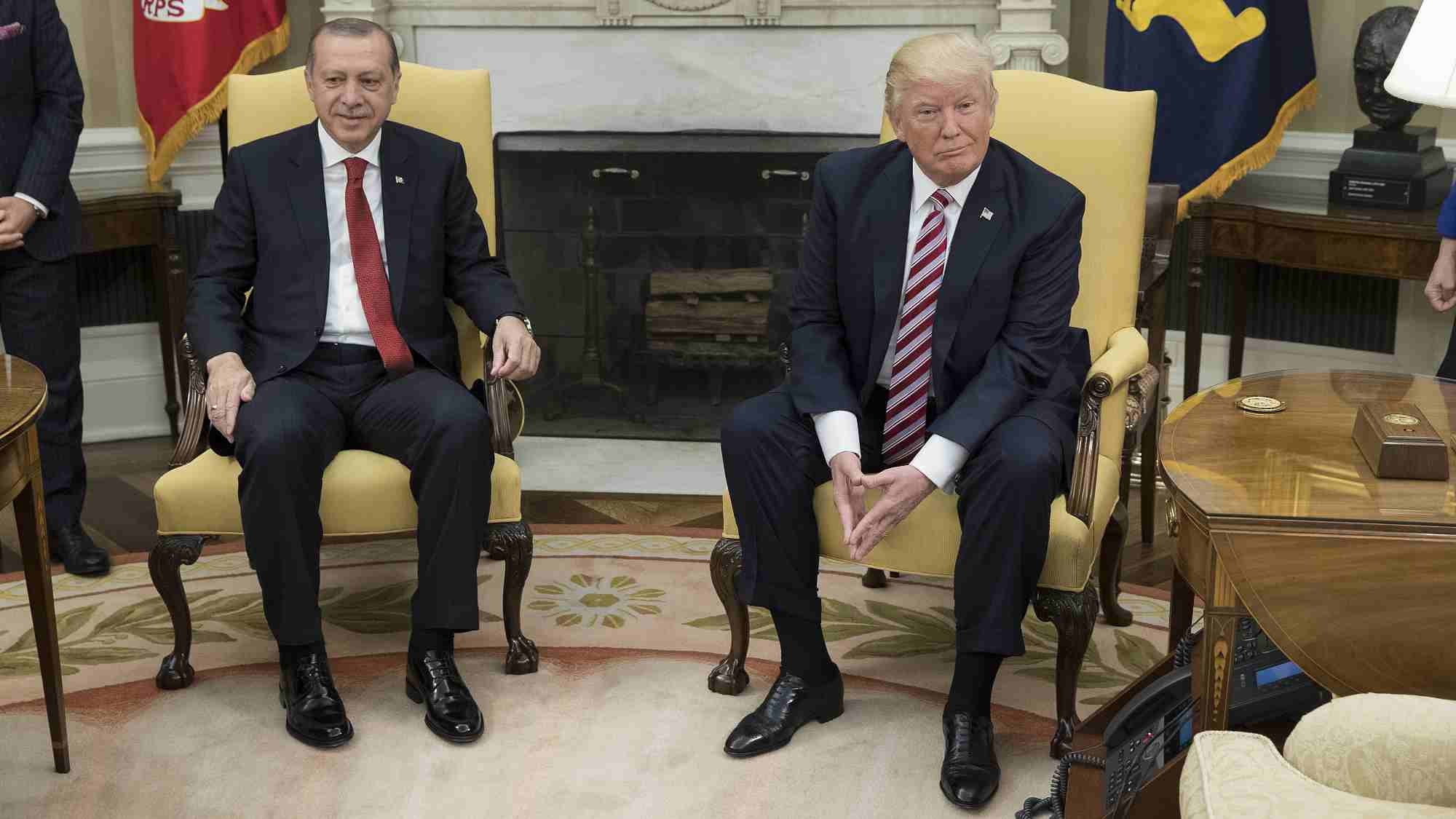
Turkish President Recep Tayyip Erdogan's US visit on Tuesday sought "a new milestone" in the strained Turkey-US relations, despite uncertainty concerning the Pentagon arming Syrian Kurds and Erdogan's demand for extraditing his rival, Fethullah Gulen, living in the US.
Erdogan's US counterpart Donald Trump was the first Western leader to congratulate the Turkish leader on victory in the constitutional referendum on April 16. However, Trump announced early this month that more weapons would be provided for the Kurdish fighters in Syria, or the YPG, which Ankara deems as terrorists.
"The Point with Liu Xin" (@thepointwithlx) held a discussion on Turkey-US relations with Bulent Allriza, Turkey Project director at the Center for Strategic and International Studies, and Serhat Guvenc, professor of international relations at Istanbul-based Kadir Has University.
undefined
Allriza doubted Erdogan's rhetoric of "a new milestone" for bilateral ties. He stressed that Erdogan should be prepared to be "extremely disappointed" given that Trump's reversal on the arms supply is "slight."
Guvenc echoed that there was "little" that Turkey could do to reverse Trump's decision, adding that Washington has sent Ankara a clear message by providing Syrian Kurds with arms just before Erdogan's arrival and negotiation on the "decision" is "off the table."
Erdogan accused the US of supporting the Kurds under the previous administration and had a "horrible relationship" with former US President Barack Obama. Before his meeting with Trump, however, he shifted rhetoric and claimed all information received about the US arming Syria's Kurds was "hearsay."
undefined
Allriza argued that it couldn't be "hearsay" as Trump has authorized the Pentagon to ship arms to Syria and Congress has been notified.
On Erdogan's hopes of extraditing Fethullah Gulen, who was allegedly behind the failed military coup in July 2016, Allriza said Trump's ability to act on this issue was limited thanks to the "many domestic problems" he currently faces.
Copyright © 2017
SHARE
- EXPLORE
- MORE
FOLLOW US