Liquidity weighs on Chinese markets, crunch unlikely






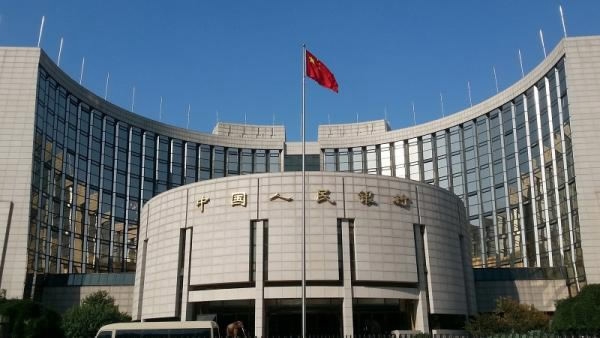
China's central bank injected 30 billion yuan (4.76 billion US dollars) into the financial system via open market operations on Monday to maintain stable liquidity. The People's Bank of China (PBOC) made the injection through 28-day reverse repos.
Chen Ji, an analyst with the Bank of Communications, said the move aims to ease the relatively tight liquidity facing the central bank in the middle of the year.
The central bank also pumped 40 billion yuan into the market through seven-day reserve repos. China has set the tone of its monetary policy in 2017 as prudent and neutral, keeping an appropriate liquidity level but avoiding excessive liquidity injections.

VCG Photo
Chinese financial markets may be in for a month of cash squeeze pressure, but a liquidity crunch is unlikely to happen. Liquidity refers to the amount of capital available on the market, and how easily it can be used. The abundance of liquidity has wide implications on the stock, bond, housing and other markets.
"We believe that liquidity conditions are likely to further tighten slightly in June, but that a replay of a liquidity crunch is unlikely," Zhao Yang, Nomura chief China economist said.
Against the backdrop of tightening supervision to ward off financial risk, some analysts cautioned that investors should expect bouts of liquidity pressure, and the market may feel the pain as well.

VCG Photo
China's benchmark Shanghai Composite Index edged down to 3,091.66 points on Monday from 3,135.92 points on January 3, the first trading day of this year. Chinese companies have also faced higher costs when issuing corporate bonds in recent months.
"Investors are not fully clear when the deleveraging will meet the regulators' standards, with repercussions of lowering debt levels difficult to define accurately, so market participants are taking a cautious approach," said Ji Jiangfan, analyst with China International Capital Corporation.

VCG Photo
Since the end of 2016, Chinese authorities have tightened financial regulation and credit control and have been using an expanded monetary policy toolkit to deleverage without destabilizing growth.
This came as surging housing prices in major Chinese cities and investment booms in financial markets, ranging from bonds to farm produce futures, made policymakers wary of debt piling up in corporations, local governments and households.
The tightening of liquidity conditions is passing through to the real economy, and the financial deleveraging has put banks' risky assets under stricter regulation, lowering the return on assets, Zhao said.
Source: Xinhua
- EXPLORE
- MORE