
South Korea’s sunken Sewol ferry was lifted two meters above the sea in a much-anticipated salvage operation on Thursday, nearly three years after the country’s worst-ever maritime accident led to the deaths of over 300 people.
undefined
(Video source: South Korea's Ministry of Oceans and Fisheries/AFP)
The operation is led by Shanghai Salvage, a Chinese state-run consortium. About 450 workers are involved in the salvage operation. The 145-meter-long ferry was originally supposed to be lifted 13 meters above the water by 11 a.m. local time, which was delayed after technical problems.
The operation began on Wednesday night and is slated to be completed by Friday for the sake of favorable weather conditions. Once it is raised as high as 13 meters, it will be carried to the port of Mokpo by a semi-submersible ship, which will take around two weeks.
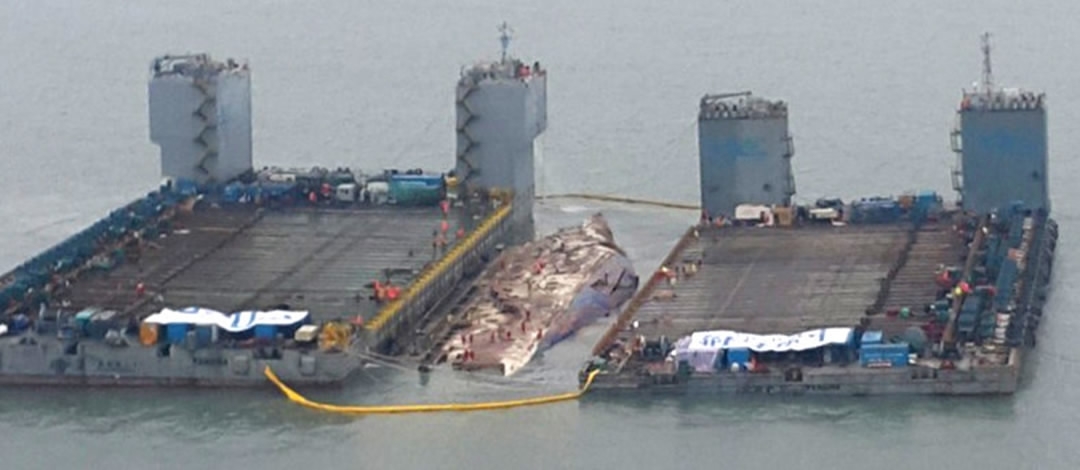
The sunken ferry Sewol is raised during its salvage operations on the sea off Jindo, South Korea on March 23, 2017. /CFP Photo
The ferry capsized and sank during a routine voyage on April 16, 2014. A total of 295 people died, 250 of whom were students on a high school trip. Nine bodies still missing are thought to be trapped inside the ferry. Once the ship reaches Mokpo, authorities will attempt to locate their remains.
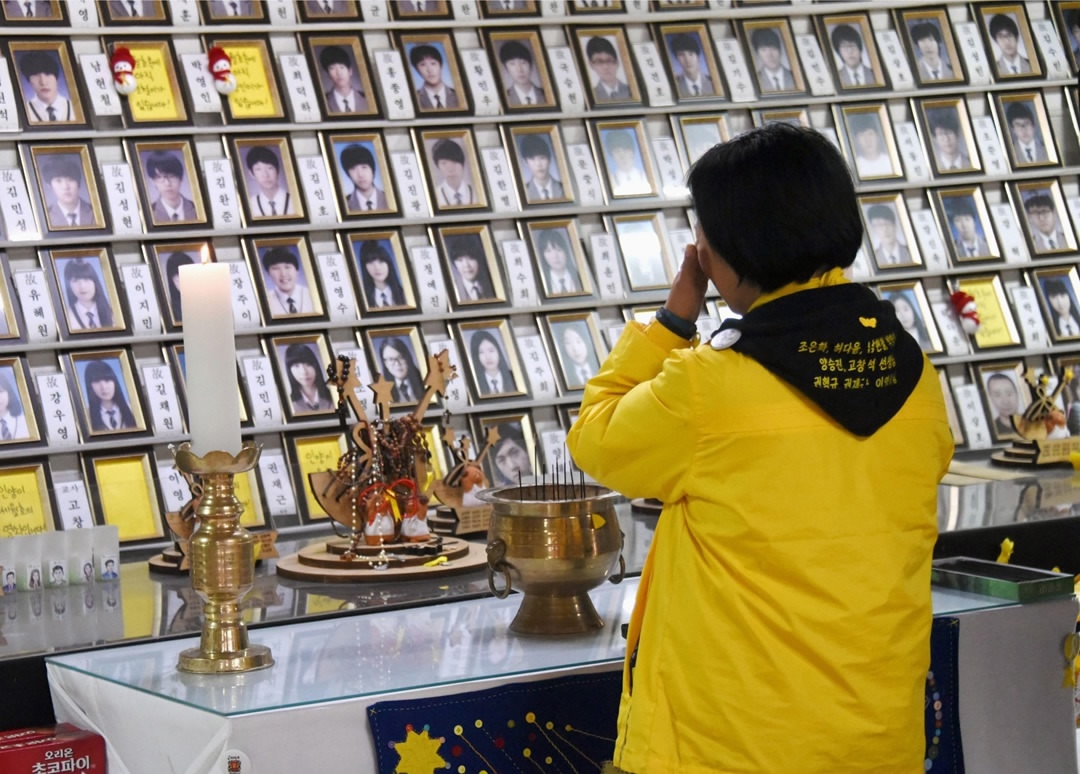
Kwon Mi-hwa, whose 16-year-old son was among those killed in a shipwreck disaster in South Korea in April 2014, sheds tears in front of photos of the victims in Jindo on March 22, 2017. /CFP Photo
“The work needs to be done very cautiously,” said Lee Cheol-jo, project leader from South Korea’s Ministry of Fisheries (MOF). Families of the victims requested that the operation team raise the ferry intact, rather than breaking it apart as is customary in salvage operations involving large vessels. Some of them kept watch from a boat by the site, while others looked on from the nearest island.
“To see the Sewol again, I can’t describe how I’m feeling right now,” said Huh Hong-hwan, who lost his 16-year-old daughter in the accident. “It has taken so long,” he added.
“It breaks my heart to see the ship coming up,” said Lee Keun-hui, another bereaved parent. “My daughter has been trapped in such a dirty, dark place for all these years.”
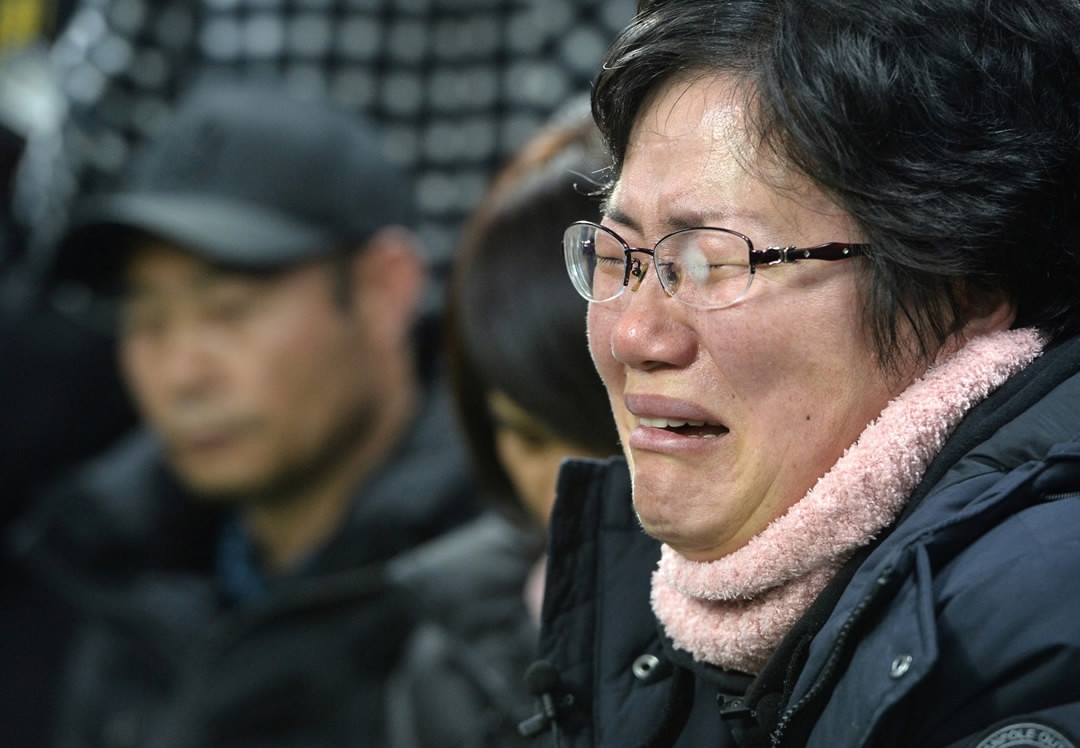
A family member of a missing passenger onboard sunken ferry Sewol cries during its salvage operations at the sea off Jindo, South Korea, March 23, 2017. /CFP Photo
The salvage operation was originally scheduled for last year, but was pushed back several times due to adverse weather conditions.
The tragedy also dealt a heavy blow to then-President Park Geun-hye, who faced fierce criticism over her official silence during the first seven hours after the incident, which contributed to the government’s poor initial response.
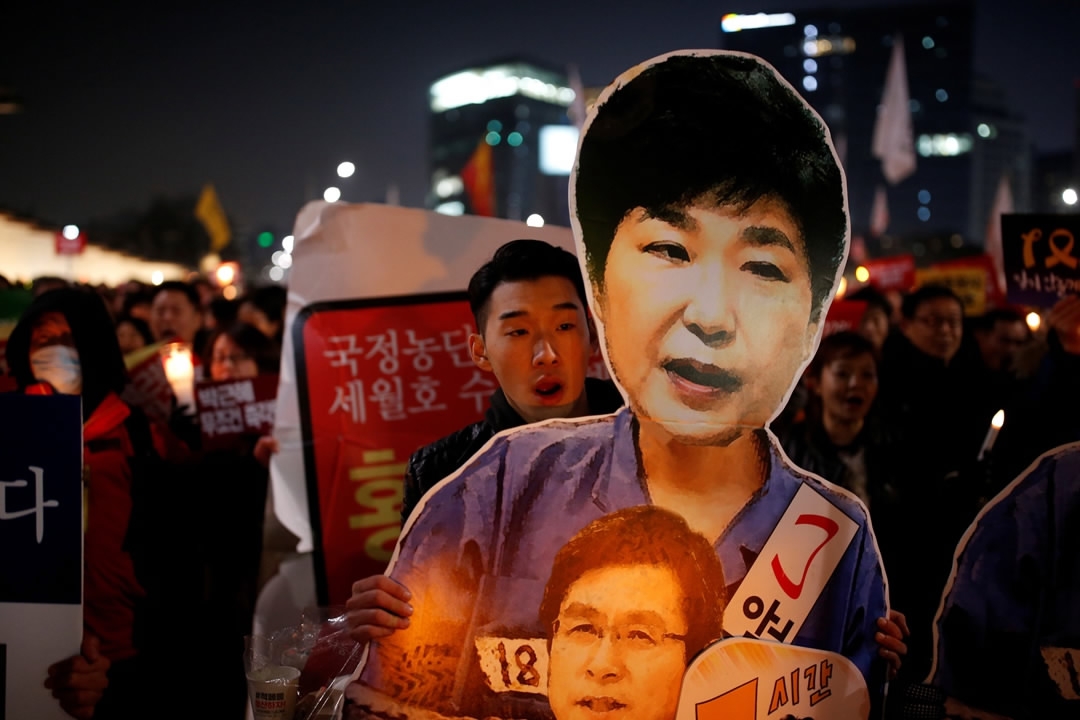
People march toward the Presidential Blue House during a protest demanding Park Geun-hye's resignation as South Korean President in Seoul, South Korea, January 7, 2017. /CFP Photo
Previous investigations concluded the accident was largely a result of human error, occurring as a cumulative result of the ferry having been illegally redesigned, overloaded, and steered too fast by an inexperienced crew, as well as questionable relations between ship operators and state regulators.
Crew members were accused of fleeing and abandoning ship, leaving those on board without any official evacuation order. Captain Lee Jun-seok was sentenced to life imprisonment for “murder through willful negligence,” whilst 14 other crew members were sentenced to prison terms of between two and 12 years.
The salvage operation is costing a total of 75 million US dollars. Authorities hope to determine exactly why the ferry sank when the wreckage arrives at Mokpo.