
China on Tuesday released a "white paper" on its space activities in 2016, laying out its achievements over the past five years and plans for the next five, as well as policies and goals for international exchanges and cooperation.
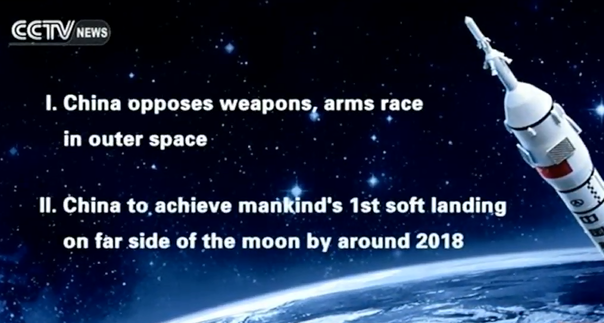
China will launch its Chang'e-4 lunar probe around 2018, which it hopes will achieve mankind's first soft landing on the far side of the moon, the paper, which was issued by the State Council Information Office, said.
It will also launch its first Mars probe by 2020 to carry out orbiting and roving exploration.
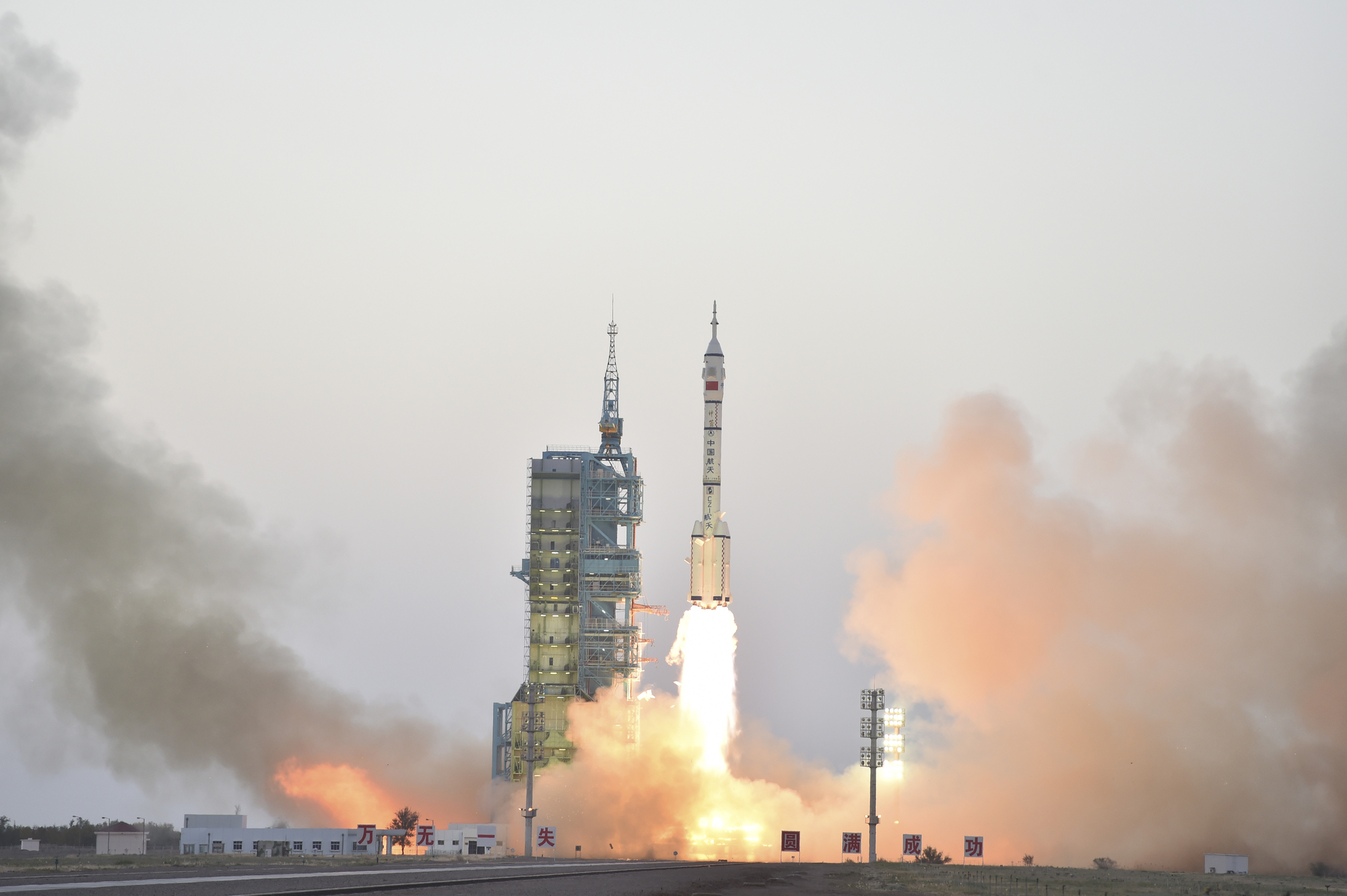
A Long March 2F rocket lifts off Oct. 17 carrying the Shenzhou-11 spacecraft. /CFP Photo
Meanwhile, China plans to form a BeiDou network of 35 satellites for global navigation services by 2020. A heavy-lift launch vehicle project is also expected in the next five years.
The White Paper noted that China’s aerospace industry is an integral part of the country’s overall development strategy, adding that Beijing adhered to the principle of peaceful space exploration and opposed the weaponization of outer space.
China has followed a path of self-reliance and independent innovation, when it comes to its aerospace industry.
Since the program was established in 1956, China has made leaps in this sphere, from atomic and hydrogen bombs to missiles, man-made satellites, manned spaceflights and lunar probes, according to the paper.
CCTVNEWS Photo
Earlier this year, the government named April 24 as China's Space Day, in a bid to encourage innovation and promote enthusiasm in the space program.
Over the next five years and beyond, China wants to push for innovative, balanced, open and shared development, the paper said.
It noted that China’s position was that all countries have equal rights to peacefully explore, develop and utilize outer space, but also that countries' outer space activities should be beneficial to their economic development and social progress, and to the peace, security, survival and development of mankind.