
Business
22:00, 05-Nov-2016
Growing RMB internationalization significant to global financial system
Updated
10:22, 28-Jun-2018
 []
[]
Share







Copied
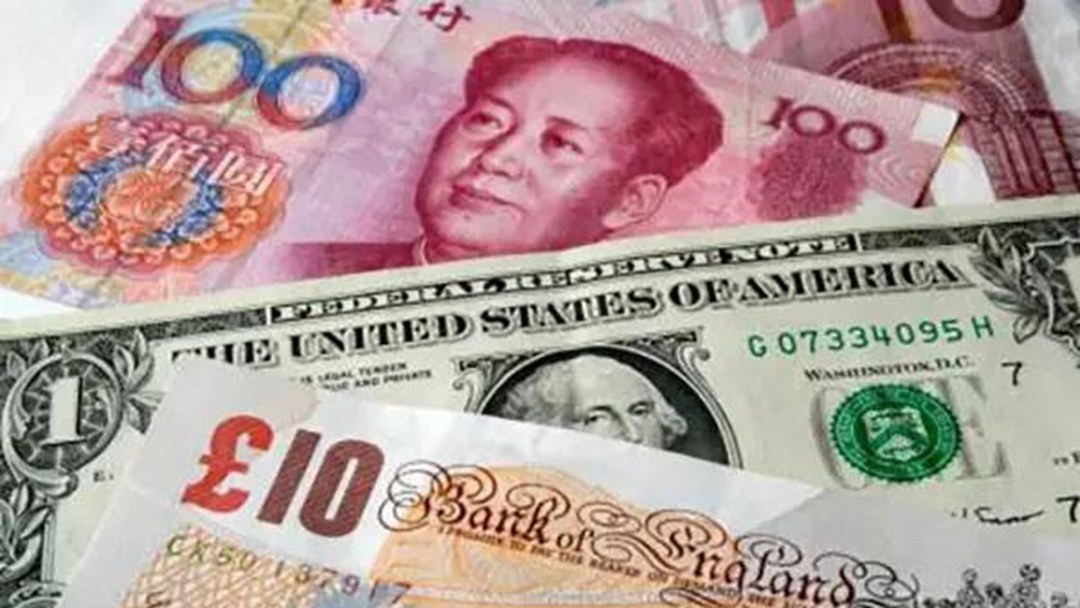
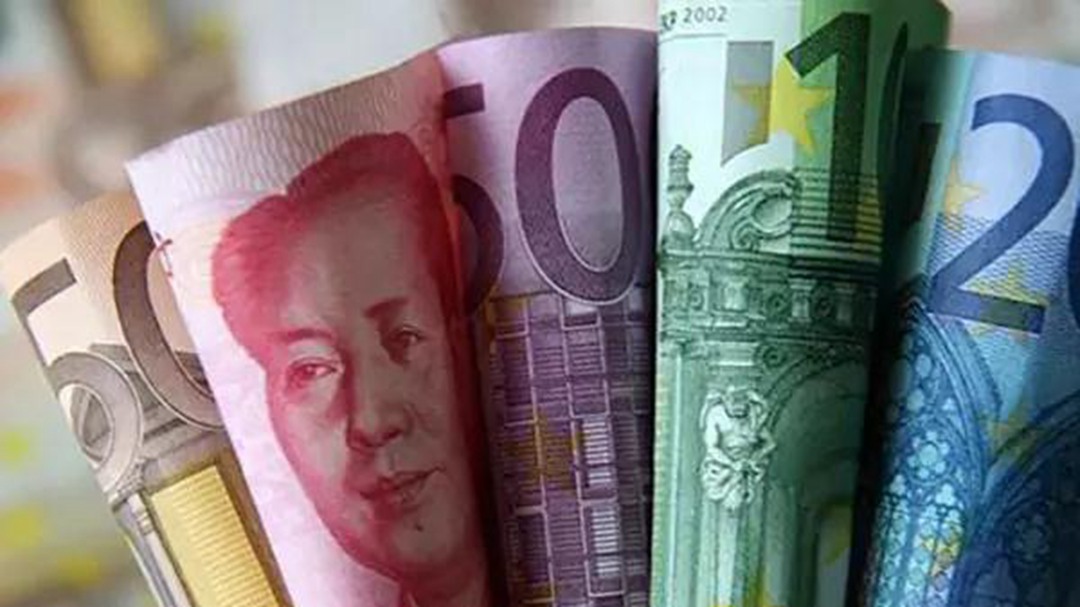
Internationalization of China's currency the Renminbi (RMB) has gained pace since it was officially included into the SDR basket last month. It is reported that 101 countries have now adopted RMB as one of their trade currencies, a number that keeps increasing.
Offshore RMB market ‘’is booming”
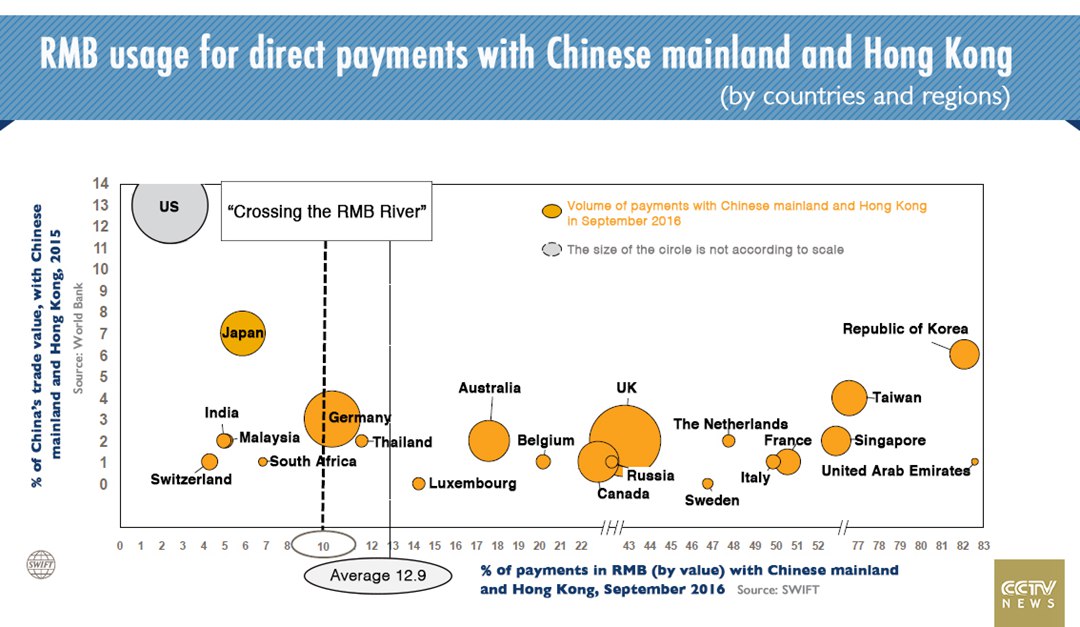
For the 101 countries, the average amount of payments made in RMB counted for 12.9 percent of direct payments by value with the Chinese mainland and Hong Kong in September 2016, according to the RMB Tracker released in October by the Society for Worldwide Interbank Financial Telecommunications (SWIFT).
According to the report, seven new countries have “crossed the RMB river”, using RMB for over 10 percent of their direct payments with the Chinese mainland and Hong Kong, bringing the total to 57 countries worldwide in September 2016, up from 50 in October 2014.
SWIFT said early adopters and major RMB clearing centers such as Singapore, the UK and the Republic of Korea (ROK) have witnessed most of the growth in RMB usage for direct payments with China.
Singapore has the most RMB deposits among Southeast Asian countries, with RMB counting for 26 percent among its enterprises in 2016. The UK has become the second largest offshore RMB clearing center, with 40 percent of its payments with the Chinese mainland and Hong Kong made in RMB. The ROK government is also pushing forward the establishment of an RMB offshore center in Seoul.
RMB is the world’s fifth most active currency
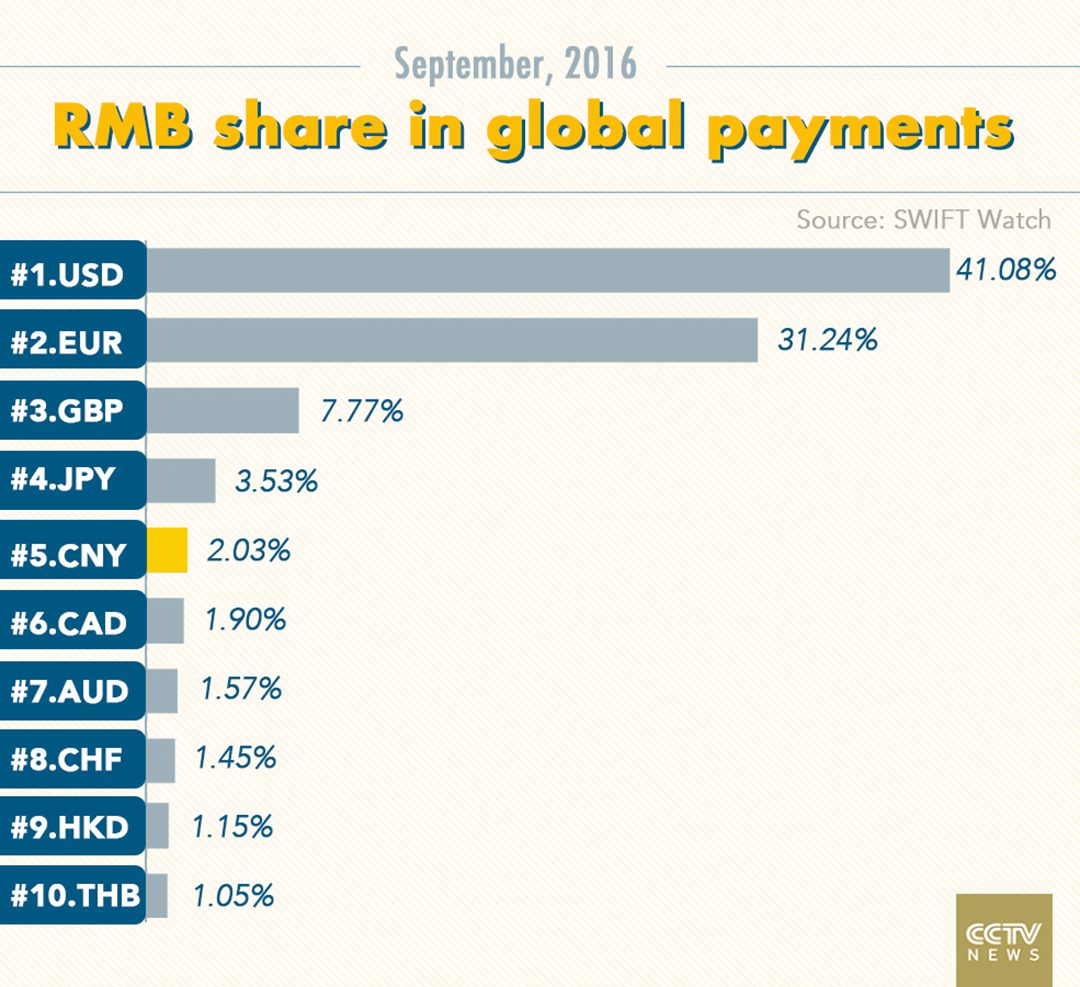
RMB keeps its position as the fifth most active currency for global payments by value, with an increased share of 2.03 percent in September 2016 from 1.86 percent in August in the same year.
The value of RMB global payments increased by 10.02 percent in September 2016 compared to the previous month, which is higher than average growth of 0.93 percent for all currencies.
Jacqueline Loh, Deputy Managing Director of the Monetary Authority of Singapore (MAS), noted the timeliness of the inclusion of RMB to the MAS as an official foreign exchange reserve this June, saying it indicates the deepening of China’s financial reform and opening up as well as the wide acceptance of RMB by the international community.
Internationalization of RMB is of great significance not only to China but also the whole international financial system, according to Mark John Boleat, Chairman of the City of London Corporation’s Policy and Resources Committee. He added that the City of London always backs up the long term development of the RMB offshore market in the UK, which meets common interests of enterprises in both countries.