
By CGTN‘s Chen Pan
French presidential candidate Emmanuel Macron has won the first round of France's election, but the race to the Elysee is not over. He will face off against far-right candidate Marine Le Pen in the second round on May 7.
Some polls suggest Pro-European Macron, a former Socialist economy minister running as an independent centrist, is going to beat Le Pen, who has promised to hold a referendum on France’s EU membership.
Other candidates, like Francois Fillon from the Republican Party and Benoit Hamon from the Socialists - both out of the race now - urged their supporters to vote for Macron in the second round.
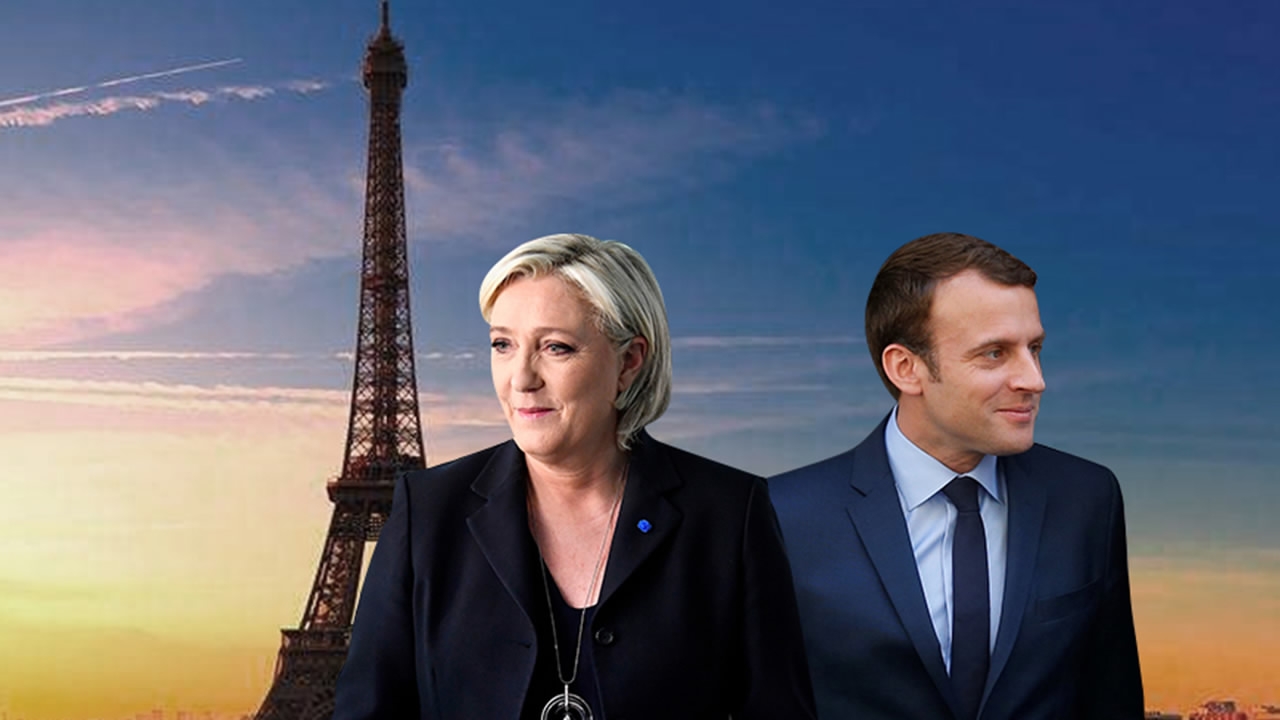
French presidential candidates Marine Le Pen (L) and Emmanuel Macron (R)/ World Insight Photo
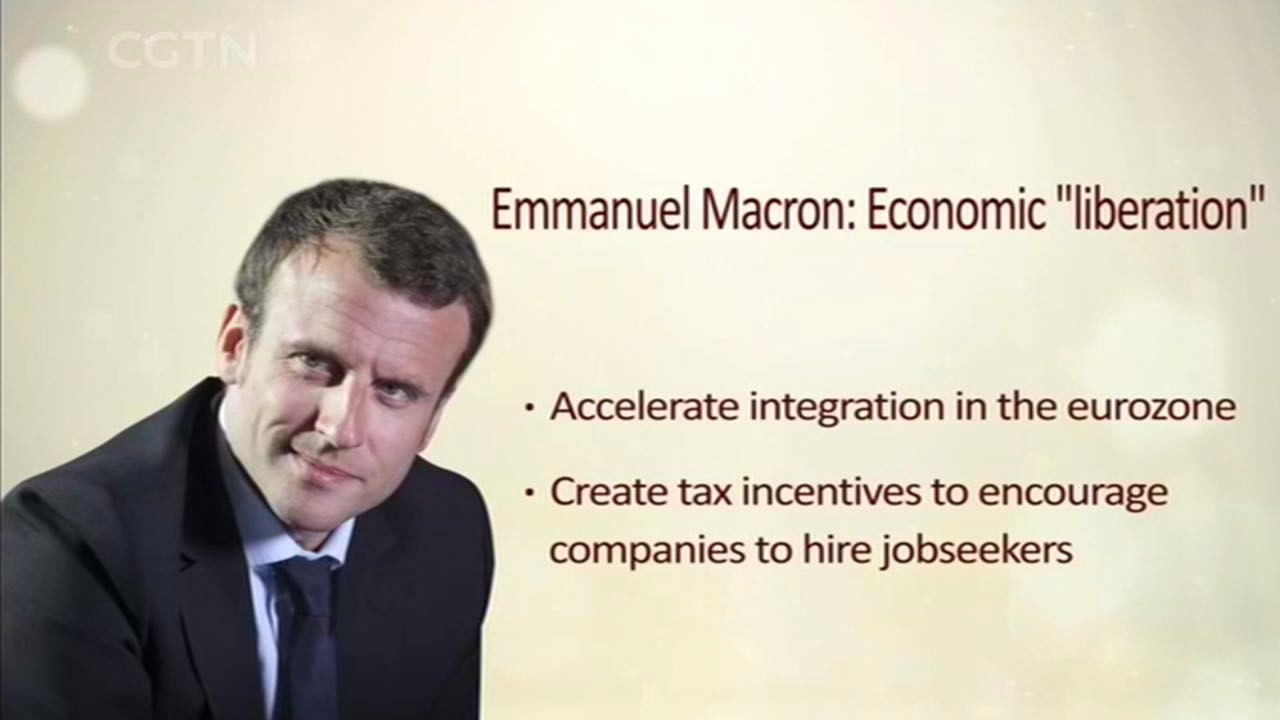
Macron is an economic liberal and an advocate of globalization. He promises lower corporation tax, better unemployment benefits, and faster integration in the Eurozone. Although Macron used to be France's finance minister, some still believe he's too young.
“I don’t think being a technocrat and being technically competent, qualifies you to become a president. Mr. Macron has never run for a single election. He has never encountered a real crisis in life – personal, private, or political. And I think really, he’s not weathered enough I think,” said Anne-Elisabeth Moutet, a columnist who writes for the Telegraph, Weekly Standard and The Sun.
“Lots of people voted for Mr. Macron because they’re really worried that if he didn’t comprehensively get into the second round, then we might have a second round between two revolutionary candidates – Marine Le Pen on one side and Jean-Luc Melenchon [far-left candidate] on the other,” she added.
World Insight Photo
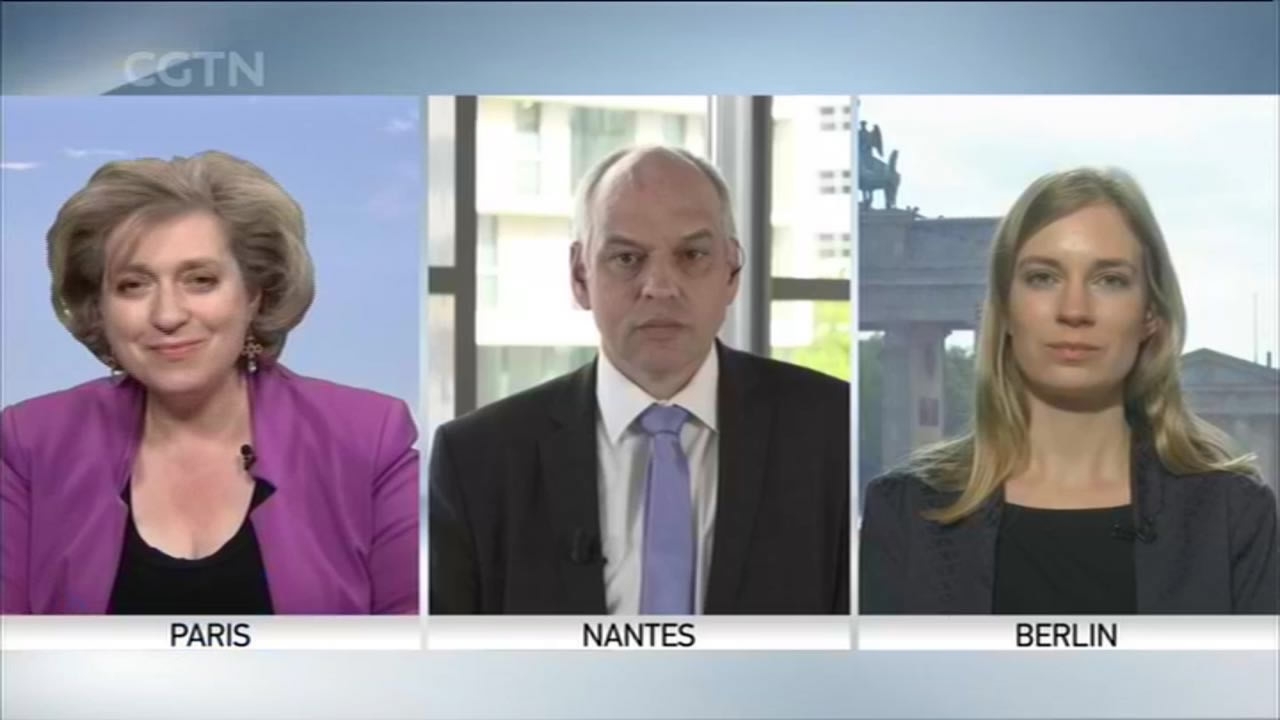
“I think Mr. Macron has every right to be rather proud of his achievement. In only one year to come as far. He has been helped by circumstances of course. But I also think he will be perfectly able being up to the function of president. He has the economic know-how. He has professional experience in a major international bank. I don’t think why he should not be considered as having the necessary expertise and necessary capacity of doing the job,” said Albrecht Sonntag, Director of the EU-Asia Institute at ESSCA School of management.
With France being a leading EU member, the French election is now expected to have impact not only on the future of France, but also the whole Europe.
Jean-Claude Juncker, President of the European Commission, was quick to throw his support behind Emmanuel Macron. And German chancellor Angela Merkel also congratulated him through a tweet.
“Mr. Macron is definitely the most pro-European candidate in this presidential race. And he’s the exact opposite of Marine Le Pen’s vision of France and Europe,” said Julie Hamann, program officer in the Franco-German relations program at the German Council on Foreign Relations.
“And I think the biggest difficulty for Macron will be, first of all, to deal with all the problems in France because in France, there’s a huge amount of unemployment and there’s the terrorist threat and a lot of discussions inside the society that might, in his first year of presidency, may hinder him to conduct those European reforms he’s standing for,” she added.
CGTN Photo
But a win for Macron is by no means guaranteed. Le Pen has announced that she’s stepping aside as the leader of her National Front Party, in a bid to reaching out for voters of other defeated candidates.
Whatever happens next, there has been a monumental change in the French political landscape. The leftist and central-right parties that have long dominated French politics are gone. In their place two very different candidates, with two very different visions for France.