BUSINESS


From an oil to a solar kingdom: Saudi Arabia’s urgency over renewable energy
2017-04-20 16:35 GMT+8
6617km to Beijing







Editor
Li Kun
Guest commentary by Jeffrey Towson
Saudi Arabia has officially launched a major push into solar and wind, with projects for 9.5 gigawatts of power from renewable energy by 2023. Bids for the first 700 megawatts of these solar and wind projects are set to begin arriving from qualified companies in the US, Europe, Japan and China.
Why is the oil kingdom going into renewables?
There has long been an argument for Saudi Arabia to expand in renewables, especially solar energy. The country is a desert and it has some of the highest solar intensity on the planet. It also has huge amounts of empty land. Saudi Arabia is actually the world’s cheapest place to produce both oil and solar energy. Discussions about getting into solar began as far back as the 1970s, and Saudi Arabia’s first solar project (the King Abdulaziz City for Science and Technology) was launched in 1979.
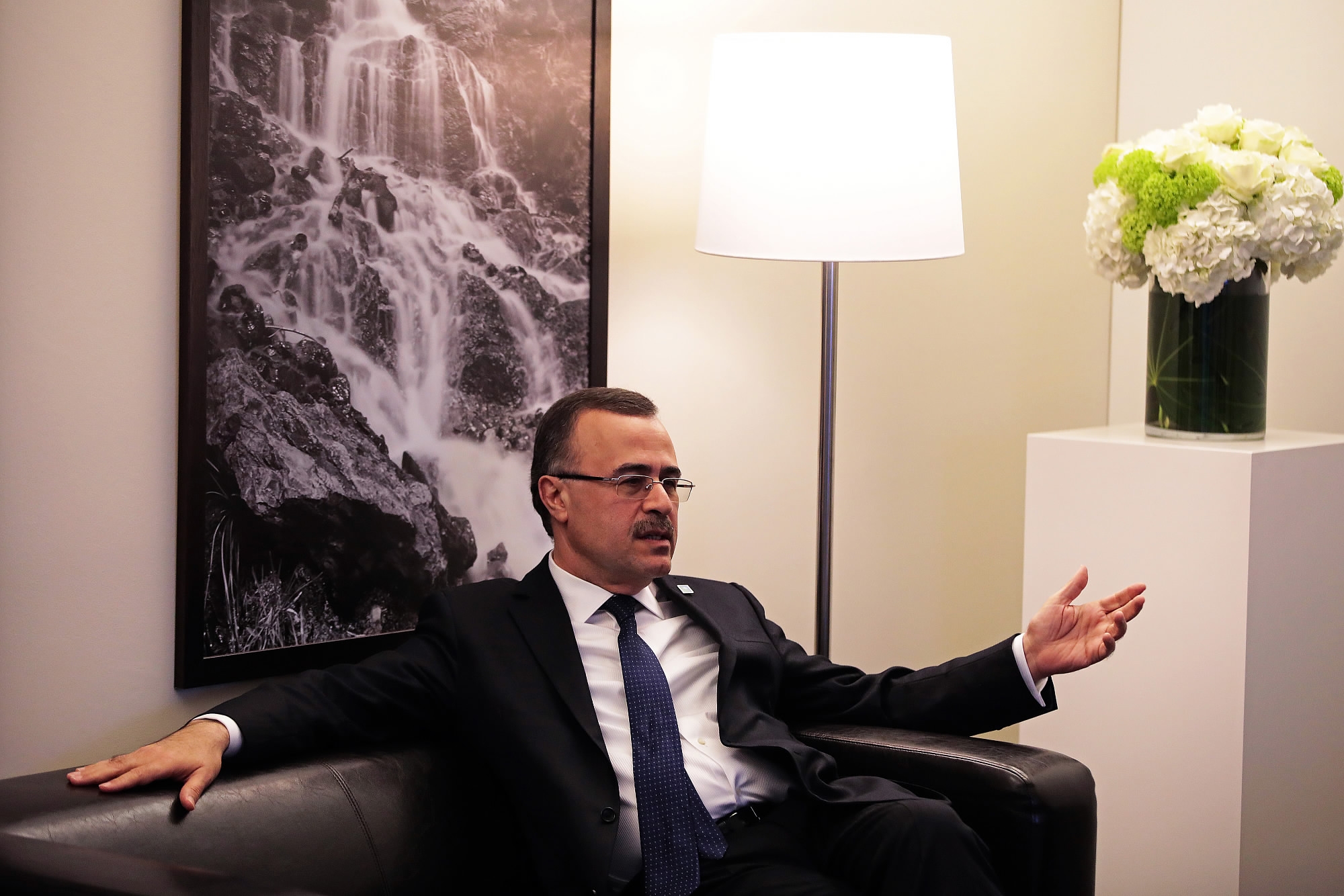
Amin Nasser, chief executive officer of Saudi Arabian Oil Co., speaks during an interview at the World Economic Forum (WEF) in Davos, Switzerland, on Tuesday, Jan. 17, 2017. / CFP Photo
The cited benefits to the country of an expansion into renewables include diversifying the economy away from oil exports, creating an advanced new industry, attracting foreign capital and creating a more technically advanced workforce.
However, the biggest immediate benefit would be to decrease their usage of oil in domestic electricity production. Unlike most countries, Saudi Arabia generates electricity primarily by burning oil, typically in very inefficient power plants. So while a small country, Saudi Arabia is actually the world’s sixth largest oil consumer, mostly because the government provides dirt-cheap state-subsidized gasoline and electricity. Saudi Aramco sells oil to the Saudi Electric Company at a price of about four US dollars per barrel, and estimates are that about 25 percent of Saudi oil is used for domestic power.
So why now?
However, these “Saudi should go into renewables” arguments have been around for a long time. Government entities including Saudi Aramco, the King Abdulaziz City for Science and Technology and Taqnia have been announcing and then postponing major renewables projects for years. And private renewables players, like GE and Acwa power, have been waiting for a decade for changes in government reimbursement, or regulations which will enable them to compete with state-subsidized oil-based electricity. As recently as 2014, announced plans to build 30 ghz of renewables projects in Saudi Arabia were pushed back to 2040.

CFP Photo
So the real question this week is why is this suddenly happening now?
The renewables programs launched this week are part of a series of renewables projects worth 10 gHz and 30-50 billion US dollars, which are now moving forward. They are being fast-tracked under the Saudi Vision 2030, the government’s sweeping top-to-bottom transformation strategy launched in the last year. Saudi Vision 2030 is the first serious attempt by the government to diversify the economy away from its oil dependence in the next thirty years. It covers everything from employment regulations and work training to state support for new industries and foreign investment. King Salman’s visit to Beijing last month was an example of the Saudi push for foreign investment.
In practice, the Saudi Vision 2030 is basically a green light for spending plans and regulatory changes that have long been on the table - but for which the political will did not exist. Falling oil prices have resulted in deficit spending and a looming cash crisis that has spurred the government into action. Diversifying the country away from oil has gone from being a nice idea to an urgent necessity. The country’s cash reserves are falling by the day and will not last more than a decade at current rates. In Saudi Arabia, political risk-taking tends to be inversely proportional to the price of oil.
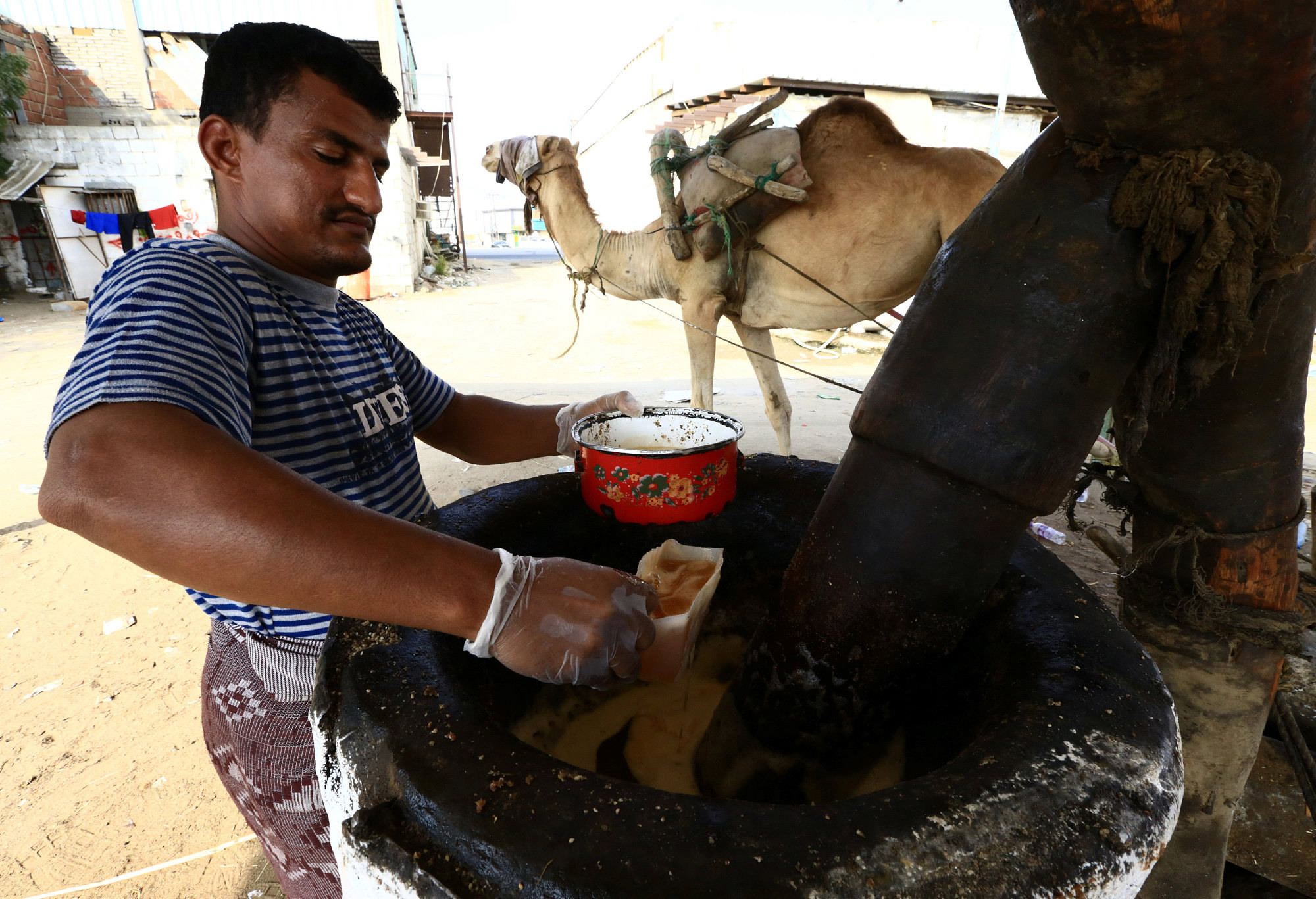
A Yemeni man extracts sesame oil in a tradition sesame press in Jazan, Saudi Arabia, December 14, 2016. / CFP Photo
Additionally, a new generation of leadership has just taken over and is willing to make major changes. This is embodied by the young Deputy Crown Prince Mohammad bin Salman Al Saud, who, via Saudi Vision 2030, has basically pulled the lever on most of the pending projects across all ministries this year.
Renewables offers one such avenue of potential economic diversification away from oil. As mentioned, Saudi Arabia is geographically in an ideal location for solar and wind, although there are concerns over how to keep vast hectares of solar panels free of sand. Nevertheless, renewables will bring in foreign expertise, launch a new industry and likely will attract foreign capital. The new projects are all being done as public-private partnerships. And as mentioned, renewables will decrease domestic oil usage.
So Saudi Arabia is going into renewables because it is trying to decrease its oil usage and because it needs to diversify its economy immediately. Renewables and many other proposals are being given a green light this year. And as such political will tends to be fleeting, they are moving very fast. Renewables projects that were previously scheduled for 2040 are now set for completion by 2023. Watch out for lots more surprising announcements out of Saudi Arabia this year.
(Jeffrey Towson is a professor of investment at Peking University Guanghua School of Management. The article reflects the author’s opinion, not necessarily the view of CGTN.)
6617km
Copyright © 2017
SHARE
- EXPLORE
- MORE
FOLLOW US