
06:24, 28-Aug-2017
Beekeeping in Syria: Return of the traditional industry to the war-ravaged nation
 []
[]
Share







Copied
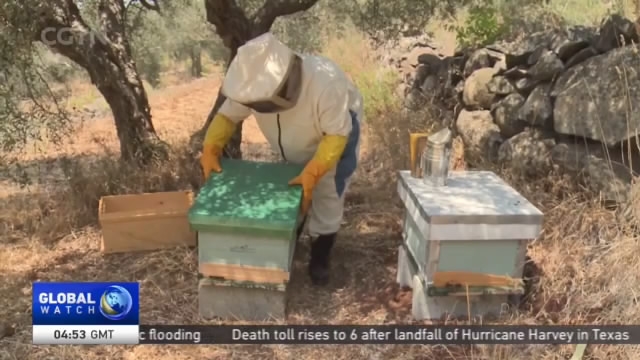
Beekeeping used to be a traditional industry in Syria. This changed when the crisis broke out in the nation. Now, with Livelihood Project, the World Food Program is trying to bring the sweet tradition back to Syria. We check out the buzz.
In a mountainous village of coastal province of Tartous Syria, local peasants open a bee hive box to check the condition of the newly installed hives and the honey. This is a beekeeping project of WFP, aiming to revitalize the Syrian beekeeping industry. From 2011 to 2015, the Syrian civil war has seen bee colonies destroyed or neglected, with a decrease of 86 percent in many places from rural Damascus to Latakia. Ammar Ahmad was a beekeeper. Because of the war, he watched his bees die in lack of resources and guidance.
AMMAR AHMAD BEEKEEPER One very cold winter, many of the bees died. The next spring, they became weak and unprepared to work. After that, they were inflicted with diseases and most of them died. We didn't have much experience, so I didn't know what to do.
This may, Ahmad received three hives and bees imported from Egypt. Long after the absence, he decided to keep bees again, hoping to bring more income to his family.
AMMAR AHMAD BEEKEEPER The hives have good quality. These kind of bees are productive and the hives have good incubation, in addition there are not many diseases that can affect the bees. So I hope it will be productive because in the past few months, we have had excellent results.
Not requiring much labor work and time, females also participate in this project. Many female beekeepers are widows, just like Reem Khalil.
REEM KHALIL BEEKEEPER At the beginning, I was angry because I couldn't do anything. But now we feel that we have something to rely on and a source to make a living. We can get enough to meet our needs through this work and help others also.
From experienced Ahmad to the female new comer Reem, all beneficiaries received also basic beekeeping training and a guide book with pictures.
REEM KHALIL BEEKEEPER I was frightened that the bees might sting, but since my brother and I both joined the training sessions for couple of days, we got to learn how to deal with bees. We got some information through the internet and all of this made me fearless about bees.
WFP launched beekeeping project in 2016. So far, there are about 3000 Syrians joined it. Over 75% of the bees survived. WFP and local partner contact each beekeeper twice every month to ensure the situation. After honey production, they also help beekeepers to sale the honey.
DIAA ALDIN KAKHI PROJECT ASSISTANT OF WFP IN TARTOUS The project aims at creating sustainable employment opportunity through distributing productive assets. This is including the bee hives and tools for beekeeping. So the project is aiming. At the end of the project, beneficiaries are able to depend on themselves.
XU DEZHI TARTOUS, SYRIA In profitable seasons, some of the beneficiaries, they can make a living themselves by selling honey products. As the Syrian situation gets better, WFP hopes that these kind of sustainable projects can be expanded to more areas to benefit more people in need. Xu Dezhi, CGTN, Tartous, Syria.