
19:49, 20-Nov-2017
Hydro-Power in Pakistan: China builds power plants to help Pakistan reduce outages
 []
[]
Share







Copied
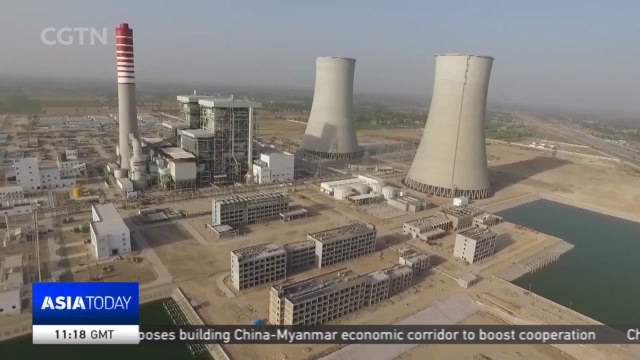
Pakistan was one of the first countries to pledge full cooperation with China in the Belt and Road Initiative, and one part of that is hydro-power. CGTN's Ge Yunfei visited the construction sites of a new power plant.
Even in Islamabad, the capital of Pakistan, power outages are quite common. In summers, the duration of blackouts can last up to 12 hours a day. Under construction about 65 kilometers away from Islamabad, there's a hydro power plant that could let the Pakistani capital say goodbye to power shortages.
GE YUNFEI ISLAMABAD I am now on the way from Islamabad to the Karot Hydro Power Plant. And we're escorted by two Pakistan military vehicles. In fact, the Pakistan government has dispatched up to 18,000 soldiers along the China-Pakistan Economic Corridor to protect the safety of all important projects. And this military escort is just part of the whole operations.
After entering the construction site, all the armed security guards, policemen and soldiers at the campus tell of how important this project is for Pakistan. And there's a barrack stationed nearby with hundreds of soldiers. As the first project of the Silk Road Fund initiated by Chinese President Xi Jinping, the Karot Hydropower Plant has long been seen as a flagship project of the China-Pakistan Economic Corridor. And Li Zhili, a manager at the site, said they are racing to complete the project ahead of schedule.
LI ZHILI, DEPUTY TEAM LEADER KAROT POWER COMPANY "The construction started on December 1, 2016. Now the work is going very smoothly and 12% of the whole project has been finished. It's estimated that the first power unit will be connected to the grid by April, 2021. But we're trying to make it ahead of schedule."
Li said this 720 megawatt hydropower plant can produce 3.2 billion kilowatts of electricity per hour every year. That'll save Pakistan from burning 1.5 million tons of coal. Pakistan has long been suffering from power outages. When this plant is fully functional, it'll provide around 10% of the total energy gap. China's Three Gorges Group is responsible for designing and building this plant. But in fact, most of the workers here are locals.
HE WENZHAN, CHIEF ENGINEER YANGTZE THREE GORGES TECHNOLOGY & ECONOMY DEVELOPMENT "Now at this site, we have over 1,800 Pakistani workers and around 650 Chinese workers. And we set up a mechanism to let skilled Chinese workers train the new Pakistani workers."
Adeel Shahzad is one of the local employees. After receiving a three-month long training, he has become a skilled operator at the water-processing factory of the project. He said he's pretty happy that he could learn a new skill while getting paid well in a safe working environment.
ADEEL SHAHZAD, WORKER KAROT HYDROPOWER PLANT PROJECT "There is a difference between outside companies and this company because I am satisfied with my income. It's a very safe place, and my Chinese bosses are very careful about my health, my safety and my work."
In addition to Karot, the Three Gorges Group is also building the biggest wind power base in southern Pakistan which will benefit half a million people. From nuclear, to solar, to thermal, power plants along the China-Pakistan Economic Corridor will account for 40% of the total new generating capacity in the next decade.
GE YUNFEI KAROT HYDROPOWER STATION The local people told me that they hope there will be more infrastructure constructions like this one, because they can't wait to say goodbye to the electricity shortage in Pakistan. GYF, Karot Hydro-power Station, Pakistan.