TECH & SCI


The Family Business: A look at China's IVF industry
2017-03-16 15:17:53 GMT+8






Editor
Zhou Yiqiu
By CGTN's Joseph Catanzaro
The tears run freely down Yu Bijun’s face as she grips Dr Ye Hong’s hand. The two women are sitting together in a Chongqing hospital.
Yu Bijun sniffles and smiles.
It’s gratitude, not sickness, that has brought her here.
“The emotions are rushing back to me,” she says.
Seventeen years ago, the now 48-year-old walked these same crowded hospital corridors, consumed by the same mixture of hope and desperation showing on the faces of the anxious couples waiting here now.
Like Yu once did, they’ve come seeking help to have a baby.
After three failed attempts at in-vitro fertilization (IVF) in Guangdong Province, Yu came to the southwestern city of Chongqing in 1999 to receive what was then cutting-edge western treatment that was new to China, where the first IVF baby had only been born about a decade earlier.
The IVF clinic at Chongqing Public Hospital, and the expertise of Dr Ye Hong, were her last hope.
“I have a 17-year-old son now,” she says, beaming with pride.
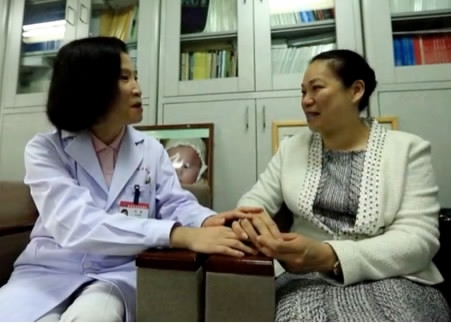
Dr Ye Hong and patient Yu Bijun reunited 17 years after her son was born with the help of the IVF clinic at Chongqing Public Hospital. / CGTN Photo
The IVF arm of Chongqing Public Hospital now treats about 10,000 patients every year. The cost to the patients is about RMB 40,000 each, per cycle.
In the 1990s, there were just a handful of IVF clinics across the country. Dr Ye says there are now about 400. According to the China Women’s Federation, a staggering 40 to 50 million Chinese people are thought to suffer from infertility, which is diagnosed after a couple fail to conceive naturally after a year of trying.
undefined
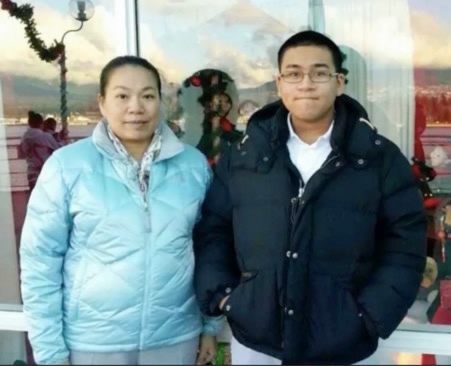
Yu Bijun and her IVF miracle baby, Xu Guoxian, who is now 17 and studying in Canada. / CGTN Photo
But despite some reports suggesting waiting times for IVF treatment in China are currently ballooning to months or even years, Dr Ye says the public health system – still the primary provider of the treatment – has the matter well in hand.
In Chongqing, she says, most women receive their initial consultation within two days.
And the process they undergo is improving apace with China’s rapid advances in the field.
Dr Ye estimates that the average, national IVF live birth rate in China is about 30 percent, compared with 50 percent in the US. But statistical comparisons are difficult, because success rates vary according to the age of the would-be mother, and also different national demographics. What’s certain is that China is making advances, and clinics like Chongqing’s are now averaging about a 50 percent IVF live birth rate.
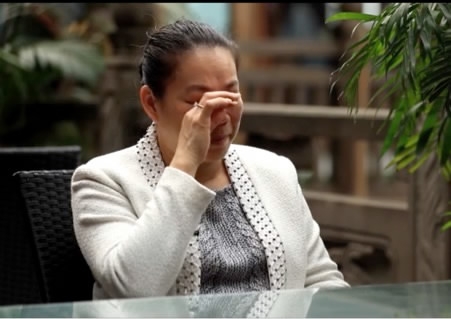
Yu Bijun still sheds tears of joy at the memory of holding her son for the first time / CGTN Photo
“I cry every time I think about it,” Yu Bijun says, beaming at the memory of the first time she held her newborn son. In China, the family business is booming, and Dr Ye Hong couldn’t be more delighted.
“I’m so happy,” she says, "because my job is to make babies, to make families happy.”
Broadcast every weekend, Rediscovering China is CGTN’s flagship news feature program. Each 30-minute edition offers a unique insight, through the eyes of our international journalists, into life and current affairs in China today. With its unrivalled access to the nation’s people and places, Rediscovering China brings you in-depth reports on the major issues facing China at a time of rapid change.
Stay tuned for more on CGTN at 10:30 a.m. (0230 GMT) on Sunday.
Copyright © 2017
SHARE
- EXPLORE
- MORE
FOLLOW US