
21:35, 09-Oct-2017
Supply-Side Reforms: Features of supply-side economics
 []
[]
Share







Copied
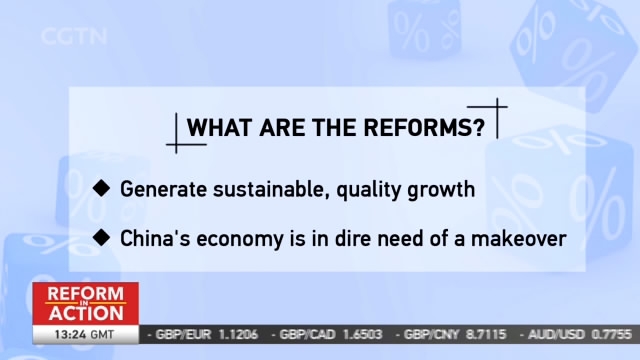
As China strives to sustain growth, supply-side reform is the latest tool to be taken from the box and sharpened. While supply-side economics, as a macroeconomic theory, is nothing new, China's supply-side reforms have some unique features.
Supply-side economics holds that the best way to stimulate economic growth is to lower barriers to production, particularly through tax cuts. The wealth-owners, rather than spending on direct "demand" purchases, will then be more enticed to invest in things that increase supply, such as new businesses, innovative goods and services. Compared to stimulating demand, which tends to be short-lived, supply-side management is expected to generate sustainable, quality growth.
The Chinese economy is no longer galloping ahead on the back of investment, exports and consumption. Cutting housing inventories, tackling debt overhang, eliminating superfluous industrial capacity, cutting business costs, streamlining bureaucracy, urbanization and abandoning the one-child policy are all examples of supply-side reforms.
Viewed as a whole, these measures can also be considered "structural" reform. By cutting capacity, nurturing new industries and improving the mobility of the populace, vitality and productivity should increase.