
13:03, 23-Dec-2017
Japan Defense Budget: Record-high budget approved, defense spending swells
 []
[]
Share







Copied
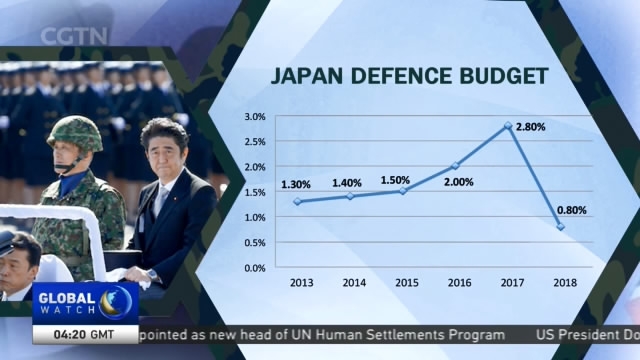
The Japanese government has approved its defense budget for 2018, its biggest ever, valued at 46 billion US dollars. The 2018 budget is a 1.3 percent increase from this year's. Japan's Cabinet on Friday also approved a record-high budget for fiscal 2018, outlining that nearly one-third of government spending would go to social security.
The budget, with intensifying the country's missile defense system as one of its priorities, includes the purchase of a new long range interceptor, and acquiring medium-range air-launch cruise missiles.
Japan will also allocate funds for the anti-ship Joint Strike Missile system, which is fired from warplanes against land and sea targets.
A third layer of ballistic missile defense and Japan's first long-range missiles are on the shopping list.
The total budget for the year starting in April was up 1.3 percent on the previous 12 months, marking the sixth straight increase.
From 2013 to 2015, the defense budget increased year-on-year respectively by 0.8%, 2.8%, and a staggering 20%.
In 2016, the defense budget exceeded 5 trillion yen. While 2017's defense budget achieved a new high, marking the fifth straight increase.
This year was the third consecutive rise for defense spending exceeding 5 trillion yen.
Much of the increase will go towards continuing to protect Japan against Pyongyang's nuclear and missile programs, despite tough UN sanctions and condemnation from the international community.
Tensions with the DPRK have increased due to its persistent missile and weapon tests in 2017 -- a situation Japan considers the most serious since the end of World War II.
While regional threats have become more pressing, Japan's military spending is limited by competing demands of social security for its aging population, as well as the pacifism embraced by much of the population.
The defense budget has grown by about 10 percent since Prime Minister Shinzo Abe took office in 2012, and accounts for about 1 percent of the economy, compared with 3.3 percent for the US.