
Military police officers in Brazil's Espirito Santo state returned to duty after a week-long strike sparked chaos and caused a wave of homicides.
According to the state's Secretariat of Public Security, some officers have returned to work, but certain police precincts continue to be encircled by families of military police officers. The families stopped police officers from leaving and insisted on improvements in working conditions and wage increases.
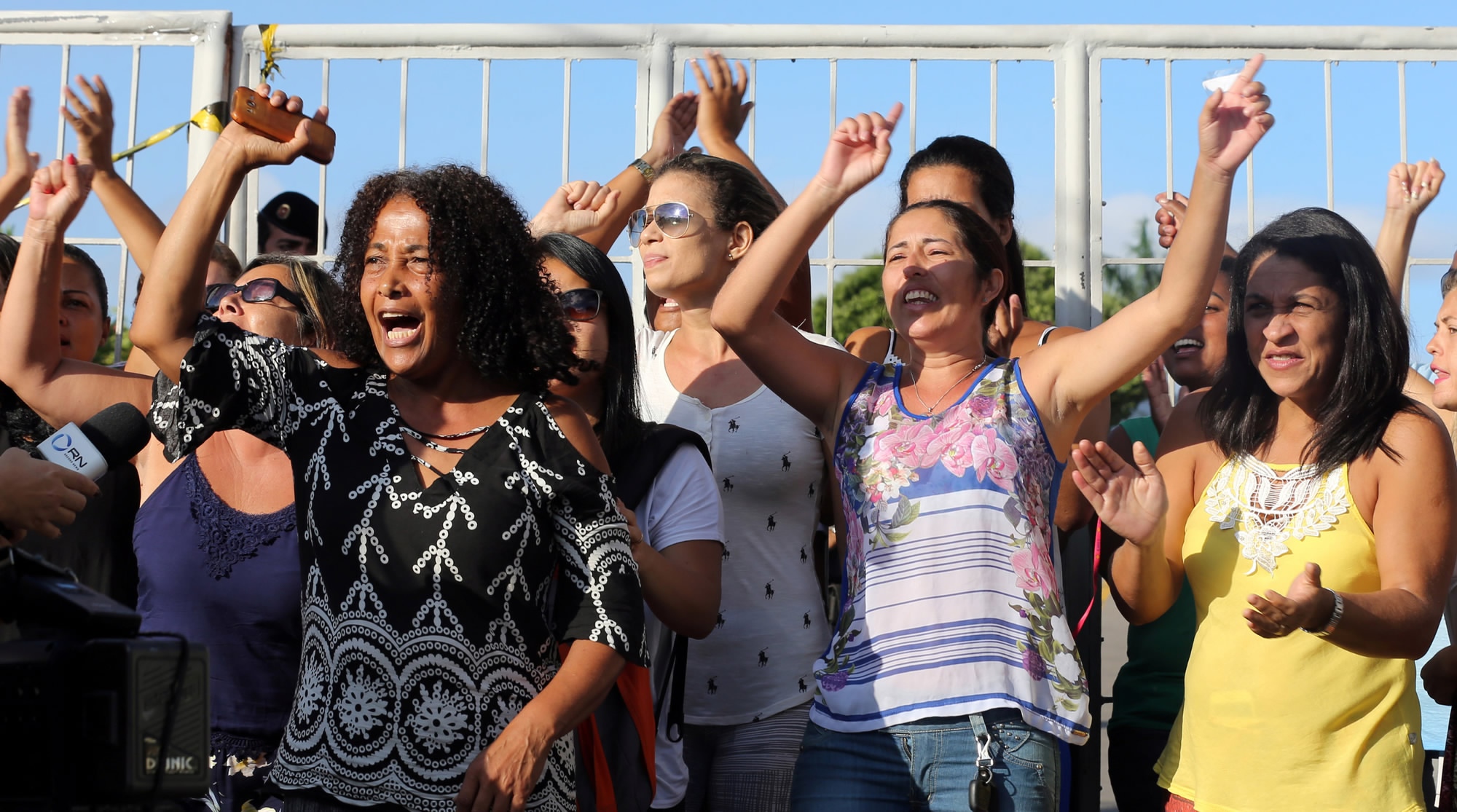
Relatives of police officers react at the main entrance of police headquarters / CFP Photo
On Saturday, Brazil's Defense Minister Raul Jungmann called on the military police "to go to the streets" and the wives of the striking officers "not to lead their partners into a trap," referring to the wave of violence sweeping the state.
"There are police who want to work. There are police today being kept in detention. To those, I say that they should go to the streets and fulfill their oaths," said Jungmann.
The strike for better pay began on February 4. Families of military police officers have taken the lead in protesting, since Brazil's army policy forbids soldiers to participate in any strike or protest.
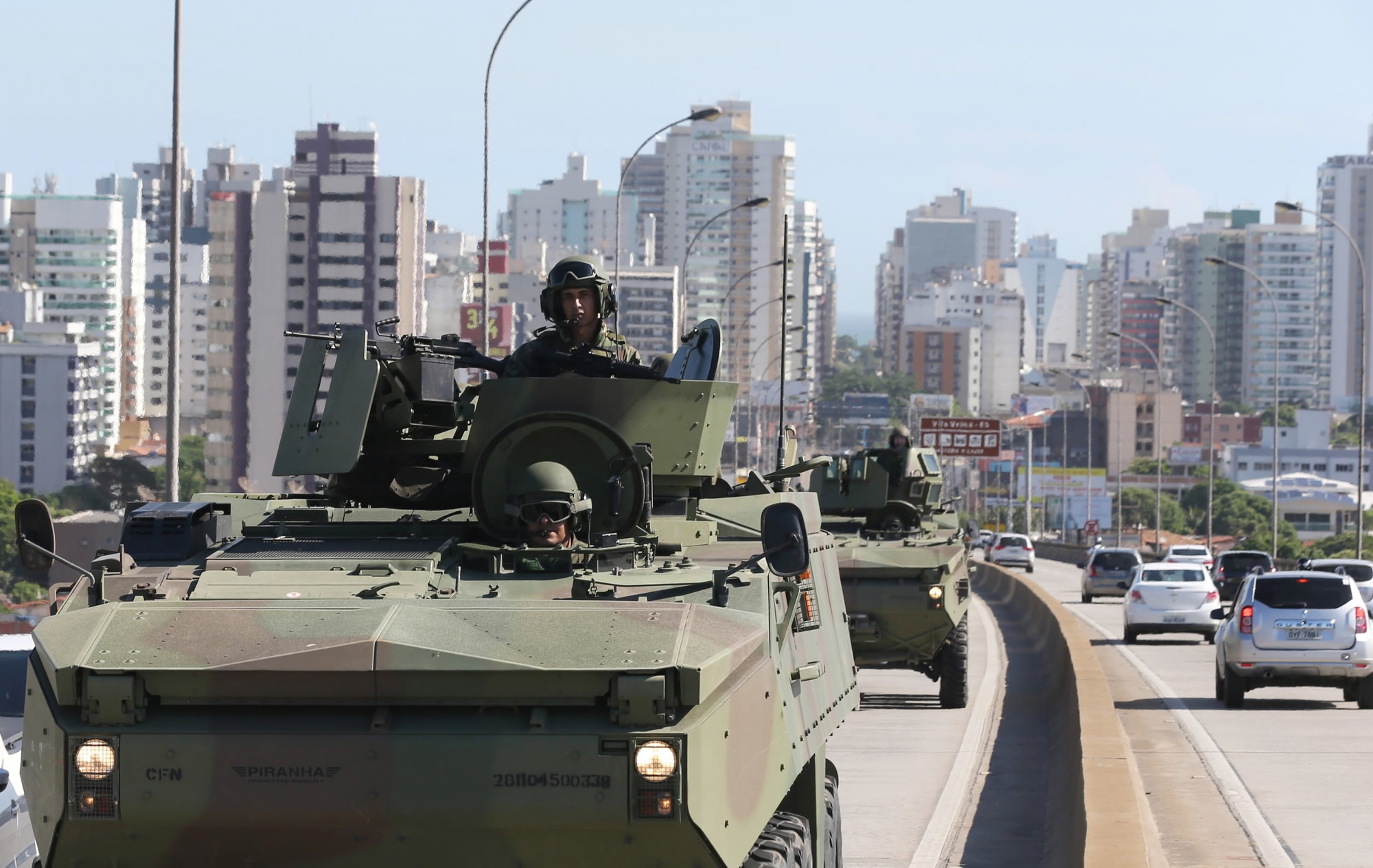
Brazilian Marines patrol a street in Vitoria, Espirito Santo, Brazil, February 9, 2017 / CFP Photo
The police strike during the past week has paralyzed the southeastern state. Since the officers walked off their jobs last Saturday, crime has become rampant across the state, with more than 138 homicides registered in the capital Vitoria and its surroundings, and lootings reported at over 300 shops, and 170 cars stolen.
The state's chamber of commerce has estimated that the damage due to the looting has risen to at least 300 million reais (96 million U.S. dollars).
With no police patrolling the streets, the federal government has deployed 1,700 troops to keep order.
(Source: Xinhua)