
17:26, 29-Sep-2017
Five Years of Progress: Strategic development of Yangtze Economic Belt
 []
[]
Share







Copied
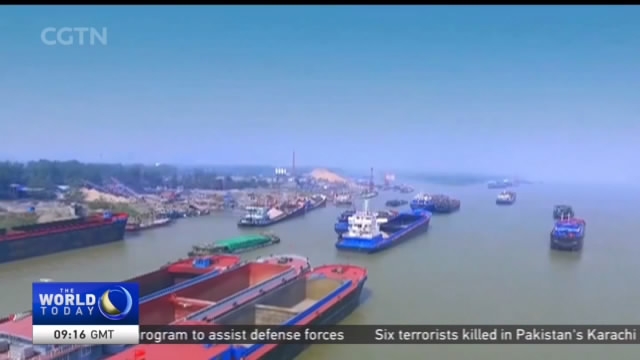
A key driving force behind China's regional economic development has been the growth of its ports. In July 2013, during a visit to Wuhan, President Xi Jinping pointed out that cooperation should be strengthened in the Yangtze River basin in order to develop an inland waterway network.
Over the last four years, the container handling capacity in Wuhan's new port has exceeded one million tons. Here's more.
The Yangluo container port is a vital component of the shipping lane in the middle reaches of the Yangtze River.
In 2013, most of the ships on this route had tonnage of between 5 to 6 thousand. Now, more than half the ships have tonnage of over 8-thousand.
This has become the largest and busiest route for container transportation in the middle and upper reaches of the Yangtze River.
XIAO JINCHENG FELLOW, STRATEGIC DEVELOPMENT OF YANGTZE RIVER ECONOMIC BELT RESEARCH GROUP President Xi said that we should develop this section of the waterway. In this strategic development of the Yangtze river economic belt, we would not only develop water transport, but also rail and road links, which could in turn increase the value of the waterway.
In the first half of 2017, the 11 provinces along the Yangtze Economic Belt saw annual GDP growth of more than 8 percent.
Last year was the seventh consecutive year that the container throughput in the Shanghai port topped the global rankings, with over 37 million TEUs.
XIAO JINCHENG FELLOW, STRATEGIC DEVELOPMENT OF YANGTZE RIVER ECONOMIC BELT RESEARCH GROUP The Yangtze River economic belt links the Silk Road Economic Belt in the west and the maritime silk road in the east. If the whole picture resembles a dragon, Shanghai is located in the head, Wuhan in the dragon's waist and Chongqing in its tail. The three regions must develop in a coordinated way. The shipping value in the Yangtze Economic Belt, in particular, plays a big role in the development of this region.
Currently, there are direct flights from Wuhan Yangluo container port to Shanghai every day. Since this year, ships weighing over 3-thousand tons can achieve two-way navigation during the day and at night.
The 21st century maritime silk road has also been extended to link Wuhan with four ASEAN nations, further expanding trade opportunities in and around the Yangtze Economic Belt.