
18:01, 28-Feb-2019
Full Episode -2018 Two Sessions II: Does the Constitutional Amendment Secure China’s Future?

Share






Copied
By Robert Lawrence Kuhn
A prime focus of attention at the 2018 National People’s Congress here in Beijing is the Amendment to the State Constitution. To judge by the whirlwind of Western reactions, one could be forgiven for assuming that the only amendment is abolishing term limits for the president and vice president. In fact, there are 21 separate provisions in the Amendment – all proposed by the Party’s Central Committee - and to understand where China is going, one must understand the meaning and intent of the totality of these provisions. This Amendment constitutes the first changes to the Constitution in well over a decade, so the question must be asked, why now? What is it about China’s “New Era” that demands numerous constitutional changes? And that includes term limits. There is still much we need to know about the big picture of the governance of China.
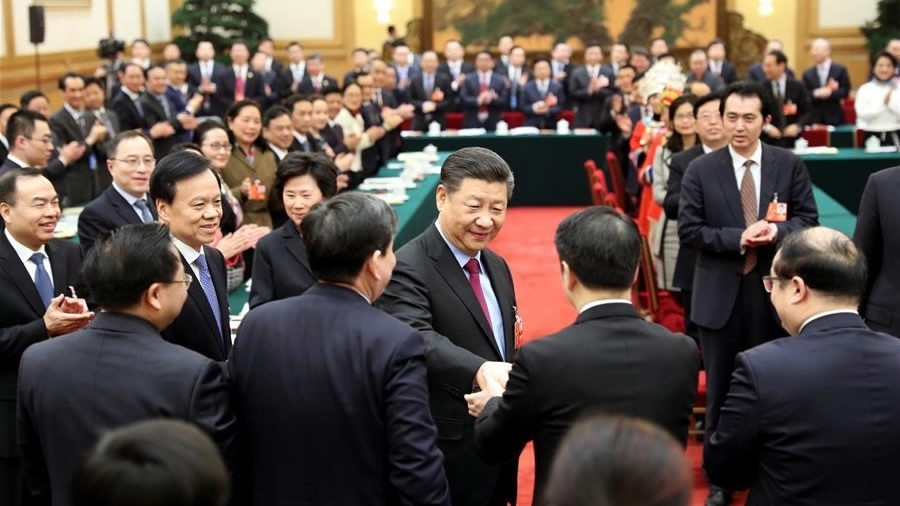
Chinese President Xi Jinping, also General Secretary of the Communist Party of China (CPC) Central Committee and Chairman of the Central Military Commission, joins a panel discussion with the deputies from southwestern municipality of Chongqing at the first session of the 13th National People's Congress in Beijing, March 10, 2018. (Photo/Xinhua)
Chinese President Xi Jinping, also General Secretary of the Communist Party of China (CPC) Central Committee and Chairman of the Central Military Commission, joins a panel discussion with the deputies from southwestern municipality of Chongqing at the first session of the 13th National People's Congress in Beijing, March 10, 2018. (Photo/Xinhua)
In a phrase, the Constitutional Amendment, with its 21 provisions, is all about strengthening China’s system of governance, especially the Party’s leadership of the country and President Xi’s leadership of the Party and the country. Xi has been consistent in respecting, indeed in championing China’s Constitution, and now by amending the Constitution, he enhances alignment between the realities of how China is actually governed and what the Constitution actually says - thus bolstering Xi’s commitment to the Rule of Law. Establishing the National Supervisory Law and Commissions, expanding the anti-corruption campaign to all public organs and organizations, is also consistent. As for term limits, it is not that Xi will hold the formal titles of leadership for life, but that he will hold real leadership long enough to bring about China’s national rejuvenation and establish a Chinese kind of democratic norms. Xi’s grand vision for mid-century China, China 2050, is for the country to be “prosperous, strong, democratic, culturally-advanced, harmonious and beautiful.” All factors considered, because of China’s special conditions and Xi’s special capabilities, abolishing term limits may be good for China. That’s Closer To China.