
By CGTN’s Xia Cheng
Despite unresolved trade-dispute between China and the US, Chinese investors are eyeing big bucks in the mid-western US, the steel and machinery hub of America. But the global economic transformation has been biting into jobs and economic output in the region, creating rust-belt cities. And that is exactly where Chinese investors find good opportunities to acquire cheap assets.

CFP Photo
China is giving US President Donald Trump the manufacturing jobs he wants, despite the US's tough stance on relations with China. Taking the Chinese auto-part maker Wanxiang as an example, the company set up its first US branch in 1994 and has created 10,000 jobs in 20 states since. Now it has more than 10 billion dollars of US assets.
Cheap asset and ample labor supply are exactly why Chinese companies favor the mid-west rust-belt region.
"Wanxiang has purchased many bankrupt enterprises or enterprises in liquidation state here, including Ford and Chrysler," said the company's CEO Ni Pin.
Data shows that the Midwest has become a favorite for Chinese investment in the US. Nearly 200 Chinese companies have invested 12.8 billion US dollars in the region, creating almost 30,000 jobs.
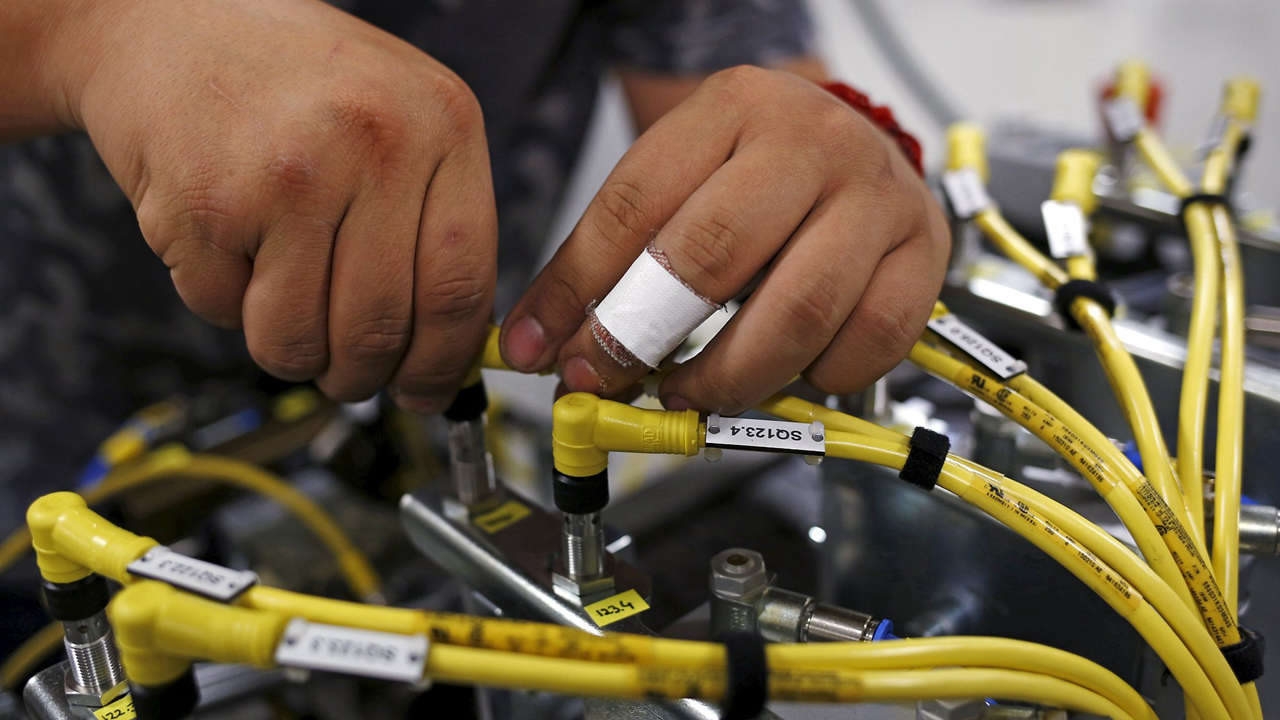
A worker fixes wiring at Felsomat in the Chicago suburb of Schaumburg, Illinois, United States. /CFP Photo
However, the US political circle has always been skeptical about Chinese investments. However, the Mayor of Chicago, Rahm Emanuel, is not one of them. He believes Chinese investments do help to create jobs.
"Leveraging the investment we're making to add manufacturing jobs here in the city of Chicago, helping more families with a middle class dream, middle class aspiration in community raise their families and their children with those aspirations. That's we're talking about," said Emanuel.
With national security concerns lingering in the US on Chinese investment, Wall Street is embracing a new flood of capital inflows.
Many US companies including investment bank Cowen saw share prices surge thanks to Chinese investment, which hit an all-time high in 2016. But analysts don't expect the same in 2017, due to growing US protectionism and other global uncertainties.