
Tech & Sci
13:04, 26-Mar-2017
Stanford report calls for closer China-US collaboration on solar energy
Updated
11:09, 28-Jun-2018
 []
[]
Share







Copied
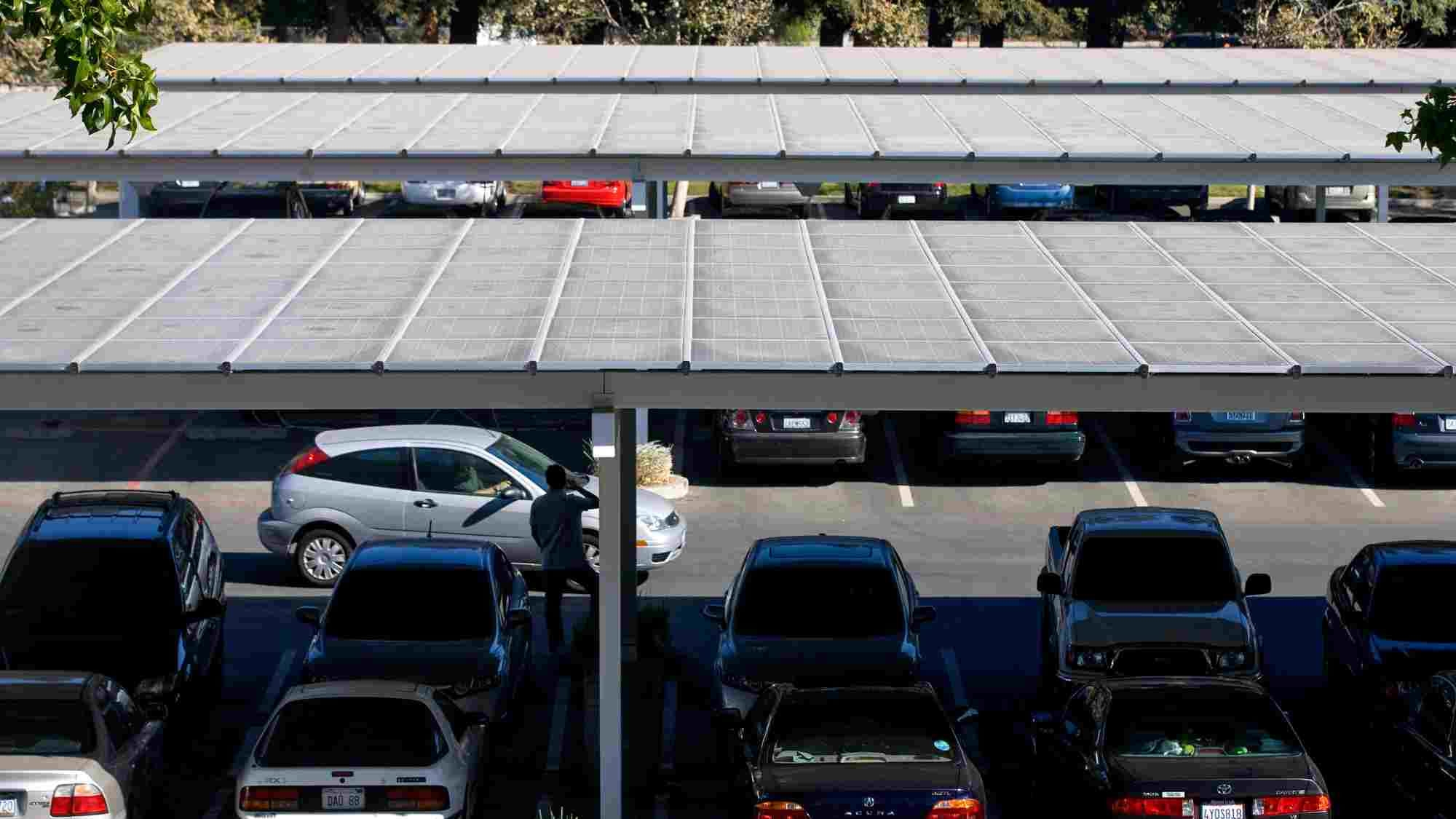
A new report from Stanford University researchers calls for China and the US to work more closely together on solar energy with each country capitalizing on its particular strengths.
Recognizing China as the major driver of the global solar industry, the researchers at Stanford's Steyer-Taylor Center for Energy Policy and Finance believe the rapidly expanding solar energy industry could contribute to curbing climate change only if governments and the private sector approach it more economically and efficiently.
"The Chinese are not only leading the world in terms of manufacturing solar equipment, but they are also the largest deployer of solar energy," said Dan Reicher, a co-author of the report and executive director of the Steyer-Taylor Center.
"Also, they are getting increasingly competitive in the research and development area, which the US has historically been dominating. With a new federal administration and a new Congress, this is the time to be thinking about what we want the US role in solar industry to look like five, 10 years from now."
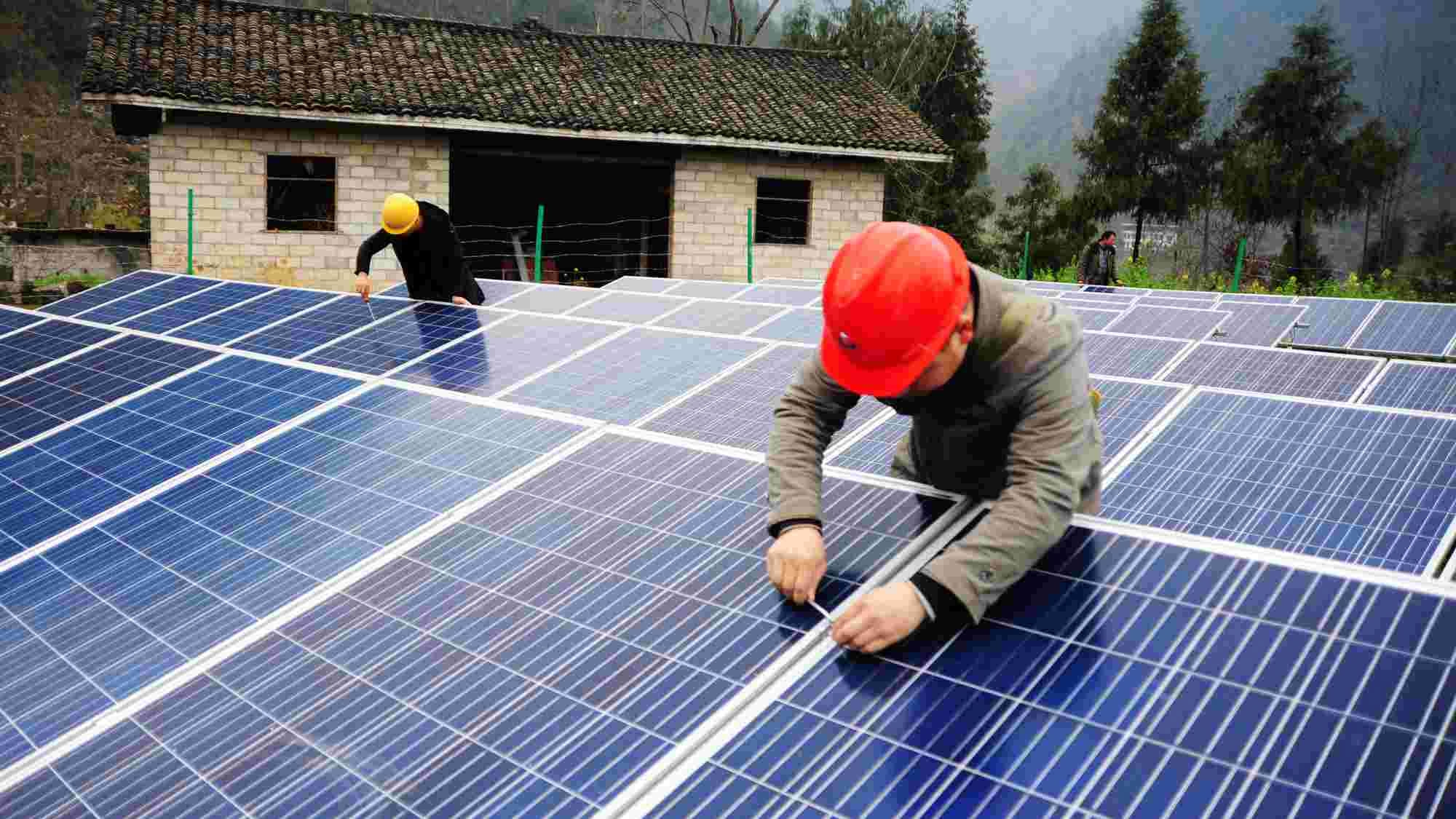
Workers install solar pannels on the roofs in a village in Chongqing, China, March 7, 2017. /CFP Photo
Workers install solar pannels on the roofs in a village in Chongqing, China, March 7, 2017. /CFP Photo
The center, a joint research center involving Stanford Law School and the Stanford Graduate School of Business, unveiled the report, "The New Solar System," this week during an event at the Brookings Institution, a think tank based in Washington DC.
Solar power currently supplies about 1% of global electricity, but the International Energy Agency predicts that solar photovoltaic technology, namely panels that convert sunlight into electricity, could grow to 16% by the middle of this century.
The US government should embrace a globalizing solar industry, continue to invest in the deployment as well as research and development (R&D) of solar energy, and prioritize plans that reduce the cost of solar power, the researchers said, adding that the government should encourage research collaborations with China.
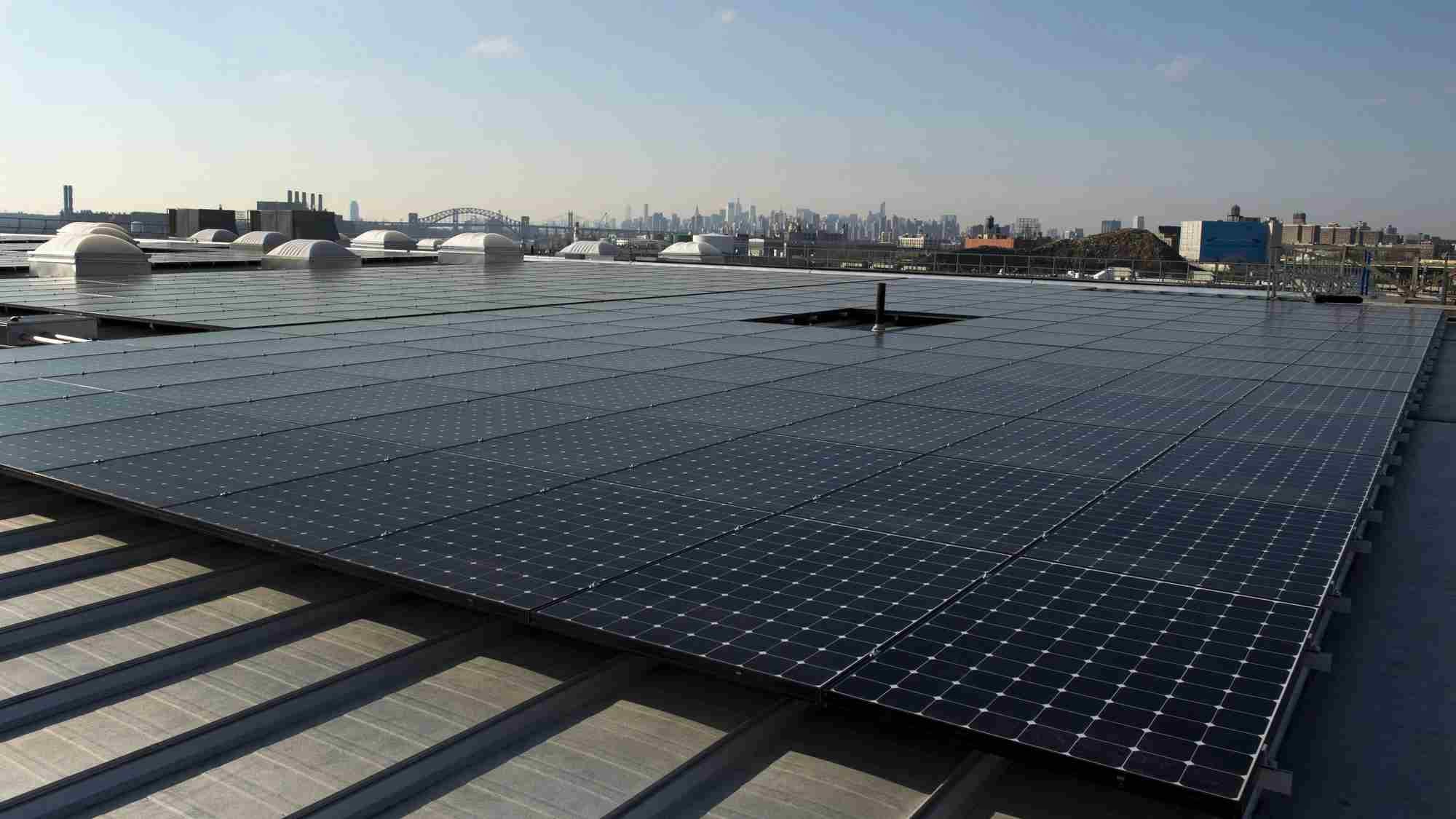
The rooftop of Jetro Restaurant Depot in the Bronx is covered with solar panels on Jan. 17, 2014 in New York. /CFP Photo
The rooftop of Jetro Restaurant Depot in the Bronx is covered with solar panels on Jan. 17, 2014 in New York. /CFP Photo
Arguing that solar R&D has a greater long-term economic value to the US than solar manufacturing, the researchers suggested reforming a federal policy that requires those who accept US federal funding for solar research and development to promise to manufacture the resulting technologies "substantially" in the US.
Created in an effort to maximize US solar-manufacturing jobs, the current policy may instead diminish the quality of the research ideas being funded by the federal government.
The researchers analyzed the current state of China's solar industry, debunking several myths that are prevalent in Western countries.
"China's solar industry and market is grossly misunderstood in the West," said Jeffrey Ball, the scholar-in-residence at the Steyer-Taylor Center and the report's lead author. For example, there is a perception that the global solar industry is centralizing in China and that its solar market is largely closed to foreign investment.
However, the researchers found that China's dominant solar companies are, as they grow larger, increasingly tapping international capital and spreading their operations across the globe.
In addition, the study found that top Chinese officials and corporate executives are eager to apply a range of more efficient financing mechanisms that have been used in the West to dramatically scale up solar deployment in China, already the world's largest solar market, which represents a potentially valuable opportunity for America and other countries in the West.
Another Western perception is that China doesn't innovate, but uses other countries' technological advances to bring down its manufacturing costs. While it's true that manufacturing processes have been China's strength, the country is intensifying its solar R&D efforts, according to the report.
Chinese researchers are also producing increasingly notable results in solar research. For example, Trina Solar, one of the world's largest solar manufacturers, recently became the first China-based firm to be recognized by the US National Renewable Energy Laboratory as having achieved a world record in the efficiency of a laboratory-scale multi-crystalline-silicon cell, the type of solar cell that dominates the global market.
"China has very ambitious targets for solar, and as a manufacturer and deployer of solar it already dwarfs the US," Ball was quoted as saying in a news release from Stanford. "The goal for the United States should not be to beat China. It should be to play to US comparative advantages – to craft policies to reduce the cost of solar power for the benefit of the world and, in the process, for the benefit of the US."
"There is an array of decisions the US government is in charge of making that will have serious implications for the future of the US solar industry," said Reicher. "This is a good moment to consider them in serious depth."
(Source: Xinhua)
11159km