
China
08:56, 15-Jun-2017
Don’t wait until disaster strikes. Please give often!
 []
[]
Share







Copied
By CGTN’s Luo Yu
Beijing had a mere 1,800 blood donors twenty years ago, but now the number is nearly 400,000 per year.
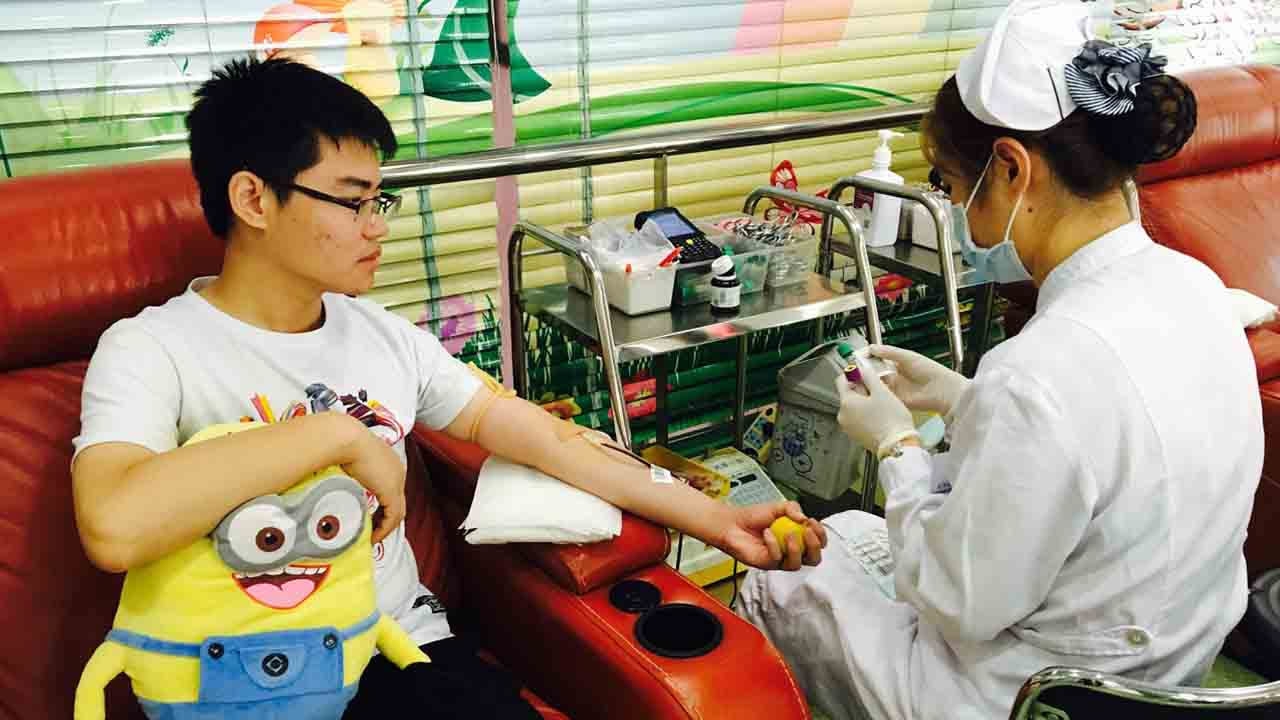
A lot of them give blood on a regular basis. University student Xiao Chunyu is a frequent visitor at the Xidan blood center in downtown Beijing. "It has become a habit. I just want to support public health programs. I don't have a specific reason. There are many who are willing to donate blood, yet not everyone is happy to do so. They still have some misunderstandings towards unpaid blood donation."
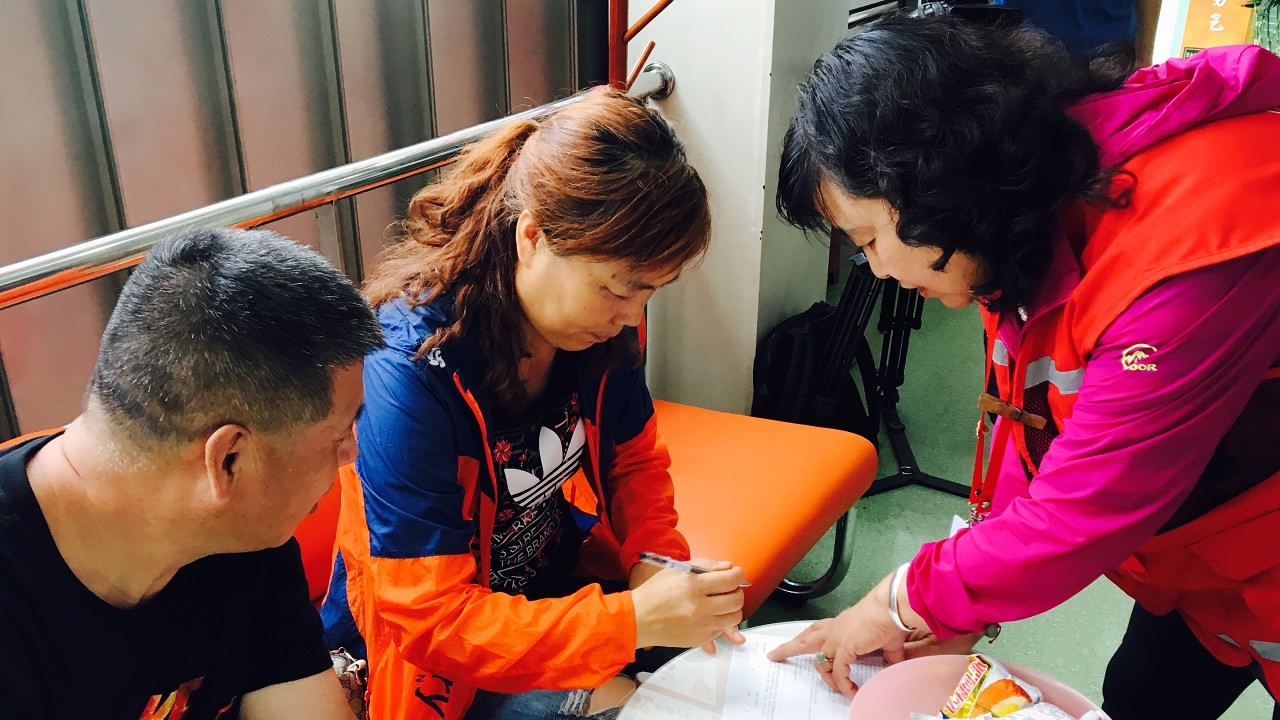
Blood donors at the Xidan Blood Center in Beijing. /CGTN Photo
Blood donors at the Xidan Blood Center in Beijing. /CGTN Photo
"I used to think donating blood might cause some health problems. But I felt relieved after the staff explained to me. If our physical conditions allow, blood giving will help others without harming our own health. It's a noble deed," said Xue Jinxiang. Encouraged by her husband, she rolled up her sleeve to give blood for the first time.
Staff working at the Xidan blood center told CGTN that they receive around 30 blood donors every day, but this still falls short of the ever increasing demand for blood. And it gets worse in emergency situations.
Doctor Hou Ruiqin works at the Blood Transfusion Department in People’s Hospital of Peking University. "We sometimes face inadequate blood supplies for emergency health care. Apart from implementing our emergency response system, we would organize doctors and nurses to give blood on a voluntary basis. Every year more than 150 staff donate blood."
But calling on hospital staff to give is simply not enough to deal with blood shortages.
Data released from Beijing Red Cross Blood Center indicates that the blood donation rate in Beijing has reached 1.82 percent, ranking first among all cities in the country.
But this figure for China has just passed 1 percent. This was well below the median blood donation rate in high-income countries, 3.21 donations per 100 people, and 1.49 donations per 100 people in upper-middle-income countries, according to the World Health Organization.
That means China can only meet the most basic requirements for blood, putting a lot of lives in urgent need for the essential fluid.
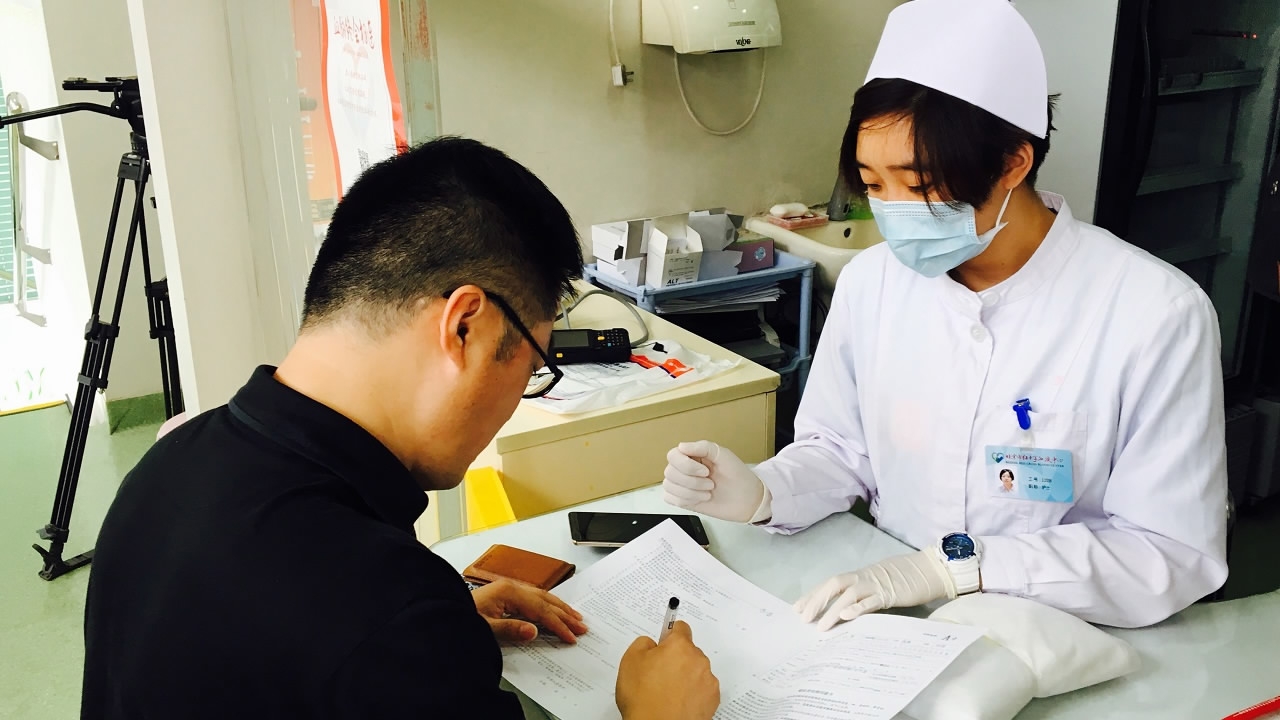
Blood donor fills out the form before blood donation. /CGTN Photo
Blood donor fills out the form before blood donation. /CGTN Photo
Don’t wait until disaster strikes.
Experts suggest people should always get prepared and brace for the challenges that lie ahead. Liu Jiang, director of Beijing Red Cross Blood Center said counter-intuitively, when a country faces emergencies such as natural disasters, its blood supply tends to be more adequate, because people are more compassionate and motivated to give at that time. "I remember after the Wenchuan earthquake in 2008, we worked till 2-3 am in the morning and people lined up to give blood. The biggest challenge is actually blood shortage caused by some other reasons such as the hot weather. That’s a time when the emergency response system for blood shortage has yet to be activated but the inventory is shrinking. That’s why the key lies on the days when disasters don't take place. If more people give blood more often, we can maintain the blood inventory at a reasonable level, then there is nothing to be afraid of," said Liu.
Meanwhile, a lot more has to be done to promote unpaid blood donation in China. One viable way is to convey the right message to the right people. "Our data shows more than 80 percent of the donors are under 30 years old. So we have to target our prospective donors and match their needs. Second, some information needs to be updated and clarified. We used to promote unpaid blood donation by saying 'blood donation is good for your health.' This is an inappropriate argument that I don't quite agree with. We can only say 'blood donation' does not cause harm to your body," Liu added.
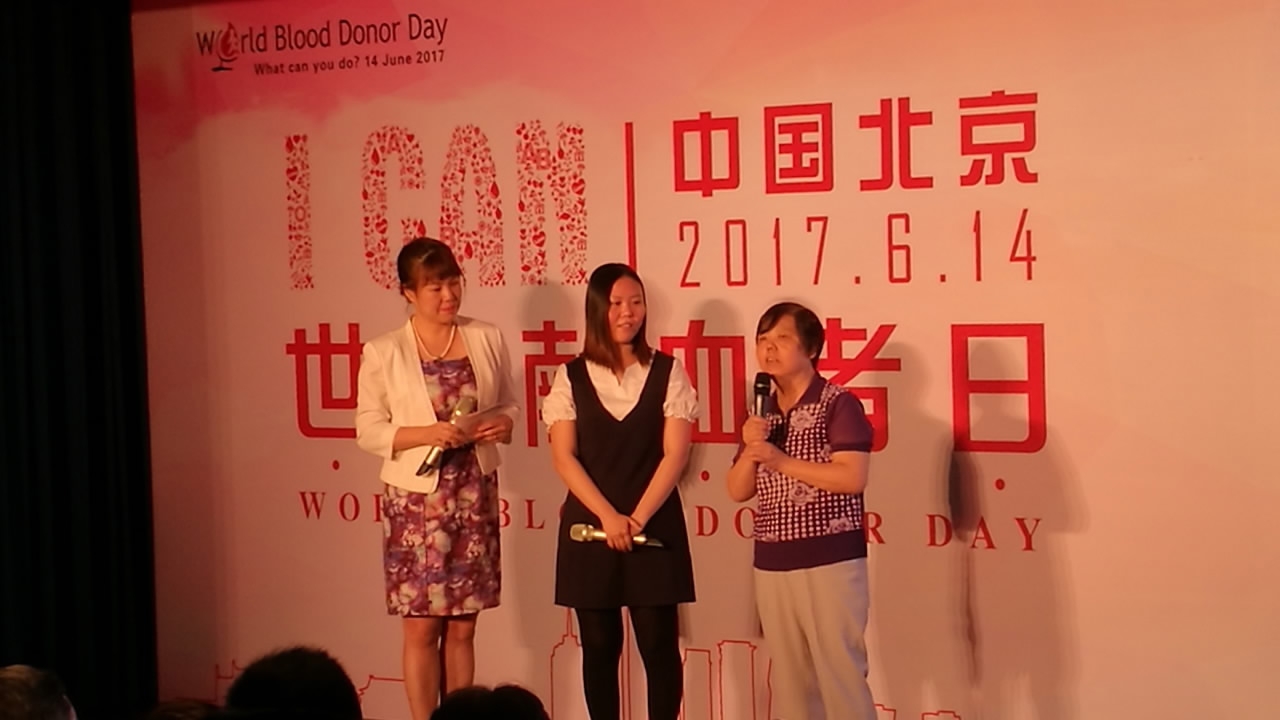
Events held to mark World Blood Donor Day in Beijing. /CGTN Photo
Events held to mark World Blood Donor Day in Beijing. /CGTN Photo
According to the Beijing Red Cross Blood Center, more than 130,000 people in Beijing have donated blood from January to May this year. And 70 percent of them did so at donation centers or at blood collection buses alongside streets in the city. What can we do as individuals to meet the increasing demand for blood to save more lives? The slogan of this year’s World Blood Donor Day answers well. "Give blood. Give now. Give often."
1km