
11:29, 29-Sep-2017
Peru Earthquake Readiness: Unregulated construction in Lima a hazard if quake hits
 []
[]
Share







Copied
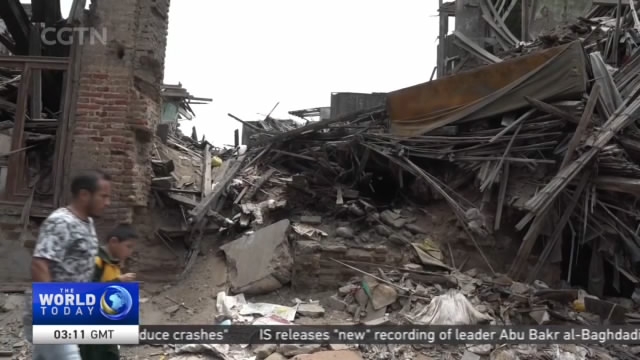
The magnitude-7.1 earthquake which hit Mexico last week left more than 300 dead and over 40 missing, most of them in the capital city. CGTN's Dan Collyns is in Peru's capital Lima, to find out what would happen if a similar quake were to strike the seismically volatile city.
This sprawling city of some 10 million people has quadrupled in size in recent decades. Filled by migrants, it spread out and up into the foothills of the Andes mountains. It's grown - for the most part - because newcomers built for themselves. In fact some 70% of Lima buildings are unregulated constructions, says Peru's Chamber of Construction. And that makes for some extraordinarily unsafe constructions.
DAN COLLYNS LIMA "This building not only breaks structural norms it appears to defy the laws of physics. It's seven stories high but one end has a width of little more than a metre, in which you could barely fit the head of a single bed."
Situated in busy downtown Lima surrounded by shops and eateries, it's an accident waiting to happen, say neighbors:
WILLY CASTRO WATCHMAKER "It was originally designed for four stories but then they put on more floors. If there was movement, it would affect the whole building, and crush it. They have to demolish it."
OLINDA CHARRE CAFE WORKER "We are all afraid because it's so narrow. In an earthquake, it could fall on us."
Lima's town hall has reacted by shutting it down and listing it for demolition. But in the majority of cases, the buildings have not been inspected for earthquake resistance. Only three out of 10 formal constructions are technically supervised, says the capital's architects' guild.
MIGUEL ESTRADA PERUVIAN JAPANESE SEISMIC INVESTIGATION CENTER "We have very good laws about earthquake-resistant construction. However, they are not respected, not so much in the important high rise buildings but in homes. That's where we have the problem of self-built constructions."
What's more, older buildings fall outside new structural regulations, which were updated after a 7.9 earthquake hit Peru a decade ago. Parts of the city could count on a new early warning system and engineers have mapped its most vulnerable neighborhoods, nonetheless engineers are concerned.
MIGUEL ESTRADA PERUVIAN JAPANESE SEISMIC INVESTIGATION CENTER "Here in Lima it would be bad. In Mexico City, it appeared they were better organized due to being hit hard in the past. If that happened in Peru with its 100s of 1000s of informal homes, we would have a big disaster."
These building were gutted in Peru's last big quake which barely affected the capital. More than 500 people were killed, next time it could be much worse. Dan Collyns, CGTN, Lima.