TECH & SCI


New study finally explains why shoelaces come untied, and it's not you
2017-04-16 12:45 GMT+8
9517km to Beijing






Editor
Xie Zhenqi
A new study shows why your shoelaces may keep coming untied, an interesting topic that almost every sneaker wearer wonders, yet no one had investigated until now. The good news is, it's not your fault.
The study suggests that a double whammy of stomping and whipping forces acts like an invisible hand, loosening the knot and then tugging on the free ends of your laces until the whole thing unravels.
Using a slow-motion camera and a series of experiments, the study by mechanical engineers at the University of California, Berkeley, and published this week in the journal Proceedings of the Royal Society A shows that shoelace knot failure happens in a matter of seconds, triggered by a complex interaction of forces.
"When you talk about knotted structures, if you can start to understand the shoelace, then you can apply it to other things, like DNA or microstructures, that fail under dynamic forces," said Christopher Daily-Diamond, study co-author and a graduate student at Berkeley.
"This is the first step toward understanding why certain knots are better than others."
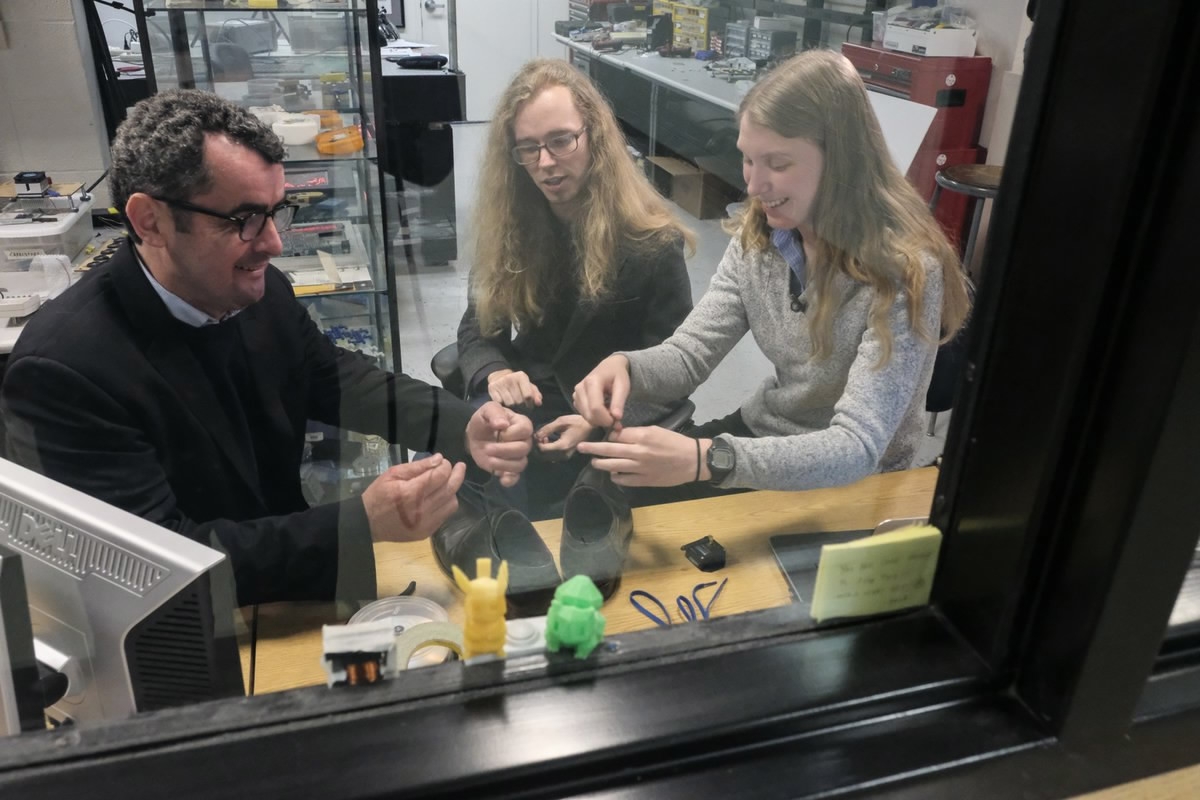
Engineering students spent two years studying forces and slow motion videos. / UC Berkeley Photo
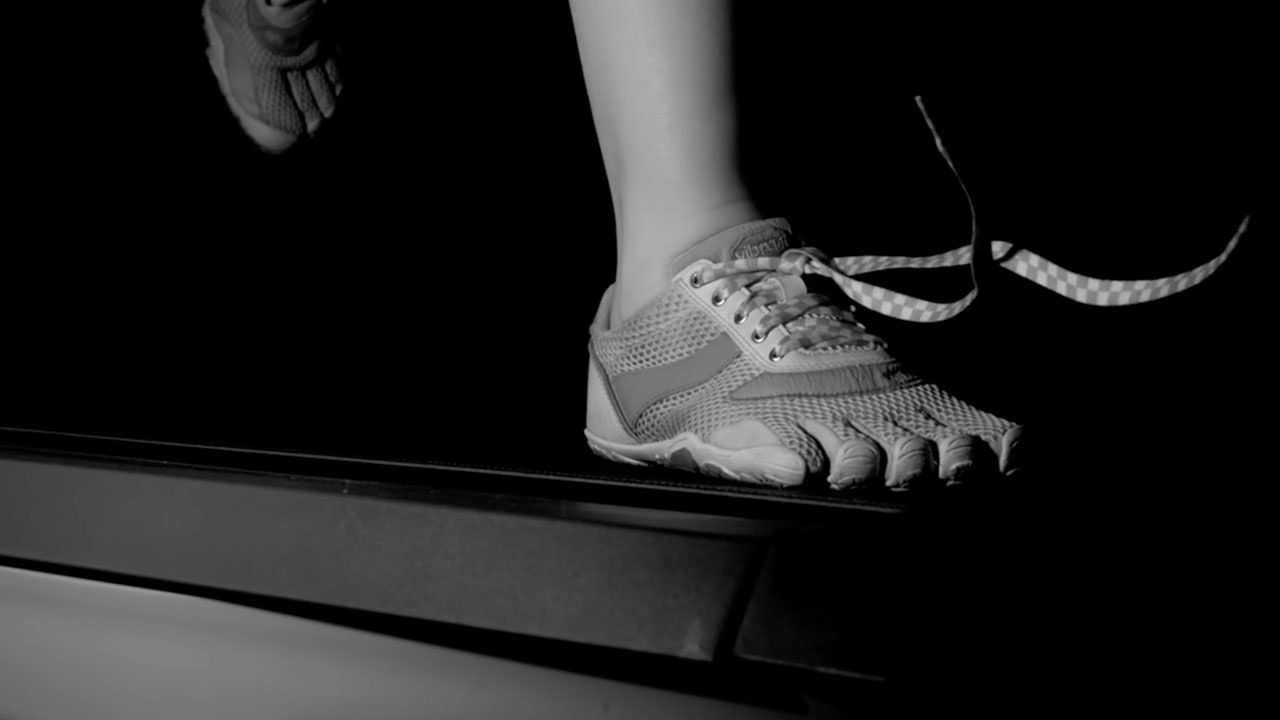
Study co-author and graduate student Christine Gregg, a runner, laced up a pair of running shoes and ran on a treadmill while her colleagues filmed her shoes.
The researchers found that when running, the foot strikes the ground at seven times the force of gravity. The knot stretches and then relaxes in response to that force.
As the knot loosens, the swinging leg applies an inertial force on the free ends of the laces, which rapidly leads to a failure of the knot in as few as two strides after inertia acts on the laces.
"To untie my knots, I pull on the free end of a bow tie and it comes undone. The shoelace knot comes untied due to the same sort of motion," said Gregg.
"The forces that cause this are not from a person pulling on the free end, but from the inertial forces of the leg swinging back and forth while the knot is loosened from the shoe repeatedly striking the ground."
CFP Photo
In addition to the dynamic interaction of forces on the knot, the footage also revealed a large magnitude of acceleration at the base of the knot.
As for the fact that when a person goes walking or running, their shoelaces don't always come untied, as tightly tied laces can require more cycles of impact and leg swinging to cause knot failure than one might experience in a day's worth of walking or running, the researchers acknowledged that more research is needed to tease apart all the variables involved in the process.
(Source: Xinhua)
9517km
Copyright © 2017
SHARE
- EXPLORE
- MORE
FOLLOW US