
Culture & Sports
14:48, 28-May-2017
Muslims in China's Xinjiang begin fasting for Ramadan
 []
[]
Share







Copied
By CGTN's Meng Qingsheng, Luo Caiwen
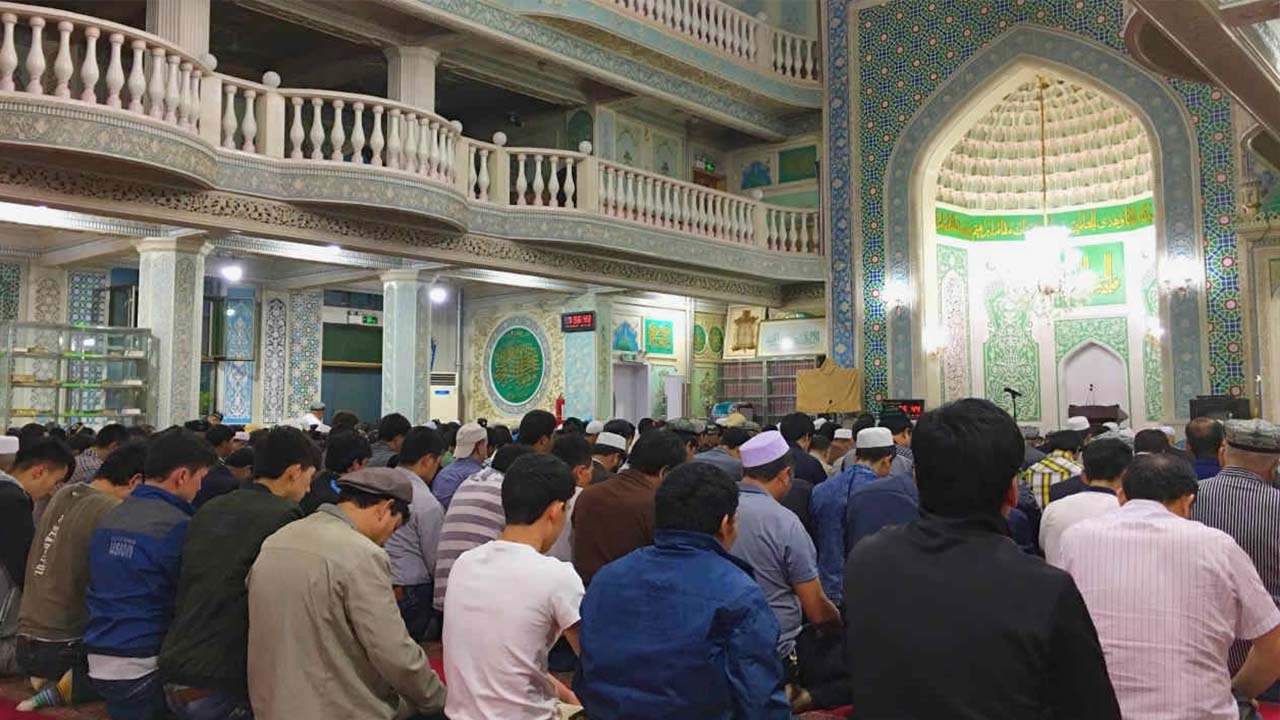
China's Xinjiang Uygur Autonomous Region is home to the country's largest Muslim population, and like many other places around the world, people there have begun observing the holy month of Ramadan.
For Muslims, Ramadan is the month in which the first verses of the Quran, Islam's holy book, were revealed to the Prophet Muhammad more than 1,400 years ago. During Ramadan, Muslims observe the religious month by fasting and reflecting on their spirituality. Ramadan this year runs from May 27 to June 26. Xinjiang's various ethnic minorities including the Hui, Uygur and Kazakh are taking part.
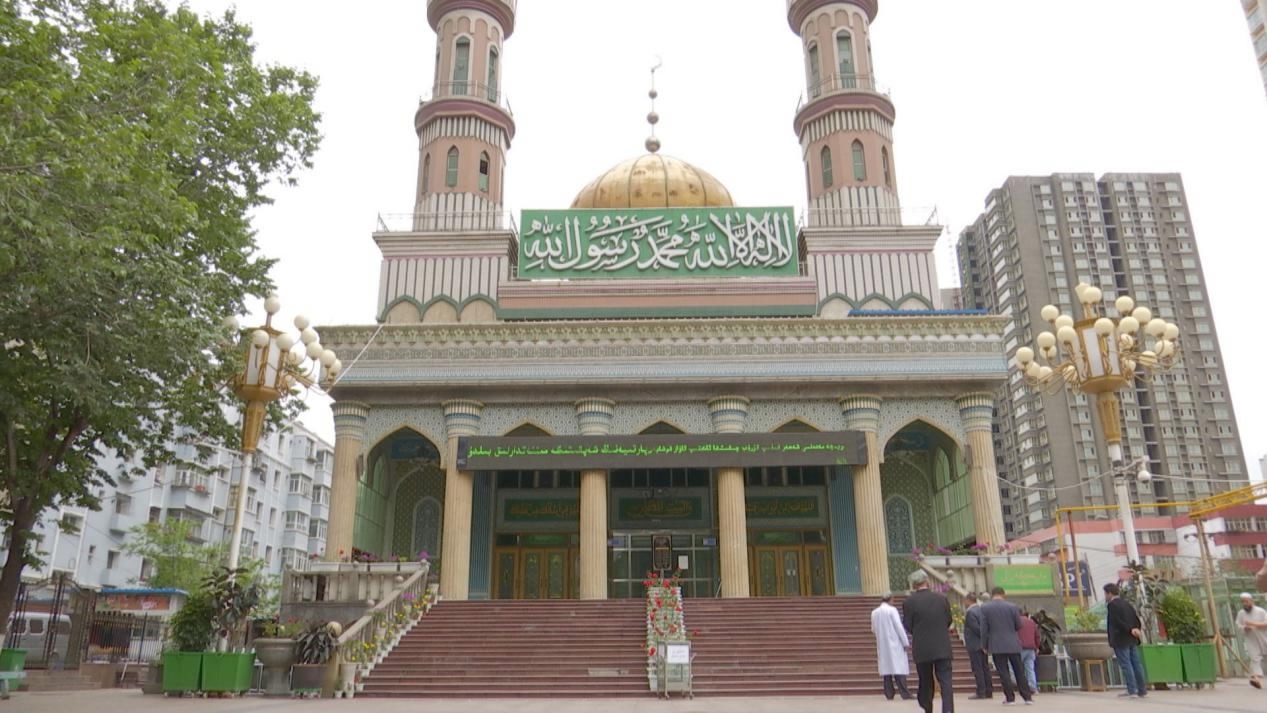
Yanghang Mosque in Urumqi City, first built in 1879, is the biggest one in the city. /CGTN Photo
Yanghang Mosque in Urumqi City, first built in 1879, is the biggest one in the city. /CGTN Photo
During Ramadan, Muslims abstain from eating, drinking, and smoking from sunrise to sunset. Muhtaram Sherif is the Imam of Yanghang Mosque, the biggest one in Urumqi. He learned the basics of fasting at a very young age from his father who served as an Imam at a local mosque for thirty years. Muhtaram believes that fasting is in fact a test of endurance. He said, "Without food and drinks, you need to work out your own to cope with it. You have to learn how to survive and get through difficulties."
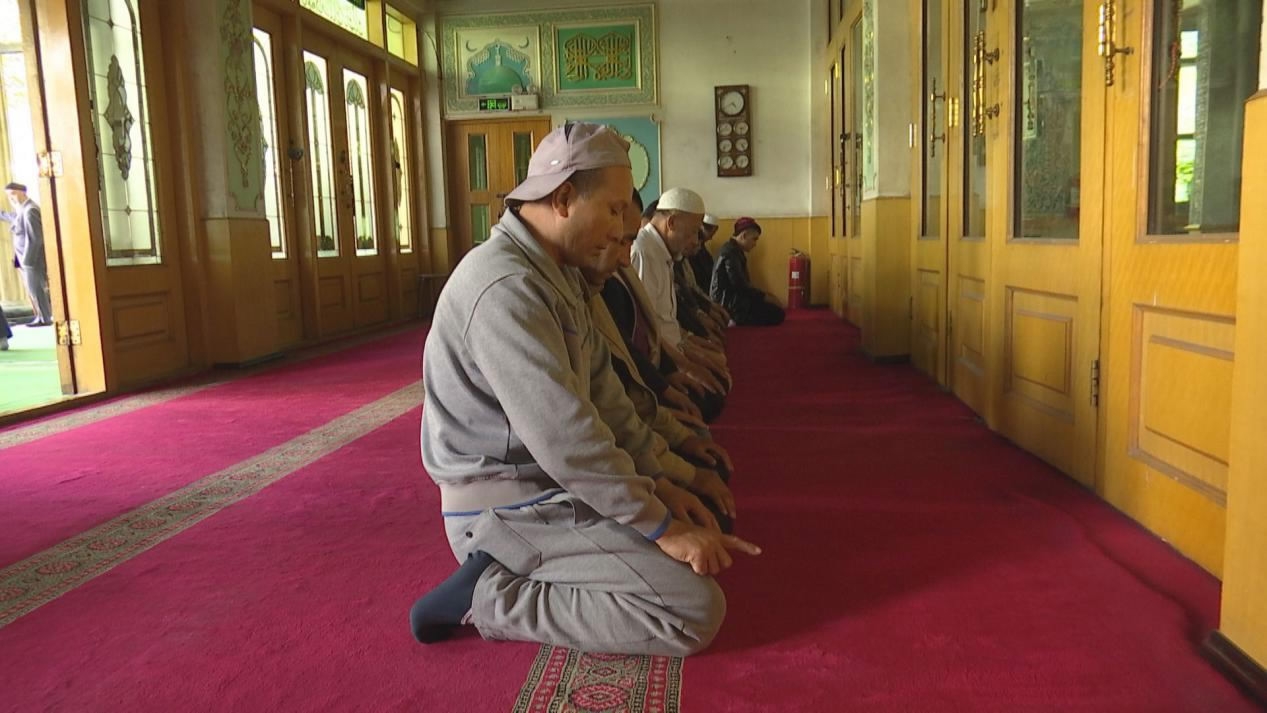
Devoted Muslims go to mosques and pray five times a day, facing the direction of Mecca, the holiest city in the religion of Islam. /CGTN Photo
Devoted Muslims go to mosques and pray five times a day, facing the direction of Mecca, the holiest city in the religion of Islam. /CGTN Photo
During Ramadan, more Muslims throng mosques to pray. The spiritual discipline allows them to curb negative thoughts and emotions, like jealousy and anger.
The number of mosques across Xinjiang stands at around 20,000. Devoted Muslims go to mosques every day and pray for five times, facing the direction of Mecca. During Ramadan, they extend the last prayer from ten minutes to two hours. Along with fasting, it's intended to get closer to God and to remind them of the suffering of those less fortunate.
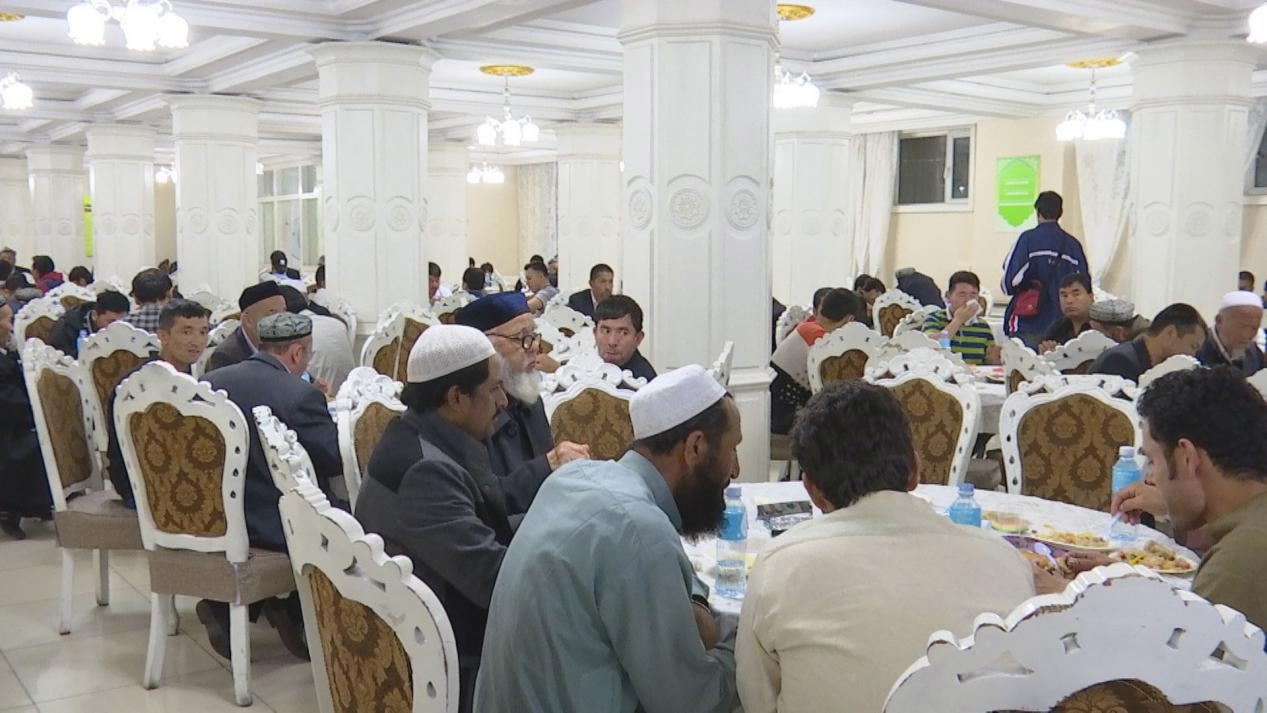
More than 300 Muslims dine at Yanghang Mosque after the day’s fasting finishes, that is, after sunset. The meal is provided for free by the mosque. /CGTN Photo
More than 300 Muslims dine at Yanghang Mosque after the day’s fasting finishes, that is, after sunset. The meal is provided for free by the mosque. /CGTN Photo
Usually, it's compulsory for Muslims to start fasting when they reach puberty, but there are exemptions, like those with illnesses, pregnant women and those with breastfeeding demands. Officials say that the local governments at all levels in Xinjiang have safeguarded lawful religious activities, and protected people's religious choices.
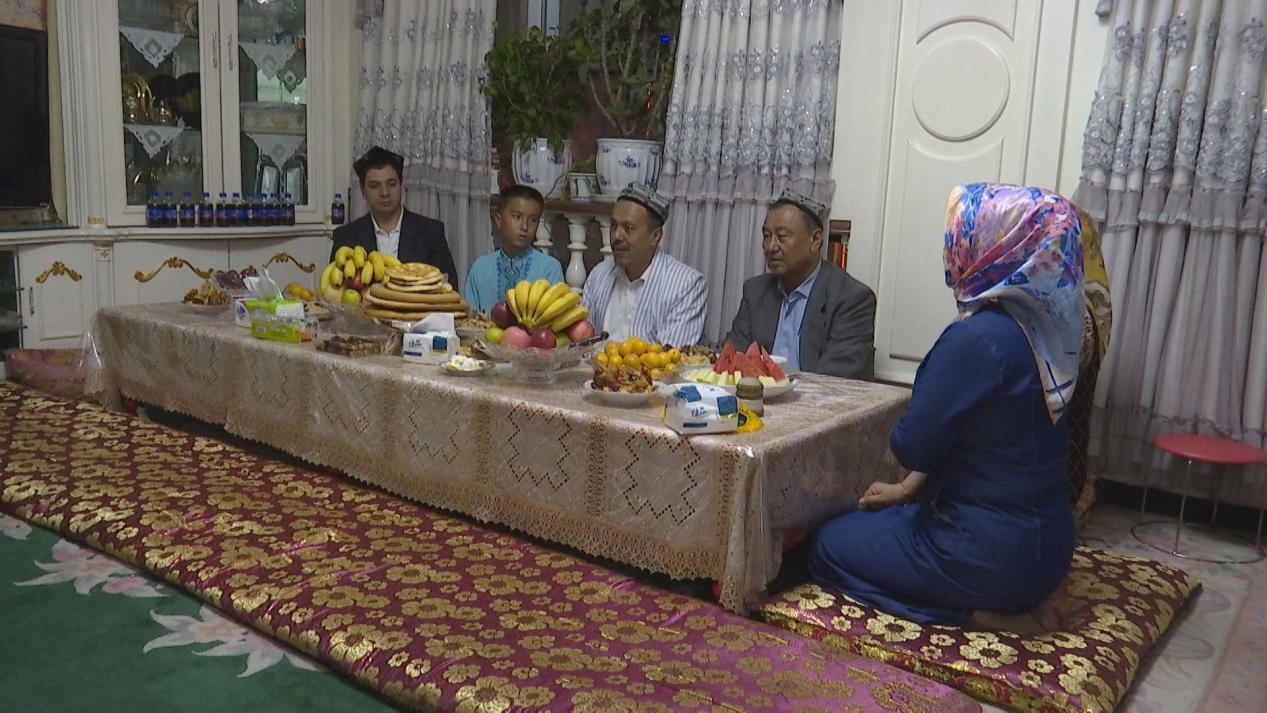
Muhtaram Sherif, Imam of Yanghang Mosque, dines together with family members after sunset. /CGTN Photo
Muhtaram Sherif, Imam of Yanghang Mosque, dines together with family members after sunset. /CGTN Photo
Once Ramadan wraps up on June 26, there will be a big three-day celebration called Eid al-Fitr, or "the Festival of the Breaking of the Fast." The Muslim holiday sees families and friends come together for big meals, with gifts exchanged.
2414km