TECH & SCI


Will the smartphones of the future be made by robots in India?
2016-12-31 15:10 GMT+8







Editor
Gong Zhe
Two trends are happening in the world of smartphone production - and it remains to be seen whether or not they will be positive or harmful.
The first is automation. Foxconn, based in China's Taiwan, is well-known as the manufacturer of Apple's iPhone. It has illustrated a three-step process to replace almost all of its workforce with robots. The process has been specifically designed for the company's factories in China, manager of Foxconn's automation development Dai Jia-peng told local tech media DigiTimes on Friday. But whether it will expand this massive elimination of manual labor to other factories remains unknown.
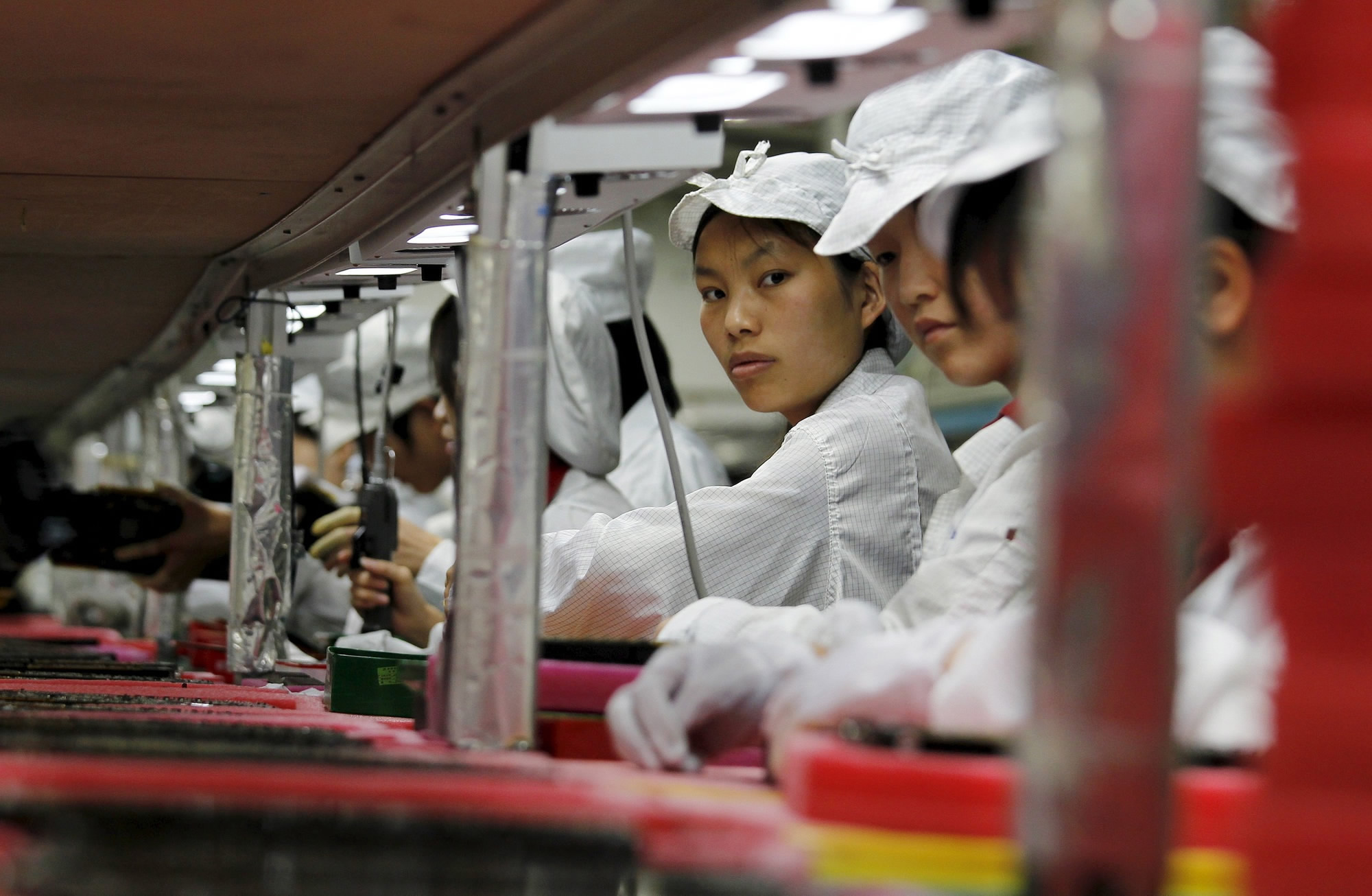
Workers inside a Foxconn factory in Longhua township, south China's Guangdong Province on May 26, 2010. / CFP Photo
According to a report by South China Morning Post, Foxconn is looking to use its "Foxbot" manufacturing robot technology to automate 30 percent of all factory labor by the year 2020.
So where will the workers go? Are they being laid off? Foxconn didn't mention that to the media. Even if the company managed to smoothly replace the workers without creating any problems, Foxconn may still be accused of not providing enough job opportunities for society.

Workers return to their dorms at a Foxconn factory in south China's Guangdong Province on January 21, 2015. Lights are not needed if robots work here, and machines don't need dorms to sleep in. / CFP Photo
Foxconn has gained a controversial reputation in recent years for a history of worker suicides, amid accusations of exploitation. This may be one of the reasons for the company's ambitions concerning automation, but it also raises the question of how the workers will react when their jobs are taken by the "Foxbots."
Now we can see the boldness of Foxconn's robot revolution. It is not only about technical innovation, but also an ethical decision bound to have repercussions.
A journey to the west
Let's talk about the second trend in smartphone production: relocation. Gone are the days when smartphone manufacturers could look to utilize the cheap Chinese workforce to reduce costs. So factories are now looking to relocate to countries like India.

Indian Prime Minister Narendra Modi (R) speaks with Apple CEO Tim Cook during a meeting in New Delhi on May 21, 2016. / CFP Photo
Take Apple again as an example. Wide-spread rumors indicate that some iPhone manufacturers are looking ahead to a future factory in Bangalore. If true, such a relocation would be a direct challenge to the policies and principles of US President-elect Donald Trump, who promised during his campaign to restore manufacturing jobs in his country. The New York Times quoted Trump in a report as saying:
"I got a call from Tim Cook at Apple, and I said, 'Tim, you know one of the things that will be a real achievement for me is when I get Apple to build a big plant in the United States, or many big plants in the United States, where instead of going to China, and going to Vietnam, and going to the places that you go to, you're making your product right here.'"

Trump speaks during a meeting with technology leaders including Tim Cook at Trump Tower in New York, December 14, 2016. / CFP Photo
According to Trump, Cook said "I understand that." But according to the growing speculation surrounding factory relocations to India and elsewhere, Apple's manufacturers do not seem to understand that.
Combining these two trends, in the future we can expect to see our iPhones made by robots based in India. Such a change would represent some of the most profound changes to industry in recent decades - the concept of automation, and the emergence of new low-wage global powerhouses of production. But is the world ready?
Copyright © 2017
SHARE
- EXPLORE
- MORE
FOLLOW US