CULTURE


Samba is officially 100 years old
2016-12-14 21:16 GMT+8
3km to Beijing







Editor
Zhang Ruijun
Samba, Brazil's most popular music and dance style, is celebrating its hundred-year anniversary.
The centennial dance is yet young and vibrant, known globally for its colorful, feathered outfits and upbeat rhythms during the Carnival.
Every Sunday musicians and locals gather to play, sing and dance Samba at the "Cacique de Ramos" headquarters, one of Rio's most traditional carnival bands. But this year, they are marking a milestone: 100 years have passed since the first Samba song, called "Pelo Telefone" (in English "By the telephone") was recorded in Rio de Janeiro.

Revelers ride on the annual 'Samba Train' on December 3, 2016 in Rio de Janeiro, Brazil./ CFP Photo
Ubirajara Do Nascmento, President of Cacique de Ramos, said that Samba is "now a universal art. When I refer to Samba, it arises a spiritual state from inside out. It is my source of youth. I am 79 years old and my medicine is Samba."
Samba is believed to have arrived in Brazil some 300 years ago during the slave trade, however it was not widely accepted until the 20th century. In 2005, it was declared by UNESCO a masterpiece of intangible cultural heritage of humanity.
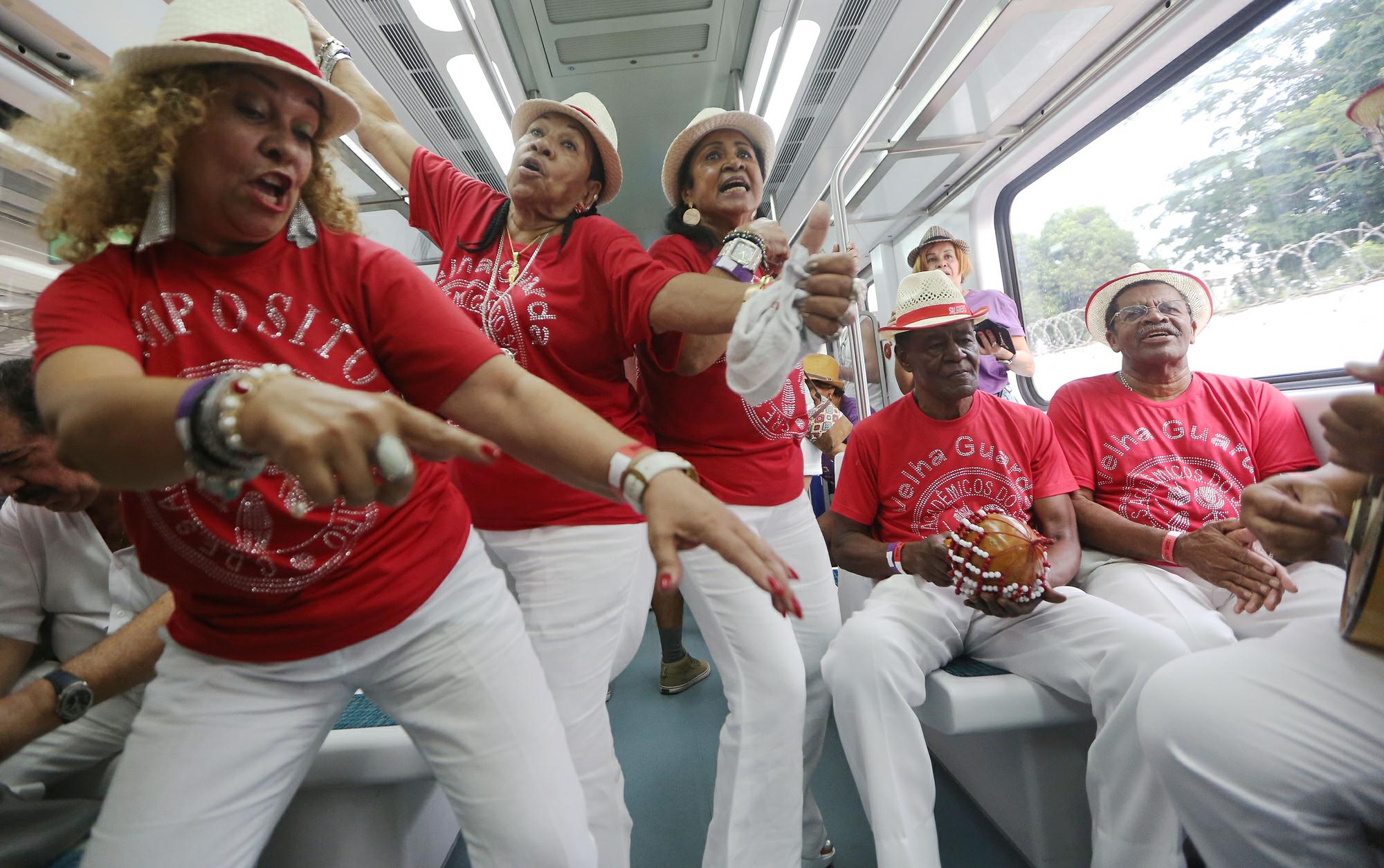
People ride the Samba Train, the annual special train carrying samba musicians and enthusiasts, part of celebrations of the national samba day and the 100th anniversary of Samba at the Central do Brasil train station in Rio de Janeiro, Brazil, on December 3, 2016./CFP Photo
For Samba lovers this is more than just a unique music style, it is part of the identity of Brazil.
A professional Samba dancer, Sidenir Camargo, told CCTVNEWS that "Samba brought together everything. Everything that is good in people, to cheer, to energize everybody so we can become one, making no differences of any kind."
While Samba dances to its 100th birthday, it seems clear the party will continue for years and years to come as Samba retains its position as a joyous source of Brazilian national pride.
Watch CCTV's Lucrecia Franco as she reports from Rio De Janeiro about the centennial birthday of the Samba.
3km
Copyright © 2017
SHARE
- EXPLORE
- MORE
FOLLOW US