POLITICS


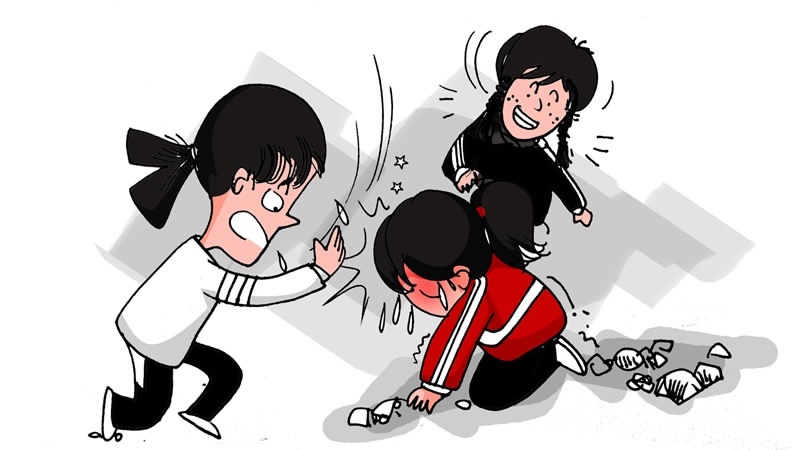
China to crack down on school bullying
2017-03-10 13:07:36 GMT+8
9km to Beijing






Editor
Wang Lei
China will get tough on school bullying this year by reviewing and tightening the law in this area, one of the country’s top legislators vowed on Friday.
“Apart from inspecting compliance with the Law on the Protection of Minors, the National People’s Congress (NPC) Standing Committee will conduct a special investigation, with campus violence as a priority,” said Wang Shengming, vice chairman of the NPC’s Internal and Judicial Affairs Committee, at a press conference on the sidelines of the NPC’s annual session in Beijing.
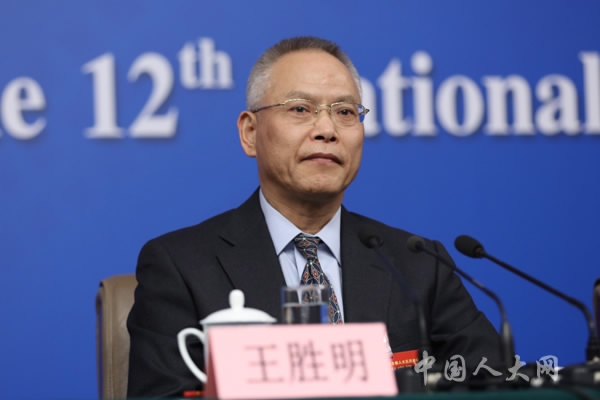
Wang Shengming, vice chairman of the Internal and Judicial Affairs Committee of the 12th NPC. /NPC.gov.cn
The review will be largely concerned with differentiating between nonviolent and violent bullying, and defining other legal terms more precisely, Wang said. “Should it be called campus violence or campus bullying, or both?” he asked.
Based on this greater precision, the NPC will then specify measures in terms of education and punishment, according to the legislator.
Officials from NPC committees covering areas ranging from the environment to financial and economic affairs also took questions at the press conference.
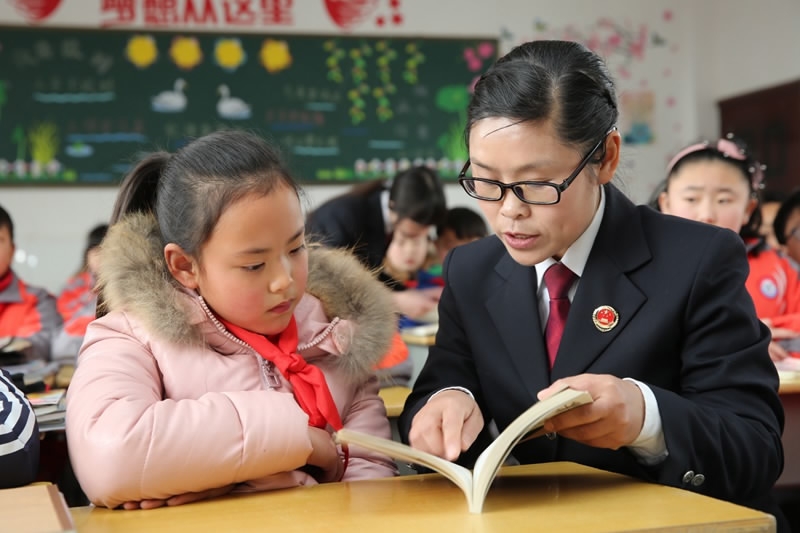
A procurator teaches pupils how to respond to bullying at a primary school in Yichang, Hubei Province in central China on February 22, 2017. /CFP Photo
Food safety
After the “strictest ever” Food Safety Law went into force in October 2015, the NPC conducted an inspection of compliance that was the “highest-profile, largest and most innovative” such exercise in the body’s history, said Liu Binjie, chairman of the Education, Science, Culture and Public Health Committee.
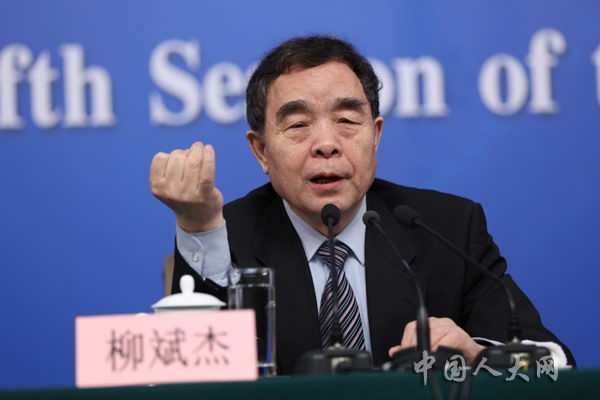
Liu Binjie, chairman of the Education, Science, Culture and Public Health Committee of the 12th NPC. /NPC.gov.cn
Led by NPC Standing Committee chairman Zhang Dejiang, inspectors visited farms, food processing plants, quality inspection agencies, school cafeterias and restaurants, covering the whole chain relevant to food safety.
“Food safety matters immensely in China,” Liu said. “It is… crucial to the wellbeing of every family and the health of the nation.”
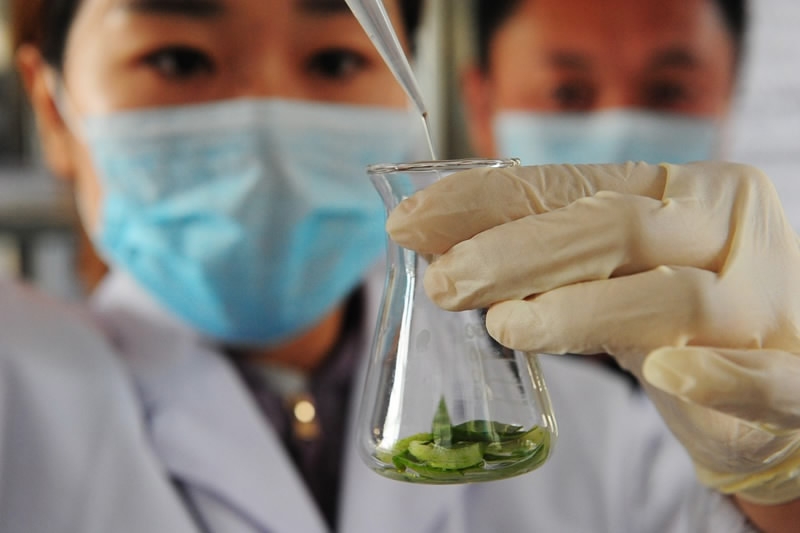
Inspectors check pesticide residue in vegetables in Fuyang, Anhui Province in east China on February 28, 2017. /CFP Photo
Local government debt
According to Liu Xiuwen, vice chairman of the Budgetary Affairs Commission of the NPC Standing Committee, China’s local government debt has been “largely locked in the cage of regulations.”
Liu said at the press conference that regulations and measures have been formulated on the approval of a debt ceiling, the issue of debt bonds, the repayment of debt, bond exchange, budget management, risk warning and emergency response.
His comments follow Finance Minister Xiao Jie’s claim to reporters on Tuesday that “China's government debt risks are generally within control.”
By the end of last year, the combined debt of central and local governments in China stood at 27.33 trillion yuan (about 3.96 trillion US dollars), with the debt-to-GDP ratio at around 36.7 percent.
That ratio is low compared to international levels, giving the government room to raise debt, Xiao said.
9km
Copyright © 2017
SHARE
- EXPLORE
- MORE
FOLLOW US