
17:59, 28-Feb-2019
Full Episode - Targeted Poverty Alleviation III: Challenges, Problems, Global Impact

Share






Copied

General Secretary Xi Jinping made Poverty Alleviation a cornerstone of his domestic agenda, because for China to truly become a “moderately prosperous society by 2020”, there could not remain any Chinese citizens living below the line of extreme poverty. Reinforcing words with actions, General Secretary Xi visited numerous poor counties and villages across China, 14 regions at last count, asserting in formal speeches and informal comments the Party’s commitment to eliminate poverty. The results, not unexpected, have been large allocations of state funds and a massive campaign by officials who feel the pressure and dare not hinder Xi’s commitment. The results have been remarkable – about 10 to 14 million people per year have been brought out of poverty. But ancillary problems have developed, particularly corruption and falsification of data. How to control such problems? Even more important, how can China assure that those people brought out of poverty stay out of poverty? What happens when leadership achieves the goal and turns - how can poverty alleviation be sustainable? Finally, a global question: Can China’s Precision Poverty Alleviation help other countries? There is still much we need to know about the targeted poverty alleviation.
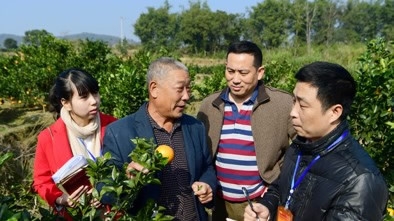
Cadre of Discipline Inspection Commission is asking a villager about the distribution and use of poverty alleviation funds in Hongkou Village, Fuan City, Fujian Province.
Cadre of Discipline Inspection Commission is asking a villager about the distribution and use of poverty alleviation funds in Hongkou Village, Fuan City, Fujian Province.
China’s Precision Poverty Alleviation campaign, for all its historic success, faces at least Four Challenges. First: Is the data reliable? There’s an obvious conflict if the same officials who did the poverty alleviation work also did the poverty alleviation assessment. I’ve seen independent auditors, often unannounced, checking and spot-checking, but I still hear talk that some data is suspect, because local officials are under great pressure. Second, there is natural conflict between officials who want to bring people out of poverty, in order to benefit their careers, and village people who want to remain classified as poor, in order to maximize their subsidies. Third, what’s to prevent those who are pushed just over the extreme poverty line, after the excitement dies down, from falling back down below it? For China’s poverty reduction to be counted a true success, it must be sustainable? Fourth, living barely over the line of extreme poverty, far below standards of living enjoyed by China’s urban middle class, hardly makes for a society of common prosperity, China’s long-term goal. The fight against poverty cannot end in 2020. The good news is that senior leaders are aware of these challenges. Looking beyond 2020, China believes its precision poverty alleviation can help other countries, thus fulfilling General Secretary Xi’s call for “Chinese wisdom” and “Chinese solutions” to benefit the world. That’s Closer To China.