
15:21, 13-Sep-2017
China Development: Today's "China Footprint": Green & sustainable development
 []
[]
Share







Copied
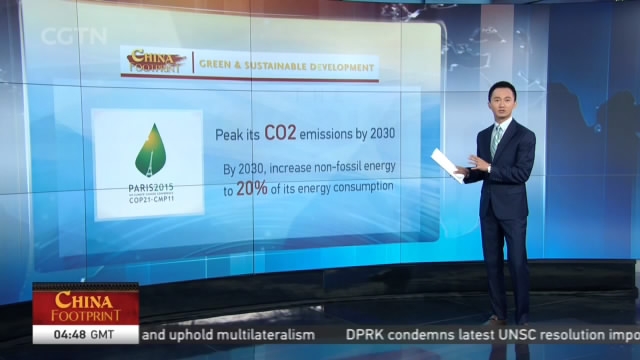
ZHONG SHI The world's largest carbon emitter, that's a number one China isn't exactly proud of and one that calls for urgent actions of change.Remember what China pledged at the historic Paris climate change conference? China has committed to peak its CO2 emissions by 2030 and to make best efforts to peak earlier. Also by 2030, It will increase non-fossil energy to 20% of its energy consumption. China is serious about those promises and is edging closer to its goals. The State Council issued a five-year plan to cut emissions at the start of the year. The goal is to cut energy consumption for every 10,000 yuan of China's GDP by 15 percent in 2020 compared with 2015. To do that, China will use coal more efficiently and encourage recyclable energy sources. In 2020, the use of coal will account for less than 58 percent of total energy consumption. Supportive policies are issued with the plan, including monetary and tax incentives and financial support for high-polluting industries.
A lot of people, when they think about China, they think bad air, undrinkable tap water, pollution all over the place. And guess what,China is aware of this “toxic” image if you will, and has plans in place to tackle pollution all-around. It is early Autumn here in the Chinese capital, the prettiest season in Beijing with fresh, brisk air, but the city government is already getting prepared for winter where air pollution is most visible. Beijing's priorities this year? Control pollution from coal burning, tackle emission from automobiles and industrial production. Rein in dust, and, make plans for when heavy pollution does happen in one of those cold, hazy winter days. To tackle air pollution nation-wide, emission in the worst-affected areas will be closely monitored. Coal consumption will strictly be controlled and gas encouraged as a replacement.More environmental impact assessments should be expected as authorities push industrial polluters to reach emission standards. They will need pollutant emission licenses. The goal is, by doing all of the above, considerable reduction of major pollutants will be achieved by 2020. More importantly and sustainably, hopes are that the rules will help foster a more environmentally friendly way of living for the people.