
By CGTN's Guo Zhijie
The sport of curling is also known as "chess on ice." If it wasn’t already gaining popularity in China following the country's push to grow interest in winter sports, it certainly is now as Beijing hosts the World Women's Curling Championship.
If you were not a curling fan before, don't worry as we’ve got a quick tutorial that will have you yelling “Hurry hard!” with the best of them.
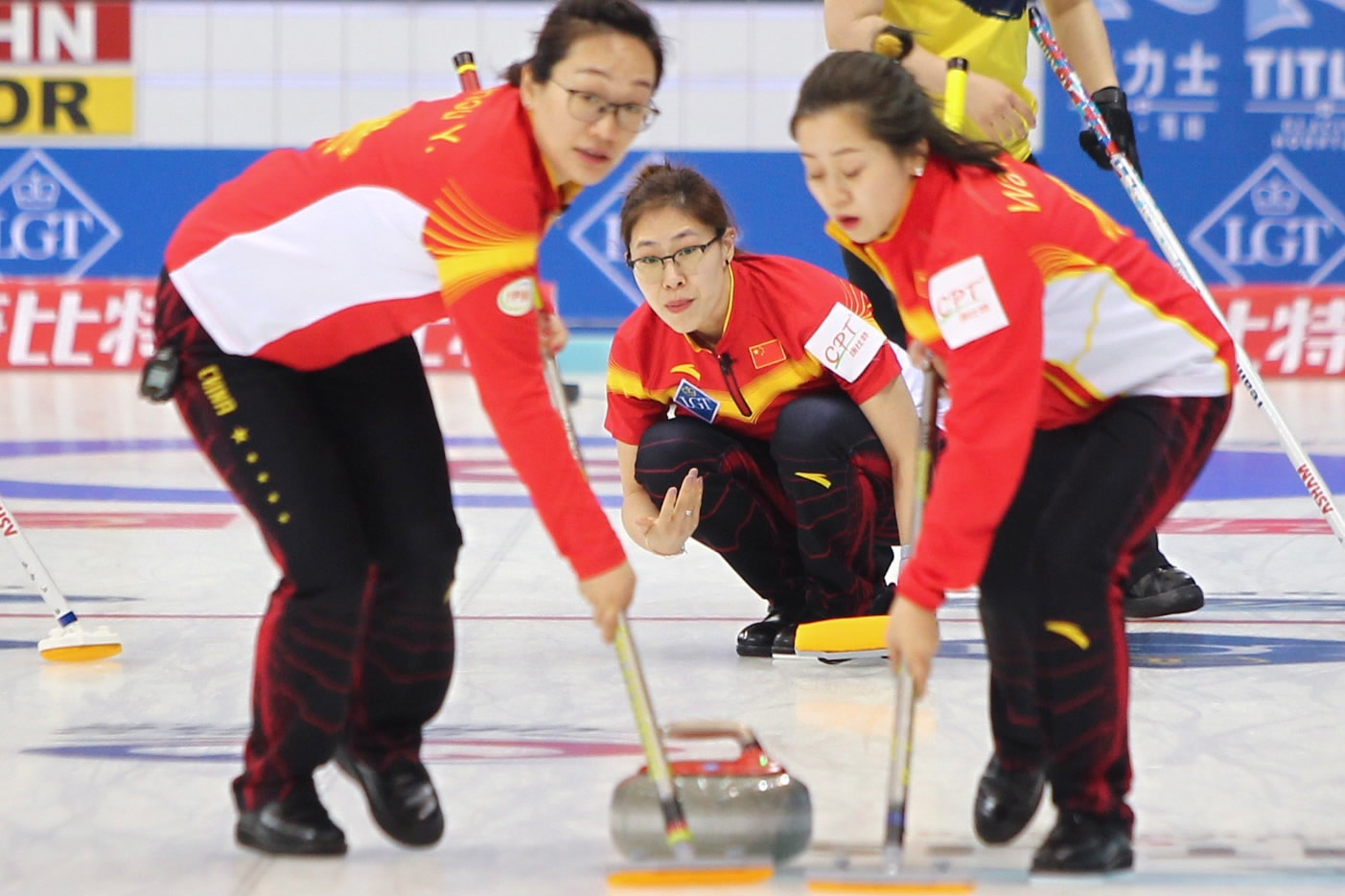
The Chinese women's curling team in action during a Women's World Championship match on March 20 in Beijing. /CFP Photo
Curling sees players slide stones on a sheet of ice towards a target area which is segmented into four concentric circles. It is related to bowls, boules and shuffleboard. Two teams, each with four players, take turns sliding heavy, polished granite stones, also called “rocks,” across the curling sheet towards the “house” – a circular target marked on the ice. Each team has eight stones. The purpose is to accumulate the highest score for a game; points are scored for the stones resting closest to the center of the house at the conclusion of each “end,” which is completed when both teams have thrown all of their stones. A game usually consists of eight or 10 ends.
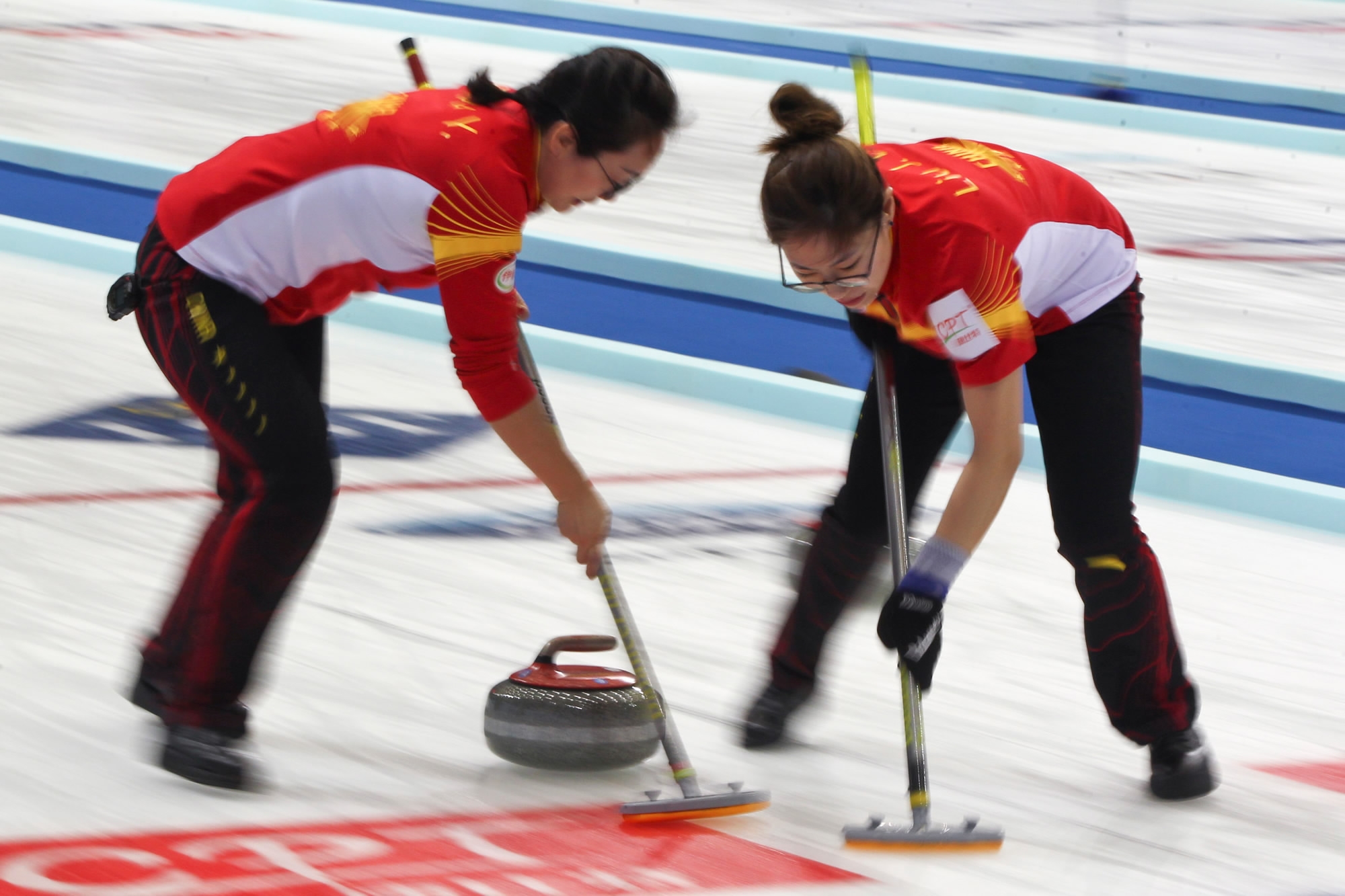
The Chinese women's curling team in action during a Women's World Championship match on March 20 in Beijing. /CFP Photo
The curler can induce a curved path by causing the stone to slowly turn as it slides, and the path of the rock may be further influenced by two sweepers with brooms who accompany it as it slides down the sheet and use their brooms to alter the state of the ice in front of the stone. A great deal of strategy and teamwork go into choosing the ideal path and placement of a stone for each situation, and the skills of the curlers determine how close to the desired target the stone will come.
The ice may be natural but is usually frozen by a refrigeration plant pumping a brine solution through pipes fixed lengthwise at the bottom of a shallow pan of water. Most curling clubs have an ice maker whose main job is to care for the ice. At the major curling championships, ice maintenance is extremely important.