Battle for Downing Street: UK election 2017 essential guide






The United Kingdom goes to the polls in a general election on June 8, with parties fighting to take control of 650 constituency seats across the county and form a new government.
Which parties are standing in the election? What are their campaign messages and strategies? How are they expected to perform? To find out the essentials, CGTN has compiled snapshots of all the major players:
CONSERVATIVES
"Strong and Stable Leadership in the National Interest"
MPs at end of previous parliament: 330
Votes (share) in 2015 election: 11,334,576 (36.9 percent)
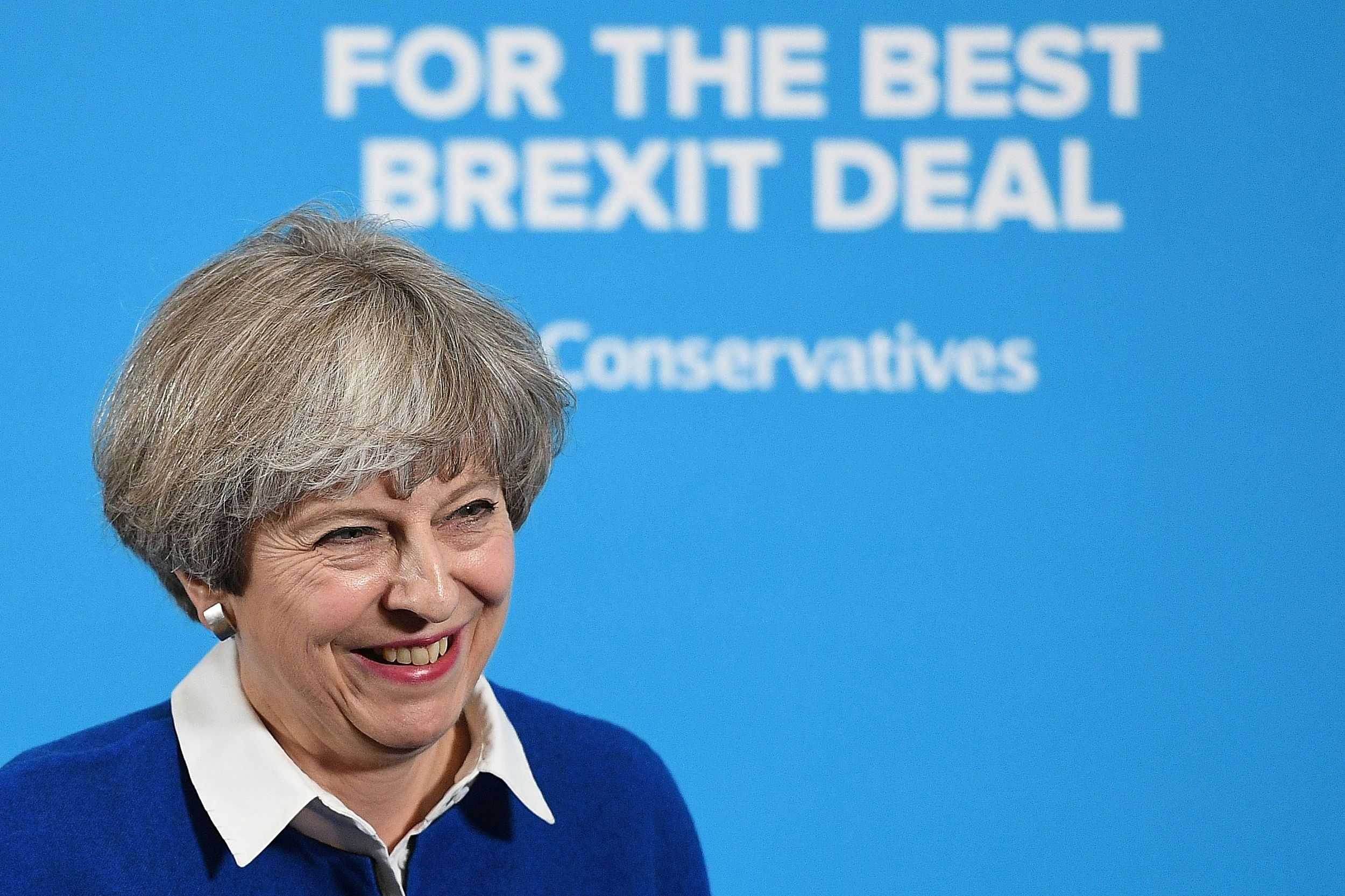
Britain's Prime Minister and Conservative leader Theresa May campaigns in Wolverhampton, central England, on May 30, 2017. /VCG Photo
Leader: Theresa May
May replaced David Cameron as prime minister following the Brexit referendum. Her approval ratings soared in her opening months in office thanks to a perception that she was calm, strong and in control. However, after two high profile U-turns – and reversing a repeated pledge not to hold a general election – opinions of her are shifting.
Strategy
Focus on Brexit and “strong and stable” government. Initially all about May, but her recent wobbles have seen a return to the Conservative brand and criticisms of the opposition.
Key policies
Brexit: Leave both the single market and customs union, threaten to leave EU without a deal in place if negotiations unsatisfactory.
Domestic: Reduce net migration to below 100,000 per year, cap energy prices for consumers.
International: Spend at least two percent of GDP on defense, retain Trident nuclear deterrent.
Controversies
The Conservatives initially focused their campaign entirely on May and her reputation as a safe pair of hands. However, her refusal to debate opponents and reliance on sound bites led her to be dubbed “Maybot” in the media. The campaign started smoothly for the party, but a central manifesto pledge aimed at tackling Britain’s social care problem was abruptly dropped – this “weak and wobbly” U-turn is seen as the reason for a weakening in the party’s poll lead.
How will they do?
May called the election arguing that she needed a clear mandate for Brexit negotiations, and polls initially suggested her party was on course to a landslide victory. Few doubt that she will remain prime minister after the election, but the polls have narrowed significantly as election day approaches.
LABOUR
"For the Many, Not the Few"
MPs at end of previous parliament: 229
Votes (share) in 2015 election: 9,347,304 (30.4 percent)
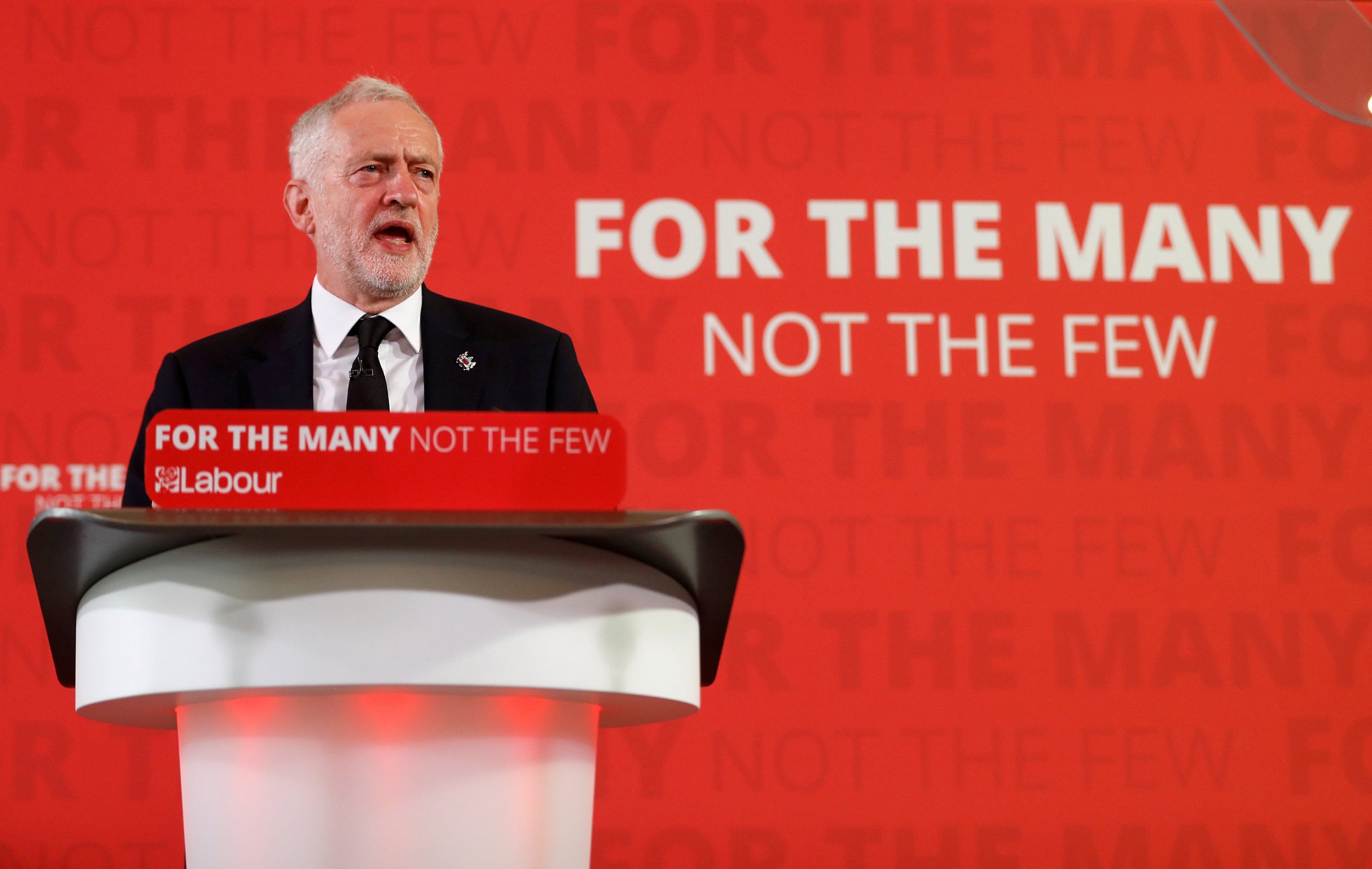
Jeremy Corbyn, the leader of Britain's opposition Labour Party, makes a speech in London on May 26, 2017. /VCG Photo
Leader: Jeremy Corbyn
Elected leader in 2015 and re-elected in 2016, Corbyn has struggled for support among established big hitters in the Labour Party. In fact, he was previously best known as the party’s biggest rebel. Despite largely hostile media coverage, support for Corbyn’s understated focus on core values in domestic and international issues has reassured some traditional Labour voters.
Strategy
Focus on core issues such as healthcare, education and workers’ rights – regarded as a defensive approach.
What do they stand for?
Brexit: Accept result, but demand parliament has a say in final deal; demand access to single market post-Brexit.
Domestic: Renationalization of key industries, no tax rises for 95 percent but increases for top five percent.
International: Support renewal of Trident nuclear weapon (despite opposition of leader) and put human rights at heart of foreign policy.
Controversies
The party has been sharply divided since leftist Corbyn’s surprise leadership victory, with many high profile centrist politicians retreating to the sidelines or even resigning their seats. Corbyn has also been beset with accusations of supporting the Irish Republican movement, which carried out a prolonged bombing campaign in the UK, and wanting to abolish the British monarchy.
How will they do?
Polls suggested Labour would suffer a landslide defeat when May called the election on April 18 – but Corbyn’s party has slowly clawed back the deficit. The expectation remains that the Conservatives will comfortably win the most seats – and perhaps even a large majority – but some recent polling has suggested Labour could beat low expectations.
SCOTTISH NATIONAL PARTY
"Stronger for Scotland"
MPs at end of previous parliament: 54
Votes (share) in 2015 election: 1,454,436 (4.7 percent)
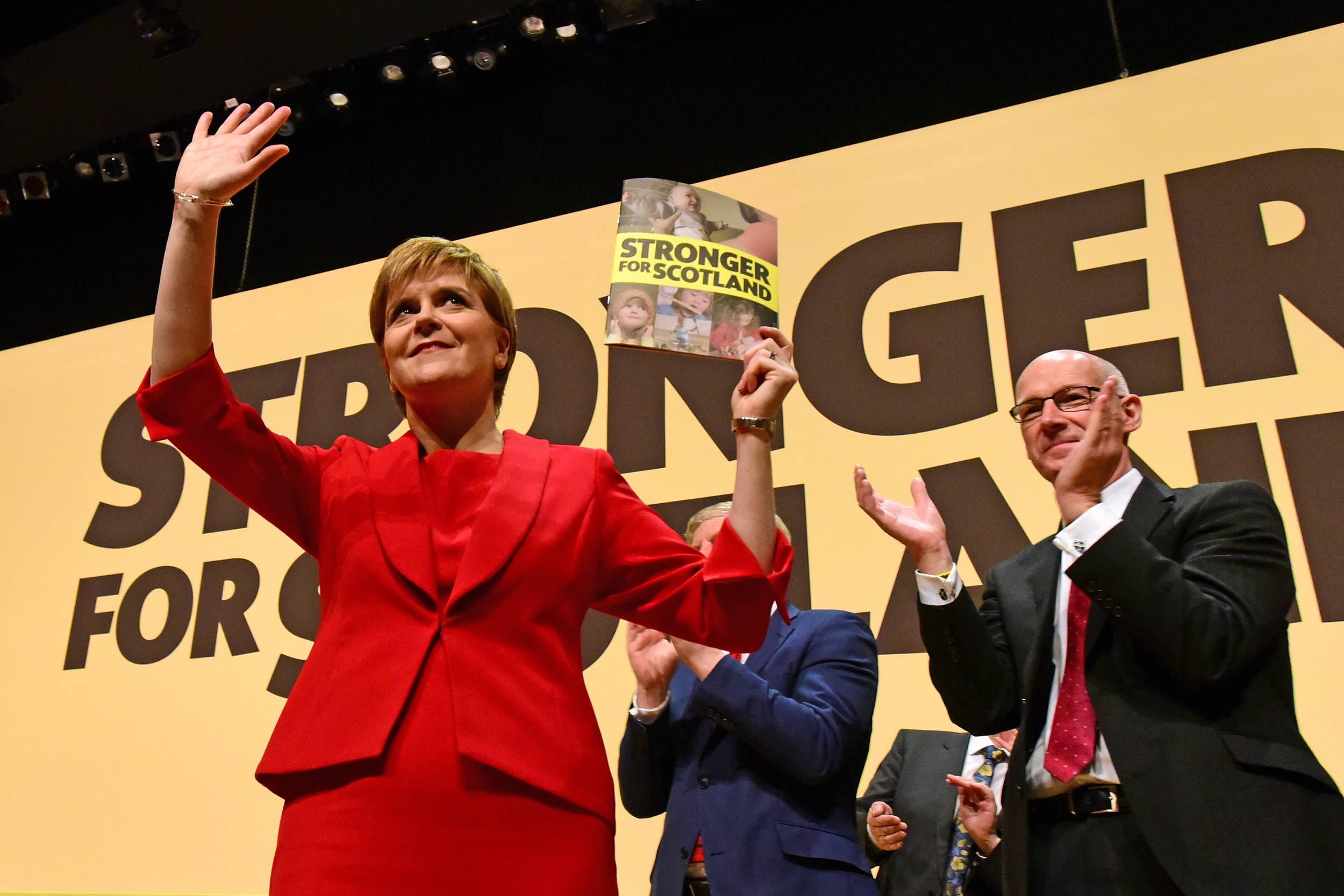
Scotland's First Minister and SNP leader Nicola Sturgeon launches the party's general election manifesto, after it was delayed for a week in the aftermath of the Manchester bombing, on May 30, 2017. /VCG Photo
Leader: Nicola Sturgeon
After a record-breaking series of results in 2015, the SNP are trying to consolidate the success in 2017 under leader Nicola Sturgeon (who is a member of the Scottish parliament) and leader in Westminster Angus Robertson.
Strategy
Policy areas such as health, policing and education are already devolved to the Scottish Parliament, so countering a resurgent Conservative Party by focusing on the consequences of Brexit and the so-called “bedroom tax” has been central to the SNP campaign.
What do they stand for?
Brexit: A special status within the EU after Brexit, allowing Scotland to retain access to the single market.
Domestic: A second Scottish independence referendum after Brexit process is complete.
International: Oppose the UK’s role in bombing Syria, oppose the Trident nuclear deterrent.
Controversies
Investigations into the financial dealings of three SNP MPs has opened a window for opposition parties, though the issue of a second independence referendum has also caused some disquiet. The party has promised a second poll, but sentiment within Scotland has moved away from independence since the Brexit referendum.
How will they do?
The SNP has a near impossible job in defending all 54 of the 57 Scottish seats it currently holds, but is expected to retain the majority despite the growing popularity of the Conservative Party. Polling suggests the party could lose up to 14 MPs, remaining the largest party in Scotland.
LIBERAL DEMOCRATS
"Change Britain’s Future"
MPs at end of previous parliament: 9
Votes (share) in 2015 election: 2,415,862 (7.9 percent)
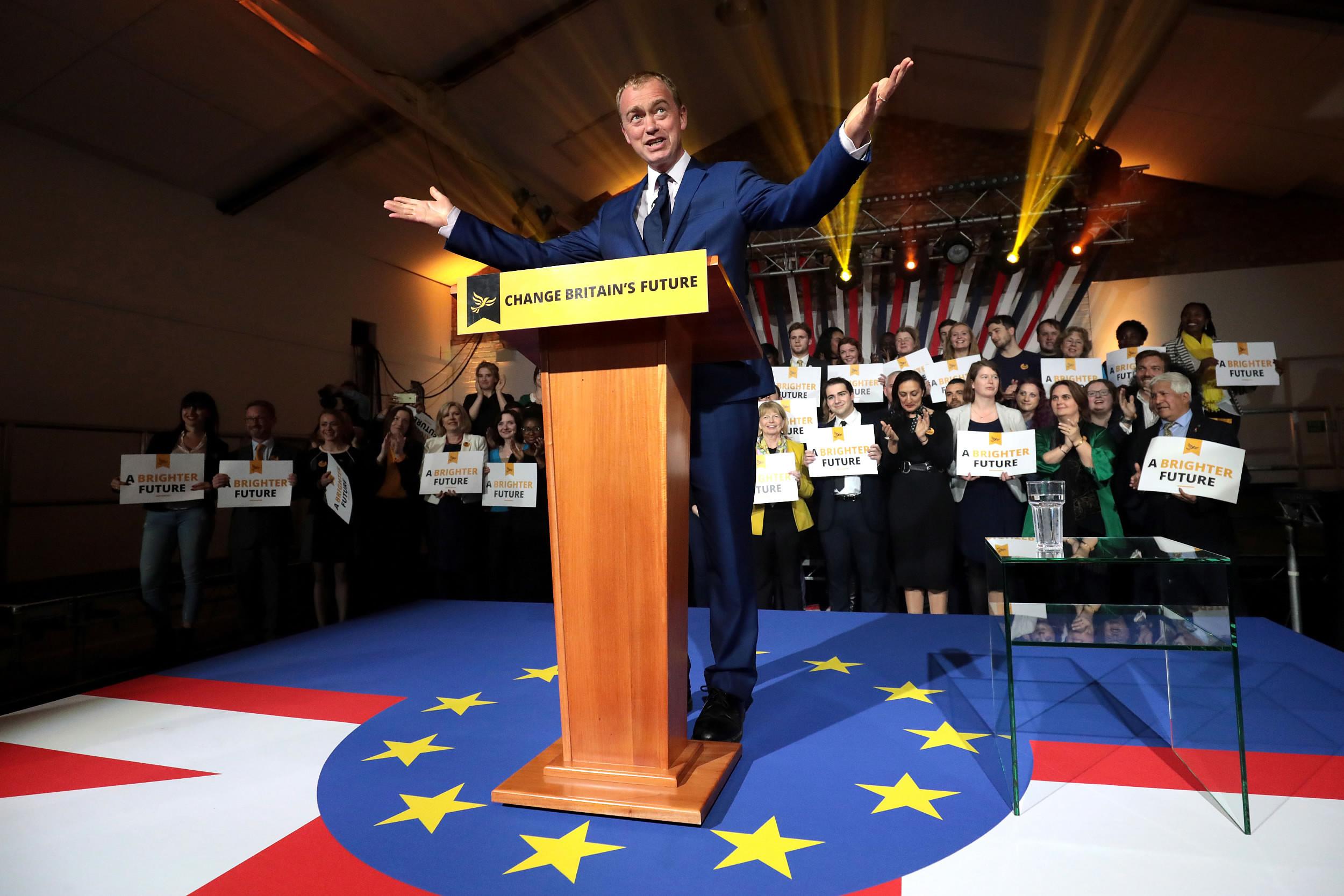
Liberal Democrat leader Tim Farron launches the party's Election Manifesto on May 17, 2017 in London, England. /VCG Photo
Leader: Tim Farron
Elected leader in 2015 following the decimation of the party in that year’s election. The Lib Dems slumped from 57 MPs to just eight after five years in coalition with the Conservatives, and Farron has focused on targeted seats in his bid to revitalize the party.
Strategy
The party – fiercely opposed to Brexit -- performed well in by-elections after the referendum, and settled on a strategy to explicitly target the 48 percent of voters who wanted to Remain in the EU by offering a second referendum.
What do they stand for?
Brexit: Offer a second referendum, stay in single market and customs union
Domestic: Increase health spending via extra one percent on income tax; legalize marijuana; big infrastructure spending increase
International: Suspend sales of weapons to Saudi Arabia
Controversies
The party has struggled for media attention, other than when leader Farron has made some unusual interventions – from questions over his commitment to gay rights to a moment caught on camera when he asked a voter to “smell my spaniel.”
How will they do?
The strategy to target Remain voters sounded like smart politics, but has failed to gain traction – not least because a huge number of voters tend to have accepted that Brexit will happen. The Lib Dems are expected to pick up votes a few seats, but still fall far short of being previous highs.
UKIP
"Britain Together"
MPs at end of previous parliament: 0
Votes (share) in 2015 election: 3,881,099 (12.6 percent)
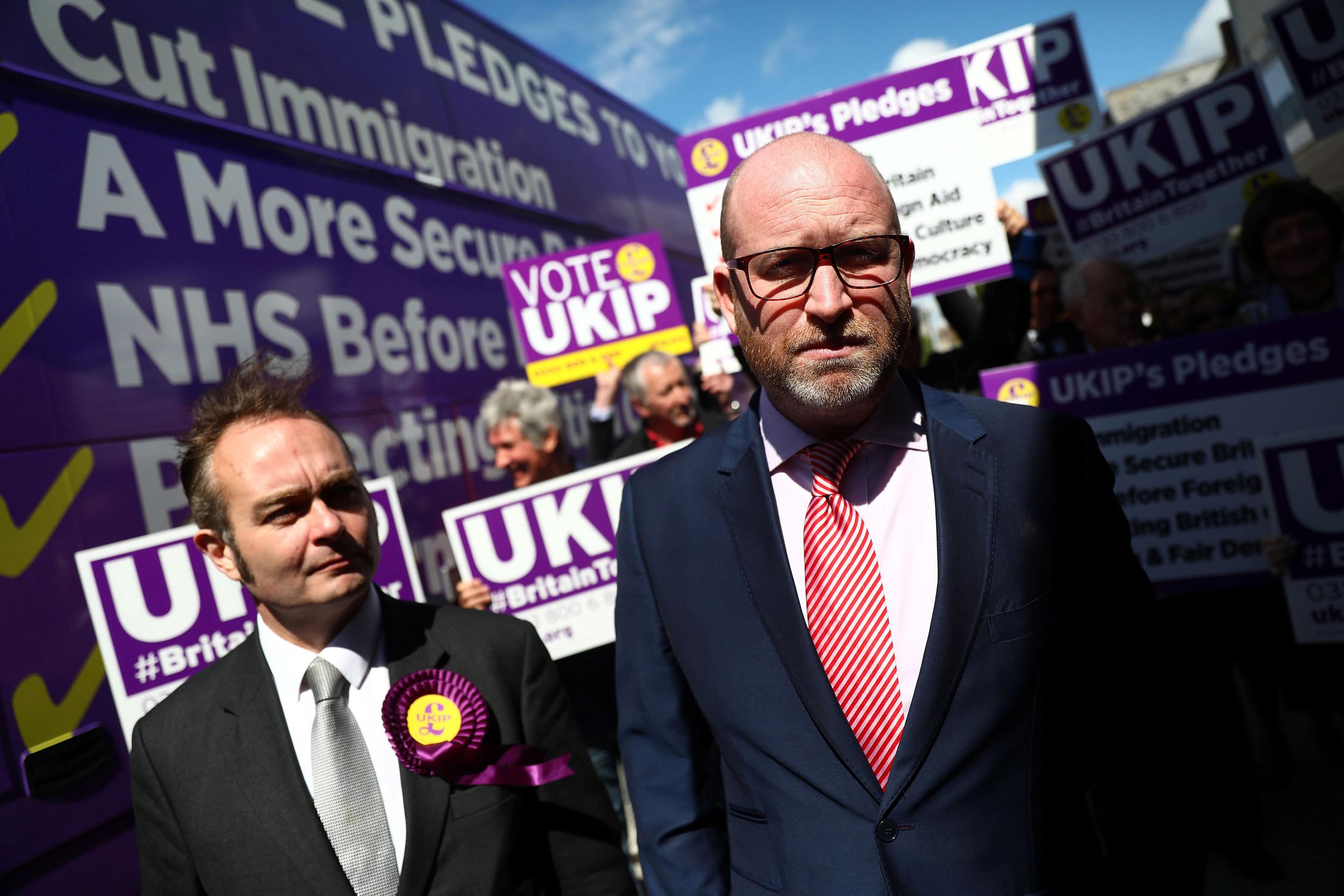
UKIP leader Paul Nuttall (R) campaigns in Clacton-on-Sea on May 20, 2017. /VCG Photo
Leader: Paul Nuttall
Paul Nuttall replaced Diane James – who lasted just a few weeks as leader in November 2016. He has since lost the party’s only MP, lost a by-election in which he put himself forward as candidate and overseen a poor set of local election results. Standing in the shadow of former leader Nigel Farage, he has struggled to make a mark.
Strategy
With Britain’s exit from the European Union virtually guaranteed, UKIP’s central mission has been realized and poll ratings have plummeted. The party has shifted to a core vote, anti-immigration stance.
What do they stand for?
Brexit: No “divorce settlement” with EU; full maritime sovereignty; full border control.
Domestic: Cut net migration to zero over five years, a ban on face coverings in public.
International: Increase in defense equipment and manpower, retain nuclear deterrent.
Controversies
The party has proved controversial since its inception, and provocative policies such as banning the burqa and uncompromising immigration plans have gained headlines if not support.
How will they do?
Polling at an average of around four percent, the party is likely to win dramatically fewer votes and is not expected to win any seats.
GREEN PARTY
"A Green Economy That Works For Everyone"
MPs at end of previous parliament: 1
Votes (share) in 2015 election: 1,157,613 (3.8 percent)
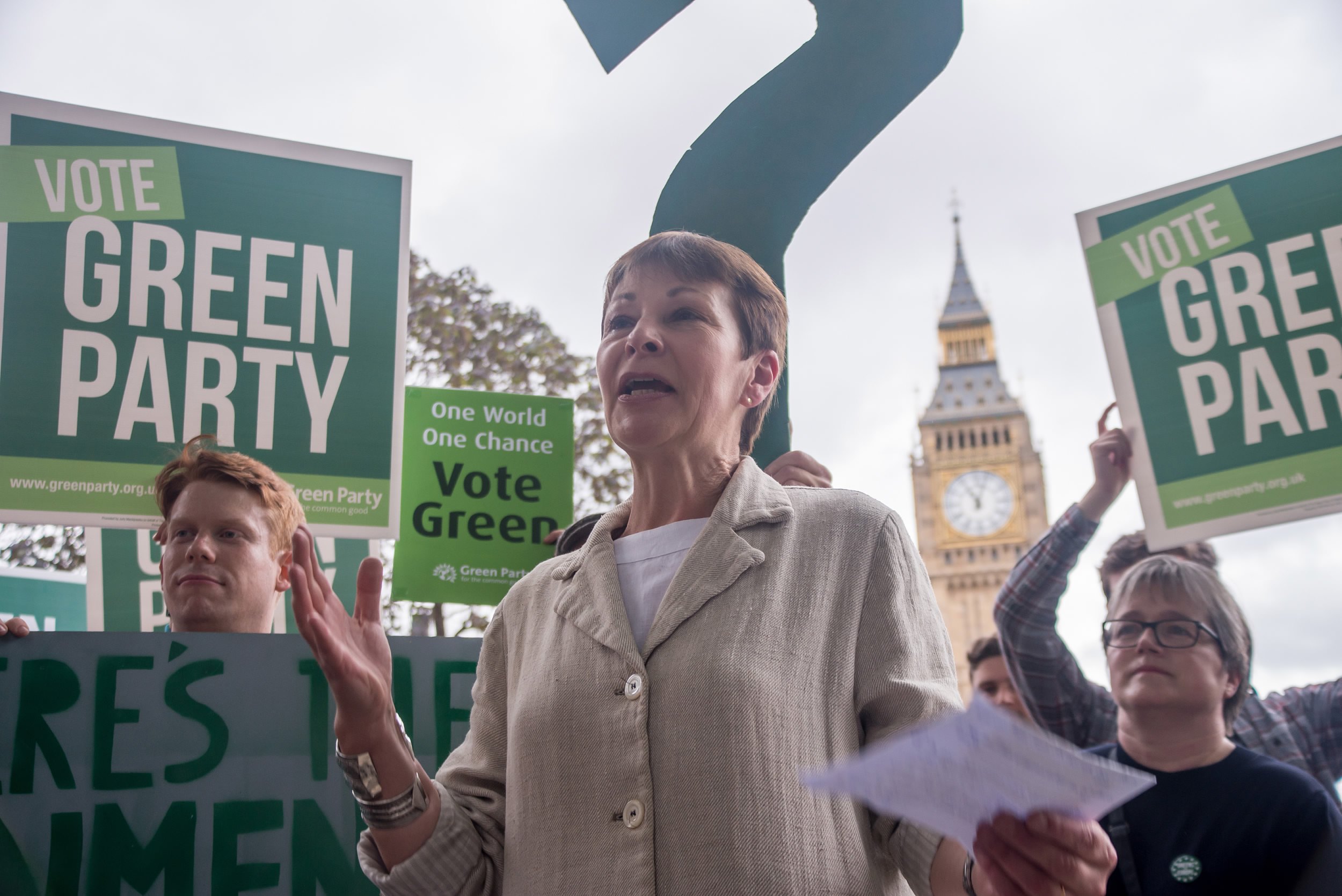
Green Party co-leader Caroline Lucas campaigns at Parliament Square, London on May 30, 2017. /VCG Photo
Leader: Caroline Lucas
Lucas has served as the Green Party’s only MP since 2010, and has returned as leader following a poor showing from Nathalie Bennett in 2015.
Strategy
Lucas argues that the election campaign has been “environment-free” – green issues and fighting Brexit are the central tenets of the campaign.
What do they stand for?
Brexit: A referendum on whatever deal is negotiated; protect freedom of movement; remain within the single market.
Domestic: Scrap all nuclear power plants, including the China-invested Hinkley Point.
International: A global deal on climate change, cancel the nuclear deterrent.
Controversies
The party has pursued a “progressive alliance” with Labour and the Liberal Democrats as an attempt to prevent a Conservative majority. Such an agreement would involve running only one candidate from each of the parties in any seat. However, with a few local exceptions – such as in Lucas’ own seat – the plan was rejected by the other two parties.
How will they do?
The British voting system at parliamentary elections makes life tricky for smaller parties, with the Greens picking up only one of 650 seats in 2015 despite winning 3.8 percent of the vote. The party has a realistic chance of picking up at least one more seat, and increasing its share of the vote.
- EXPLORE
- MORE