
18:30, 31-Aug-2017
Healthcare in Africa: WHO says non-communicable diseases are biggest killers
 []
[]
Share







Copied
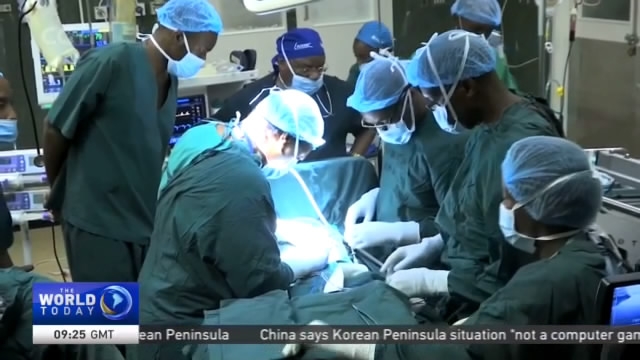
Non-communicable diseases are fast becoming the biggest killers on the continent. But how prepared are African countries in dealing with these lifestyle health problems? CGTN's Farai Mwakutuya went to the regional meeting of the World Health Organisation in Zimbabwe to find out.
Africa faces a new threat and it's come at a huge financial and human cost. DR ANWAR HUSNOO, MAURITIAN HEALTH MINISTER It's a major problem in Mauritius. Just to give you an idea: about 75 percent of the budget of the ministry of health is spent on non-communicable diseases.
The trend is similar in other countries on the continent. And authorities are concerned. AARON MOTSOALEDI, SOUTH AFRICAN HEALTH MINISTER We are carrying a double burden and I can tell you those are extremely expensive and Africa doesn't have the resources to treat them, the only way to fight them is prevention. They don't have any bacteria or virus or organism that causes them, the bacteria or parasite is the human being.
Smoking, excessive consumption of alcohol, poor diet and a lack of exercise have fuelled lifestyle diseases. And experts say changing those habits could save lives.
In Mauritius, 22 percent of the adult population is diabetic; 28 percent suffers from hypertension and at least half the population is obese. Authorities have reinforced public awareness with legislation.
ANWAR HUSNOO, MAURITIAN HEALTH MINISTER We have legislated to reduce the amount of saturated fat we use. At least if we can control that we can control the cardiac problem that's number one. We have a sugar tax to control the amount of sugar being taken by the population. We have prohibited fizzy drink in schools.
Experts say something as simple as eliminating the need for a sugar fix could prevent the need for costly treatment in the long term. FM, CGTN, VF, Z