
15:41, 16-Sep-2017
National Defense Education Day: Air raid siren drill in Beijing holds a practical and symbolic purpose
 []
[]
Share







Copied
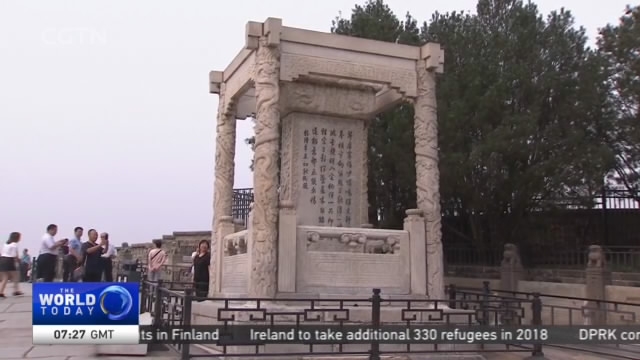
Beijing has held an air raid alarm drill in suburban areas, as part of China's annual National Defense Education Day. Such drills have been conducted annually since 2014, serving a practical and symbolic purpose. CGTN's Han Peng reports from the Chinese capital.
HAN PENG BEIJING For over a generation, Beijing has not seen war. But authorities are keen to keep the people on alert. The National Defense Education Day is on the third Saturday of September. It closely coincides with September 18th, China's day of infamy in World War II. In 1931, the country's northeast fell to Japan. The testing of air raid sirens can be heard here, on Lugou Bridge. It's the gate of Beijing, the place where Japan began its full scale invasion in 1937.
LU XIAOWEI BEIJING RESIDENT Because we have that history, we should remember history, which can make us keep moving forward and fight for peace.
CHEN HUAQIANG BEIJING RESIDENT Hearing the sirens of war in a time of peace at such a historic place, I feel deeply about the tragedy we suffered and the changes we have experienced. This suburban location of tragedy has become a place of highways and high speed rails.
HAN PENG BEIJING Authorities say there are also pragmatic motives. By carrying out the air raid alarm signals, they hope the public becomes familiar with the warning sounds in order to reduce casualties during wars and even during times of peace, say for example if there's a disaster.
The warning system consists of three separate three-minute-long sirens: a pre-alert siren with long intervals, the air raid alarm in short intervals, and an all-clear siren with no intervals. Some schools are holding emergency evacuation drills.
Although China says it's committed to peace, there are several flash points that some fear can trigger a full scale war, including the DPRK, South China Sea issues, Taiwan's pro-independence policies and Japan seeing a revival of right-wing politicians.
At 10:00 am on each National Defense Education Day, the air sirens are put into service as a literal wake-up call to the Chinese public. HanPeng, CGTN, Beijing.