The funeral procession bearing the ashes of Cuban revolutionary leader Fidel Castro began its journey across the island on Wednesday. It started in Havana and will end at a final resting place in Santiago de Cuba, where Castro launched his revolutionary movement and claimed victory in 1959.
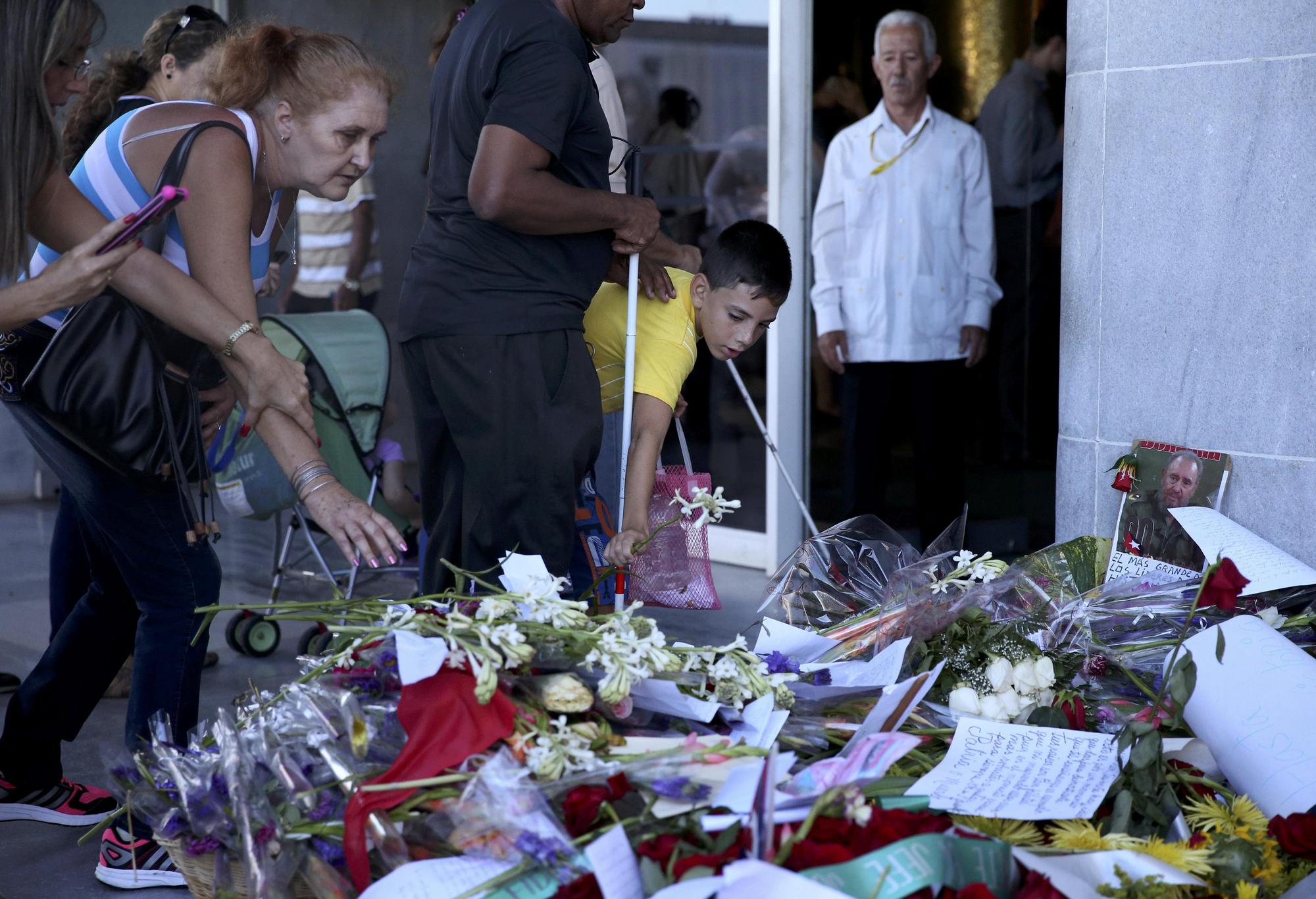
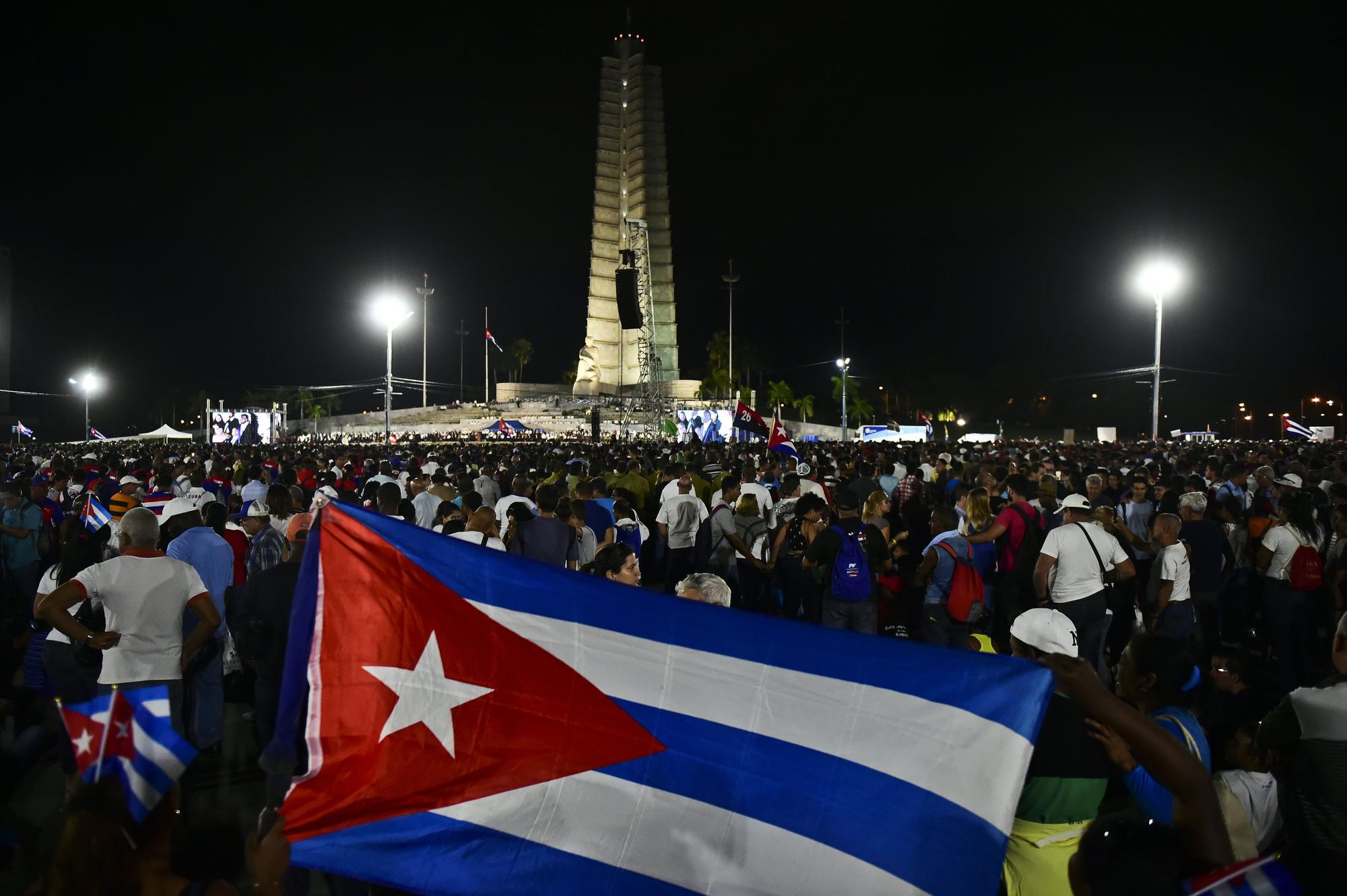
Castro passed away last Friday at the age of 90. The Cuban government declared a nine-day period of national mourning starting from Monday, with a ceremony drawing thousands to Havana's Revolution Square.
President Raul Castro, the late leader's younger brother, led the farewell ceremony along with other relatives and dignitaries.
CFP Photo
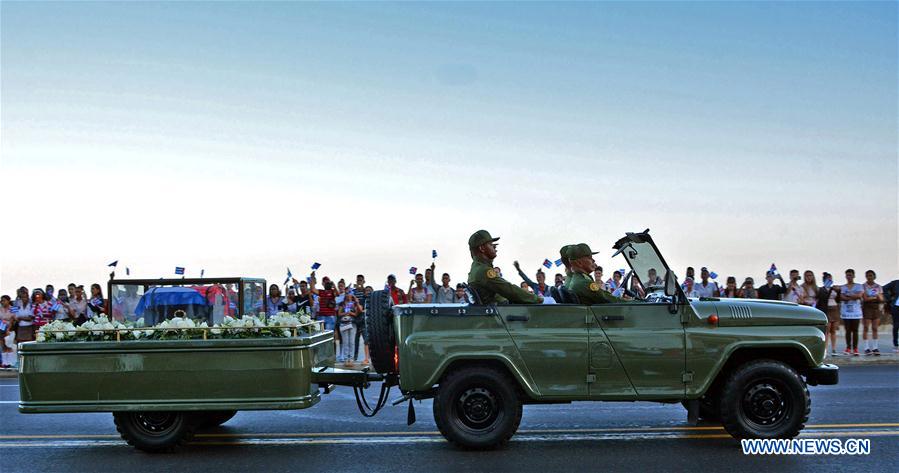
The urn carrying Castro's remains was covered with a Cuban flag and white roses, and placed in a military vehicle that drove through the avenues of Havana.
A huge number of people gathered along the route to say goodbye to the man who dominated the island for more than 50 years, while chanting "Long live Fidel" and "I am Fidel."
A two-day homage on Monday and Tuesday drew Cubans from all generations to the island's main squares to pay tribute to the founding leader of the revolution.
CFP Photo
The procession will last four days, travelling over 1,000 km and across 13 of Cuba's 15 provinces to Santiago, where Castro will be laid to rest on December 4 in the Santa Ifigenia Cemetery.
The procession is in honor of Castro's Caravan of Freedom, which began after the dictator Fulgencio Batista fled the country on December 31, 1958.
On the famous journey, the former president was accompanied by around 1,000 members of his rebel army that left Santiago de Cuba on January 2, 1959 and arrived in Havana six days later.
"This is a decisive moment of our history. Tyranny has been defeated. (Our) happiness is huge. However, much remains to be done. We cannot let ourselves be deceived in believing all (will be) easy from now on. It may be that the most difficult is yet to come," Castro said in a speech to the Cuban people in January 1959.
(Source: Xinhua News Agency)
1843km
