POLITICS


Premier Li visits Foxconn, pledges to further open business environment
2017-05-09 20:12 GMT+8
624km to Beijing







Editor
Wang Xuejing
Premier Li Keqiang on Tuesday said China would further open and improve its business environment during a visit to a Foxconn Group science park in Zhengzhou, central China's Henan Province.
Li talked with Foxconn chairman Guo Taiming, saying the company was welcomed to put research and development sections and even the entire industrial chain in the park. He said China, with its huge market and human resources, is one of the most favorable destinations for investment in the manufacturing industry.
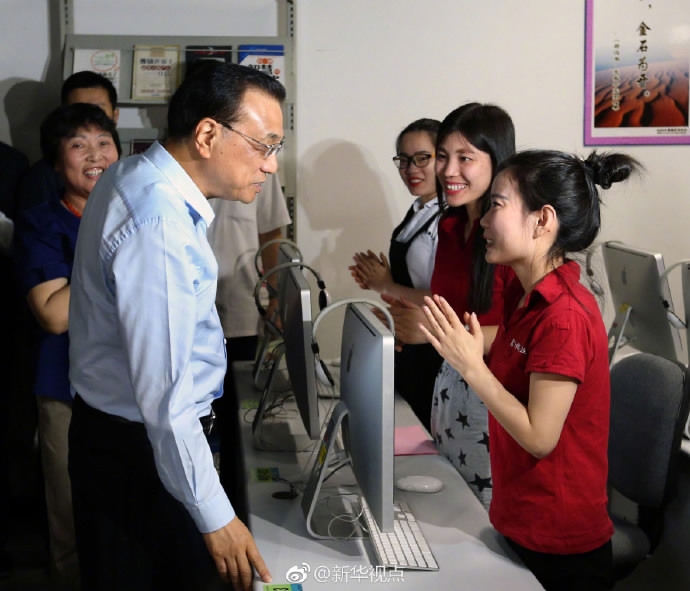
Chinese Premier Li Keqiang talks to a Foxconn worker on Tuesday during his visit in central China's Henan Province./Xinhua Photo
Li also visited some of the world's first unmanned workshops, and a workshop manned by 2,000 staff for precision assembly. He held talks with workers there and encouraged them to cherish the spirits of craftsmanship and entrepreneurship.
The Chinese premier made the visit during an inspection tour to Henan Province that began on Monday.
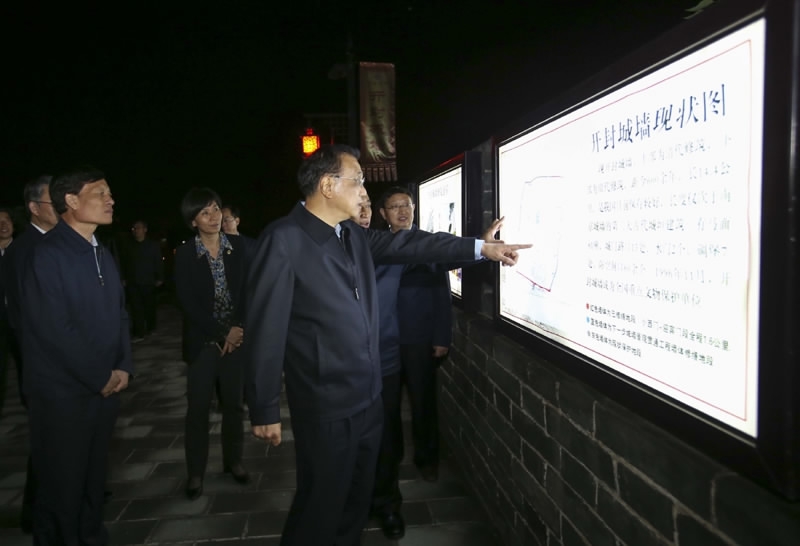
Li Keqiang visits the ancient city wall in Kaifeng, Henan Province. /Photo by the Chinese government.
While paying a visit to a pilot free trade zone in the province, Premier Li asked local authorities to further streamline administration to improve the business environment, and encouraged enterprises to make technological breakthroughs to facilitate China's industrial upgrading.
He also urged local authorities to speed up the reconstruction and renovation work of old areas and shanty towns while visiting Kaifeng, an ancient city which used to be the imperial capital for eight dynasties.
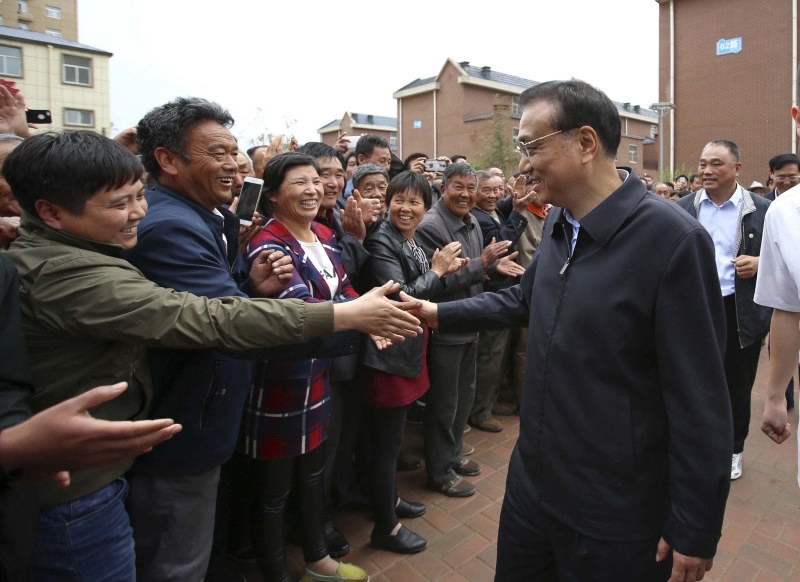
Li Keqiang shakes hands with residents living in reconstructed buildings during a shanty town and old town renovation program. /Photo by the Chinese government
Li stressed the importance of repair work in the ancient city at the same time, calling it a historic responsibility.
Coordination is required, said the premier, adding that enabling the residents to live in renovated buildings is as important as protecting the historical sites of the country.
624km
Copyright © 2017
SHARE
- EXPLORE
- MORE
FOLLOW US