POLITICS


Opinion: Ahead of Xi's Finland visit, can free trade really help both big and small countries?
2017-04-04 15:11 GMT+8






Editor
Li Kun
Guest commentary by Wang Shuo
Politically the idea of free trade is under attack in a way that we have not seen since the end of World War Two. Around the world there are growing populist calls for increased protectionism, and recent events such as Brexit seem to point to anti-globalization sentiments in several developed economies.
Chinese President Xi Jinping recently emerged as a champion for the ideals of free trade at the Davos World Economic Forum. But does free trade really help all economies? Possibly one of the best examples to answer this question is to look at President Xi’s next state visit to Finland. Can free trade really help big and small economies at the same time? Can China and Finland both benefit from free trade?
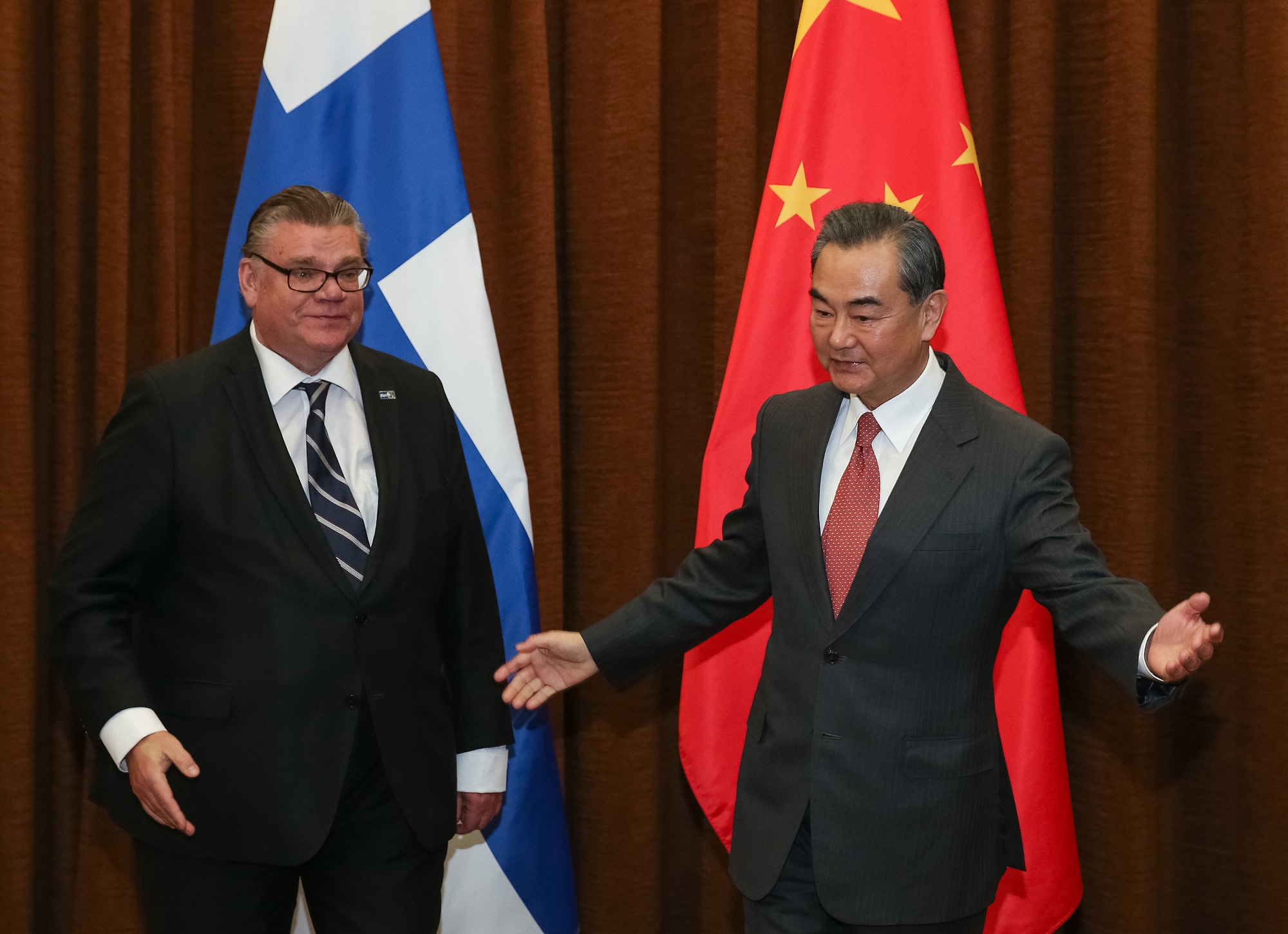
Chinese Foreign Minister Wang Yi (R) gestures to Finish Foreign Minister Timo Soini (L) during their meeting at the Ministry of Foreign Affairs in Beijing on February 27, 2017. / CFP Photo
On April 5, President Xi Jinping will pay a visit to Finland, the first one ever by a Chinese president to a Scandinavian country over the past 22 years. The cooperation between China and Finland shows the importance of free trade and how it benefits economies irrespective of their size.
Firstly, foreign trade is very important for Finland. Finland is a highly industrialized, liberalized market economy and officially is ranked tenth in the World Economic Forum's competitiveness rankings in 2016-2017. About one third of Finland's GDP comes from exports, and in addition to wood and some minerals, its demand for raw materials, energy and some industrial components is dependent on imports.
Secondly, Finland is one of the main supporters of free trade in the European Union. As an important member of the European Union and the eurozone, its competitiveness and GDP per capita are higher than the European average. Its internal EU trade accounted for over half of its total foreign trade, and it also has special cooperative relations with other Nordic countries. Although its foreign trade policy is formulated by the European Commission, Finland is consistently an important voice within the EU in support of free trade and in opposition to protectionism.
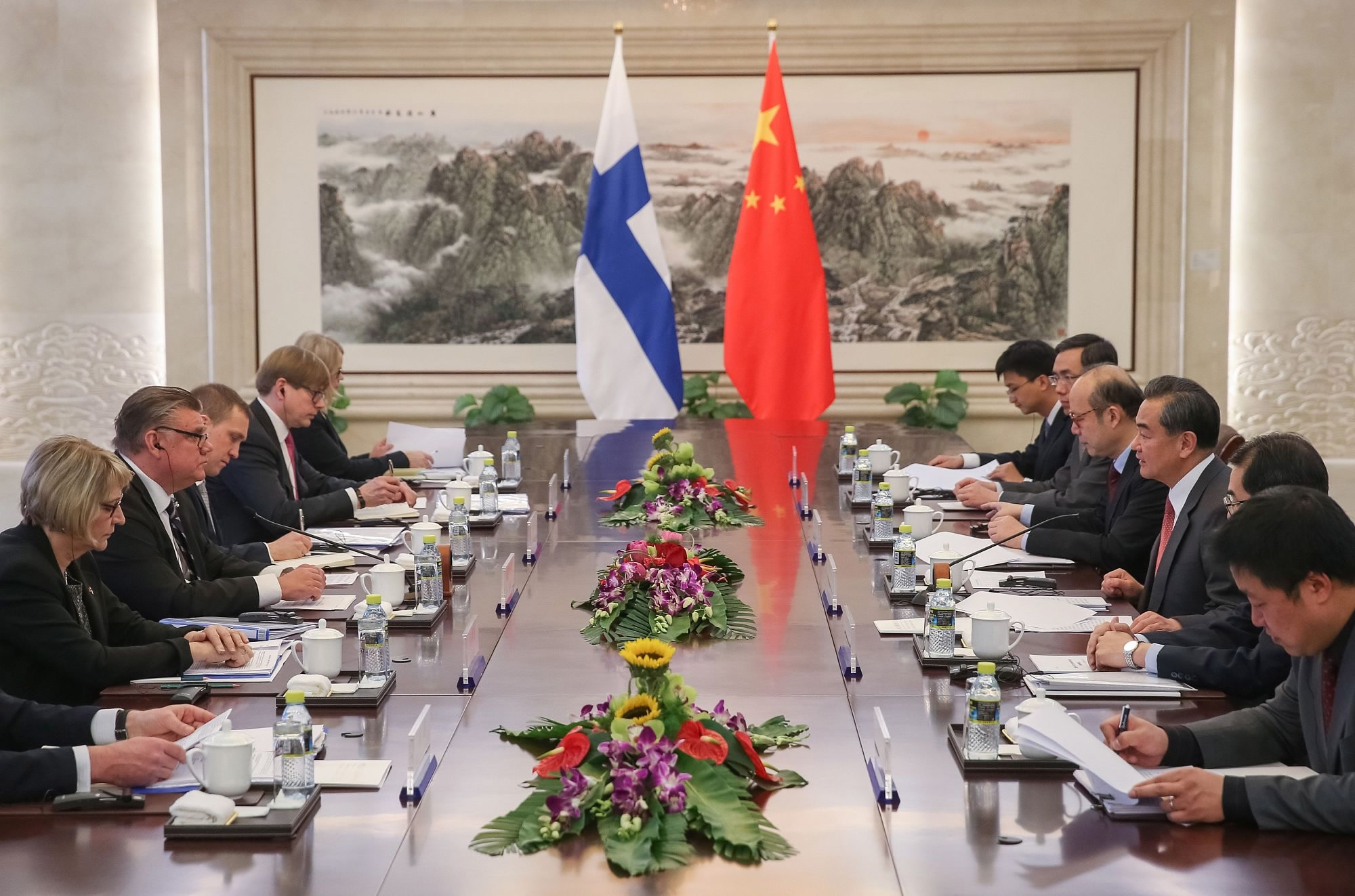
The meeting between Chinese Foreign Minister Wang Yi (3-R) with Finish Foreign Minister Timo Soini (2-L) during their meeting at the Ministry of Foreign Affairs in Beijing on February 27, 2017. / CFP Photo
Thirdly, Finland and China are a good example of how free trade has benefited their relationship and has been a good foundation for cooperation. Finland was one of the first Western countries to establish diplomatic relations with New China, as well as that to sign an intergovernmental trade agreement with China. In recent years, Finland has had a positive response to China’s "Belt and Road" initiative, and is a founding member of the Asian Investment Infrastructure Bank. At present, China is Finland's fourth largest trading partner and for the fourteenth consecutive year is Finland’s largest trading partner in Asia. Both China and Finland are in critical period of economic transformation. China has its "13th Five-Year Plan," and Finland has also proposed its own "2025 vision", with both looking to restructure their respective economies. Therefore, both sides have a strong desire to further strengthen economic and trade relations.
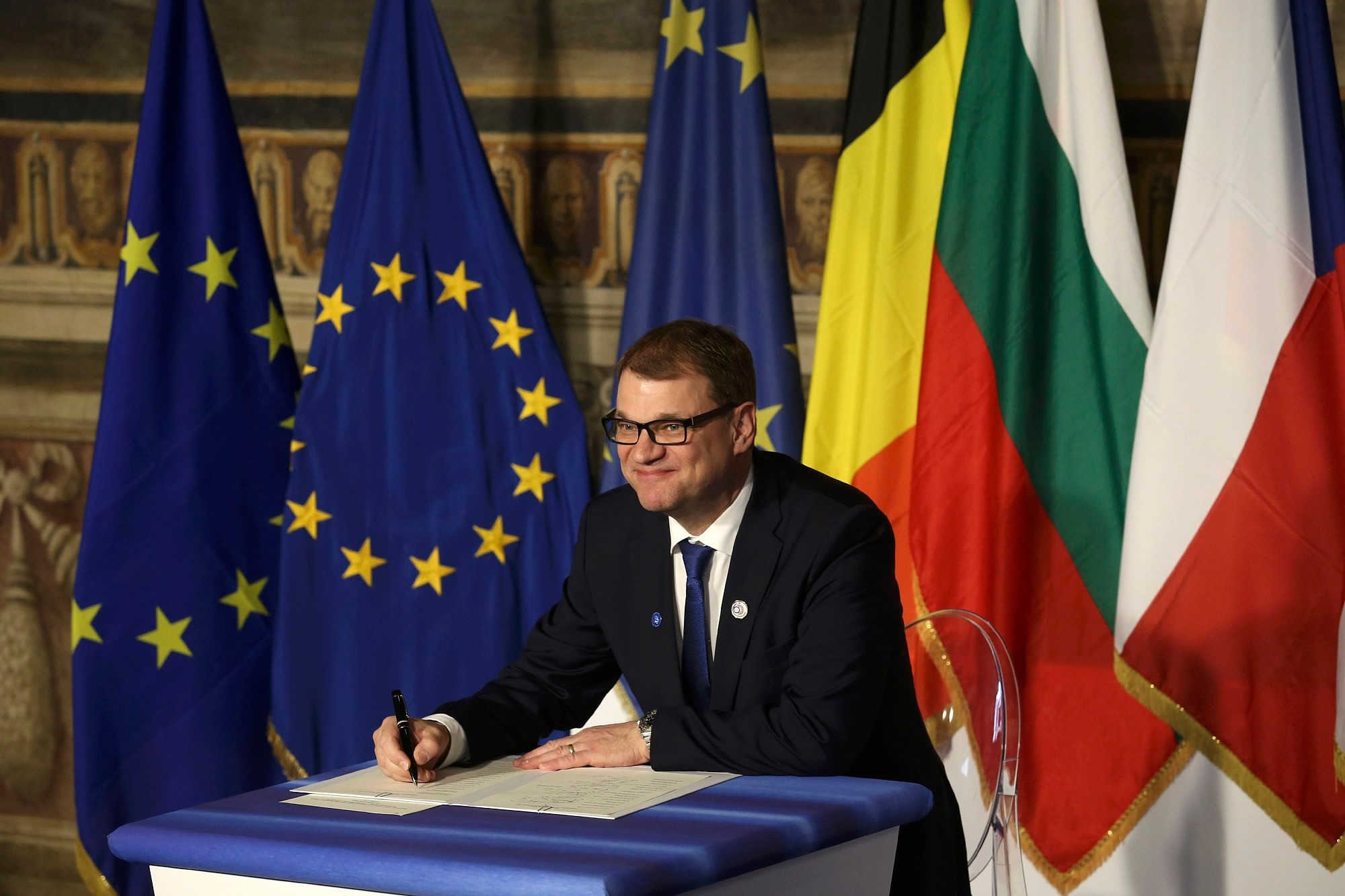
Finland's Prime Minister Juha Sipila signs a document during the EU leaders meeting on the 60th anniversary of the Treaty of Rome, in Rome, Italy March 25, 2017. /CFP Photo
Fourthly, Finland is willing to work together with China to promote global free trade. The rise of global protectionism has led to concerns about free trade countries, including Finland. On January 17, President Xi Jinping delivered a speech at Davos, strengthening global economic governance and promoting free trade. Finland gave this a high level of appreciation and believes there is a common language between Finland and China.
In Finland, President Xi will further promote bilateral economic and cultural exchanges. Hopefully the two countries will set an example for good free trade cooperation amongst countries, big and small.
(Wang Shuo, deputy director, Institute of European Studies, China Institutes of Contemporary International Relations. The article reflects the author's opinion, not necessarily the view of CGTN.)
Copyright © 2017
SHARE
- EXPLORE
- MORE
FOLLOW US